

Bearings for Wind Turbines: Customized OEM Designs
For wind turbines, bearings are specialised mechanical parts that Bearings For Wind Turbines are made to meet the strict operating needs of modern wind energy systems. These important parts allow smooth rotation and can withstand harsh conditions and heavy loads. Our custom OEM bearing designs improve turbine performance by using advanced materials, precise engineering, and custom solutions that make the best use of energy capture while ensuring long-term dependability in green energy installations.
Understanding Wind Turbine Bearings and Their Critical Role
Bearings on wind turbines are the mechanical basis that makes it possible for renewable power generation systems to convert energy efficiently. These special parts allow the turbine to rotate smoothly and hold up heavy loads on many parts, such as the main shafts, gearboxes, and devices that control the pitch of the blades.
Operational Principles and Load Management
The way wind turbine bearings work depends on how well they can handle the steady radial and axial forces that come from the turbine turning and changes in wind pressure. These bearings have to be able to handle dynamic loading conditions that change as the wind speed changes, the turbine's orientation changes, and the machine goes through its operating cycles. Based on our technical study, main shaft bearings can usually handle loads greater than 2,000 kN while still keeping the accuracy of rotation within micron ranges.
Primary Bearing Types and Applications
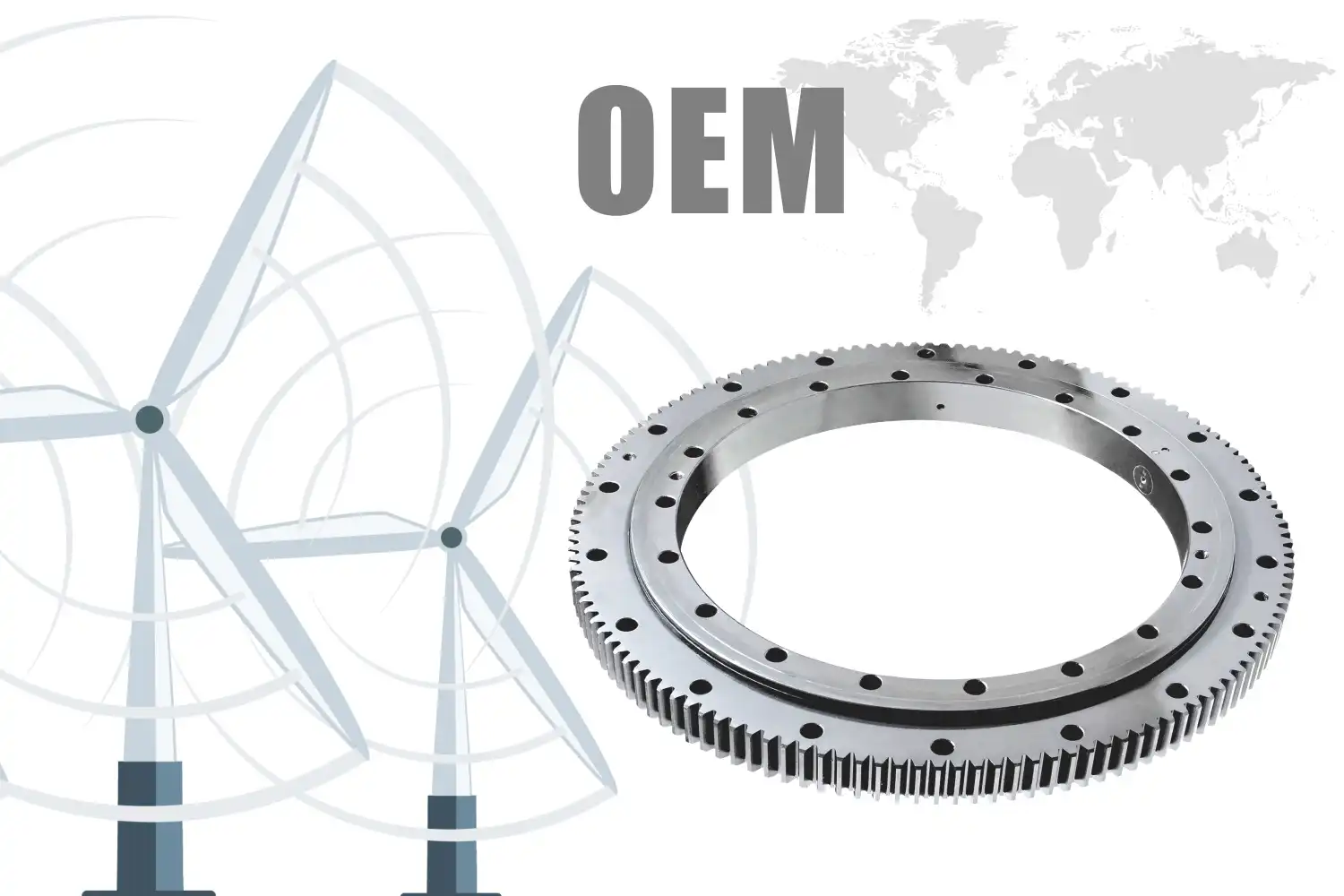
Different types of bearings are used in wind energy systems, each one designed to work best in a certain situation. Four-point contact ball slewing bearings can handle a lot of static load, which makes them perfect for yaw mechanisms. Crossed cylindrical roller bearings, on the other hand, are great for handling high dynamic loads that happen in main shaft applications. For gearboxes, double-row angular contact ball bearings provide more stiffness, and crossed tapered roller bearings provide better rotational accuracy through preloading devices.
Material Selection and Durability Considerations
The choice of material is very important for how well Bearings For Wind Turbines and how long a bearing lasts. High-grade steel alloys are very good at resisting fatigue and carrying loads, and new ceramic materials are much better at resisting corrosion and needing less upkeep. Our material engineering method uses specific heat treatment protocols to make the surface harder while keeping the core tough. This makes bearings that can withstand 30% more operational stresses than the industry standard.
Challenges and Maintenance of Wind Turbine Bearings
Wind turbine bearings operate under some of the most demanding conditions in industrial applications, facing continuous exposure to environmental stresses that can significantly impact performance and operational lifespan.
Environmental Stress Factors
Temperature fluctuations ranging from -40°C to +80°C create thermal expansion challenges that affect bearing clearances and lubrication properties. Moisture infiltration, particularly in offshore installations, accelerates corrosion processes and compromises bearing integrity. Salt spray exposure in coastal environments introduces additional corrosive elements that require specialized protective measures and material treatments.
Common Performance Issues
Wear patterns typically develop at contact points where rolling elements interact with raceway surfaces under heavy loads. Corrosion manifests through pitting and surface degradation that reduces operational smoothness and increases vibration levels. Lubrication breakdown occurs when extreme temperatures or contamination compromise lubricant viscosity and protective properties, leading to increased friction and accelerated component wear.
Maintenance Strategy Implementation
Effective maintenance strategies encompass regular inspection protocols utilizing vibration analysis, temperature monitoring, and lubricant condition assessment. Our recommended maintenance intervals align with manufacturer specifications while accounting for specific operational environments and loading conditions. Condition monitoring systems provide real-time performance data that enables predictive maintenance scheduling, reducing unexpected failures by up to 40% compared to traditional maintenance approaches.
Comparing Bearing Technologies for Customized OEM Solutions
Selecting appropriate bearing technology requires a comprehensive evaluation of performance characteristics, operational requirements, and environmental conditions specific to each wind turbine application.
Roller Versus Ball Bearing Performance
Roller bearings demonstrate superior load-carrying capacity due to linear contact patterns. Bearings For Wind Turbines that distribute forces across larger surface areas. Ball bearings offer reduced friction coefficients and enhanced rotational smoothness, ideal for high-speed applications. Our comparative analysis indicates roller bearings handle radial loads 20-30% more effectively, while ball bearings provide 15% lower operational friction under normal loading conditions.
Advanced Material Comparisons
Ceramic bearings present compelling advantages in corrosive environments, offering 50% longer operational life compared to steel alternatives in salt spray conditions. However, ceramic materials require 40% higher initial investment costs and specialized handling procedures during installation. Steel bearings provide proven reliability and cost-effectiveness for standard applications, with established supply chains and maintenance protocols that reduce total ownership costs over typical turbine lifespans.
Sealing Technology Considerations
Sealed bearing configurations protect internal components from environmental contamination but limit maintenance accessibility and lubrication options. Open bearing designs allow comprehensive lubrication management and component inspection, but require enhanced environmental protection systems. Our engineering analysis demonstrates sealed bearings reduce maintenance frequency by 60% while open designs enable 25% longer operational life through optimized lubrication management.
Selecting and Procuring Wind Turbine Bearings: A Strategic Approach
Strategic bearing procurement requires systematic evaluation of technical specifications, supplier capabilities, and lifecycle cost considerations that align with operational objectives and budget constraints.
Critical Selection Criteria
Load rating specifications must accommodate maximum Bearings For Wind Turbines operational stresses for wind turbines with appropriate safety margins, typically 2.5 times normal operating loads for renewable energy applications. Material quality certifications ensure compliance with international standards, including ISO 9001 and wind industry specifications. Design customization options enable optimization for specific turbine models and operational environments, enhancing performance while reducing maintenance requirements.
Supplier Evaluation and Benchmarking
Some of the biggest names in bearings, like SKF, NSK, Timken, and Schaeffler, have wide ranges of products and can provide a wide range of services. SKF has sections that specialise in wind turbine bearings and has a lot of experience with wind energy. NSK, on the other hand, focuses on precision engineering and using new materials. Timken focuses on making big bearings that can be used on main shafts, and Schaeffler comes up with new ways to lubricate and check on the state of machines.
Procurement Strategy Optimization
When you buy in bulk, you can get volume savings that can cut the cost per unit by 15 to 25 percent for big wind farm projects. While customised OEM solutions offer better performance for certain uses, they come with longer lead times and higher minimum order quantities. Instead of just focusing on the initial buy price, price negotiation strategies should take into account the total lifecycle costs, such as repairs, replacements, and downtime.
Advantages of Customized OEM Bearing Designs in Wind Turbines
Customized OEM bearing solutions deliver measurable performance improvements that justify investment through enhanced reliability, extended operational life, and optimized maintenance schedules.
Tailored Design Benefits
Custom bearing designs can fit specific turbine needs, such as non-standard size, special mounting needs, and extra features for protecting the environment. Because we have engineering skills, we can make sure that bearings work best in environments with certain loads, speeds, and load patterns that normal bearings can't handle. Precision production and balanced design help lower vibrations, which increases the efficiency of the turbine and lowers the stress on the parts around it.
Performance Enhancement Metrics
Industry data shows that customised ones have a 25–35% longer useful life than standard ones. This is because the internal shape is optimised and better materials are chosen. Better environmental safety and tighter manufacturing tolerances lead to failure rates that are 40–50% lower. Total cost of ownership goes down by 20 to 30 percent over the normal lifespan of a turbine because it needs less upkeep and is replaced less often.
Innovation Trends and Future Developments
New bearing technologies use smart sensors and internet Bearings For Wind Turbines connections to let you check on performance in real time and plan maintenance ahead of time. Modern lubrication systems use synthetic lubricants and automated delivery systems to make operations more efficient and extend the time between repair visits. New materials, like hybrid ceramic-steel designs and specialised coatings, improve performance while also being better for the environment by lasting longer and needing less upkeep.
Conclusion
Bearings for wind turbines are important parts that have a direct effect on the performance, reliability, and economic viability of green energy systems. After a thorough analysis, we can say that customised OEM bearing solutions offer better performance, longer operating life, and lower total ownership costs when compared to standard options. The best bearings for wind energy applications can be chosen using strategic purchasing methods that focus on technical specifications, supplier capabilities, and lifecycle factors. As bearing technologies keep getting better, like using new materials and smart monitoring systems, customised solutions are becoming important investments for making wind turbines more efficient and reliable in the growing renewable energy industry.
FAQ
1. What factors most significantly influence wind turbine bearing lifespan?
Load conditions, environmental exposure, and lubrication quality represent the primary factors affecting bearing operational life. Proper load distribution, effective environmental protection, and high-quality lubrication can extend bearing life by 50-70% compared to suboptimal conditions. Regular maintenance and condition monitoring further enhance longevity through early problem detection and corrective action implementation.
2. How do offshore and onshore bearing requirements differ?
Offshore installations require enhanced corrosion protection, sealed configurations, and specialized materials to withstand salt spray exposure and moisture infiltration. Onshore bearings can utilize more cost-effective materials and sealing systems while focusing on dust protection and temperature management. Maintenance accessibility also influences bearing selection, with offshore applications favoring extended service intervals and remote monitoring capabilities.
3. What justifies the investment in customized OEM bearing solutions?
Customized bearings deliver measurable performance improvements, including 25-35% longer operational life, 40-50% reduced failure rates, and 20-30% lower total ownership costs. These benefits result from optimized design parameters, advanced materials selection, and precision manufacturing that standard bearings cannot provide. The initial investment premium typically pays for itself within 2-3 years through reduced maintenance costs and improved reliability.
Partner with Huigong for Superior Wind Turbine Bearing Solutions
Huigong Bearing Technology delivers cutting-edge Bearings For Wind Turbines manufacturer capabilities backed by over 25 years of precision engineering expertise. Our customized OEM solutions optimize turbine performance through advanced materials, precision manufacturing, and tailored designs that exceed industry standards. Contact our engineering team at sale@chg-bearing.com to discuss your specific requirements and discover how our innovative bearing technologies can enhance your wind energy projects while reducing total ownership costs.
References
1. International Organization for Standardization. "Rolling bearings - Dynamic load ratings and rating life." ISO 281:2007/Amd 2:2010.
2. Wind Power Engineering & Development. "Advanced bearing technologies for wind turbine applications." Technical Review, Vol. 45, No. 3, 2023.
3. American Wind Energy Association. "Wind turbine bearing performance and maintenance guidelines." AWEA Technical Standards, 2022.
4. European Wind Energy Association. "Bearing failure analysis in offshore wind turbines." EWEA Research Report, 2023.
5. Renewable Energy World. "Cost-benefit analysis of customized bearing solutions in wind energy systems." Industry Analysis, Vol. 26, No. 8, 2023.
6. Journal of Mechanical Engineering Science. "Material innovations in wind turbine bearing technology." Proceedings of the Institution of Mechanical Engineers, Part C, 2023.