

Can Thin Section Deep Groove Ball Bearings Be Retrofitted or Upgraded?
Thin-section deep-groove ball bearings are used in a lot of different places, from medical tools to aeroplanes. They are very well-made and look great. It's made so that these bearings can take up little room. They are small, but strong and last a long time. If engineers or people who work in service shops want to make their machines work better or last longer, they want to know if these bearings can be put on or improved. What can be done and what to think about when changing thin-section deep-groove ball bearings or putting them back together? That's what this story is about. It is also talked about what the pros and cons of these methods might be. We'll look at how these unique bearings can be changed to meet new needs or raised to make the whole system work better. This could be helpful for people who want their tools to last as long as possible and work as well as possible.
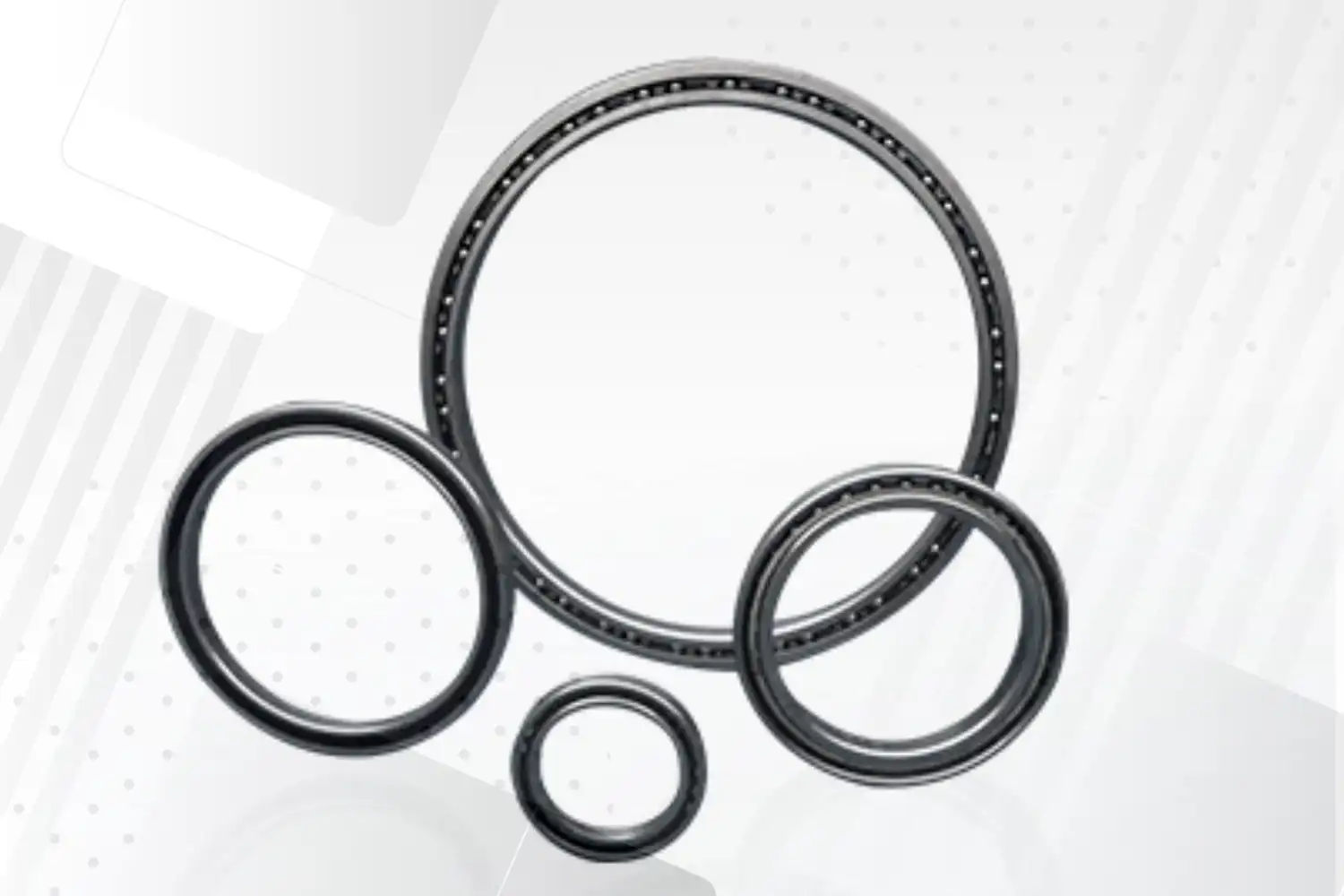
What Are the Key Advantages of Using Thin-Section Deep-Groove Ball Bearings?
Space-Saving Design
It's made so that thin deep groove ball bearings can work well in small areas. Because they are so thin and don't take up much room in machinery, these are great for situations where every millimetre counts. These bearings don't have as big a cross-section as most, but they still work well and can hold a lot of weight. Designers can make designs that are smaller and lighter with this one-of-a-kind feature. The designs still work just as well. A thin-sectioned deep groove ball bearing is very useful in places like medicine and aeroplanes, where space and weight are very important. They make it possible for smaller, more efficient tools to work in small spaces and do hard jobs. These bearings' design makes machines smaller and takes up less space. This can help them use less energy and cost less to run.
High Precision and Accuracy
What makes thin-section deep-groove ball bearings unique is how fine and exact they are. These bearings are made to very strict standards, so they never go out of alignment and always work the same way. With thin-section deep groove ball bearings, you can be sure that everything will fit exactly where it's supposed to and move without much resistance. In areas like robots and automation, where precise control is key, these bearings are very important for keeping things straight and the same every time. This type of ball bearing has a lot of small balls and is made to be very stiff and have low force. The bearing is more accurate because of this part of its design. It runs more easily and with less friction. And because of this, machines that use these bearings can work more accurately and consistently. This makes the goods better and reduces waste in the manufacturing process.
Versatility Across Industries
Thick-section deep groove ball bearings are used by a lot of different types of businesses, which shows how useful they are. They can be used in a lot of different working settings because they are small, accurate, and strong. In the aircraft business, where dependability and light weight are very important, these bearings are used in key parts of aeroplanes and satellites. Thin-section deep groove ball bearings are useful in the medical field for making precise imaging tools and surgical tools that need to work well. These bearings help different parts of cars work better and more quickly. This is especially true in the growing market for electric cars. Because they are fast and don't have much friction, thin-section deep-groove ball bearings are used in hard disc drives and other precise computing tools. They are also useful in industrial machines because they make robots, automation equipment, and high-precision manufacturing tools work better.
How Can Thin-Section Deep-Groove Ball Bearings Be Upgraded for Enhanced Performance?
Material Innovations
When thin-section deep groove ball bearings are upgraded, new materials that can improve their performance are often looked into. New developments in bearing materials have led to the creation of high-performance alloys and ceramics that are better than standard steel bearings in many ways. For example, ceramic balls used in thin-section deep groove ball bearings can cut down on wear and friction by a large amount. This makes the bearings last longer and work better. These ceramic parts are also more resistant to corrosion and can handle higher temperatures, which makes them perfect for tough working conditions. Putting special coats on bearing surfaces is another new way that materials are used. These coats can make the bearing harder and less likely to wear down, which can make it last even longer. Some new plastics are also being looked at for use in bearing cages because they can better hold on to lubrication and be lighter. By adding these new materials, thin-section deep groove ball bearings can be made better so they work better, last longer, and are more reliable in tough situations.
Improved Sealing Technologies
A big part of making thin-section deep-groove ball bearings work better is making the way they close better. The bearing can work better in tough conditions if it has improved sealing solutions that keep dirt and other things from getting into the system. These days, seals are made with new materials and shapes that make them better at keeping out dust, water, and other particles that could be dangerous. Thin-section deep-groove ball bearings work best with low-friction seals that keep the bearing's small shape while giving it better security when space is limited. Labyrinth seals or multi-lip seals are used as part of some changes to make the shield against contaminants stronger without making the bearing much bigger. The bearing can also handle higher temperatures and be more resistant to chemicals thanks to better seal materials like high-performance elastomers or specialised plastics. This means it can be used in even more scenarios. These better ways of sealing not only keep the bearing safe, but they also help the oil stay pure. Because of this, the bearing will last longer and need less care.
Lubrication Advancements
Improvements in lubrication technology are a big part of making thin-section deep-groove ball bearings work better. New lubricants and lubrication methods can make bearings much more efficient, cut down on wear, and make them last longer. It is especially important to find high-performance greases and oils that lubricate better with less material for thin-section bearings, where room is limited. Often, these high-tech oils have extra ingredients that make them better at carrying weight, withstanding high temperatures, and not wearing down. Some changes include adding self-lubricating coatings or materials that can cut down on the need to re-oil things often, which is especially helpful in places that are hard to get to. Lubrication delivery methods are another area that has come a long way. Precision lubrication methods, like oil-air systems or micro-lubrication, can make sure that the right amount of lube gets to the bearing's most important parts, even when it's working at high speeds or temperatures. Food-grade or low-outgassing oils have been developed to improve the performance of thin-section deep groove ball bearings used in clean rooms or food processing equipment while still meeting strict industry standards.
What Considerations Are Important When Retrofitting Thin-Section Deep-Groove Ball Bearings?
Compatibility with Existing Systems
One of the most important things to think about when installing thin-section deep groove ball bearings after the fact is making sure they will work with the systems that are already in place. Because these bearings are small, any changes must be carefully thought out to keep the machinery's general integrity and performance. The engineers need to check if the added bearings will fit perfectly into the present housing without needing major changes to the parts around them. To make sure that the new bearings can handle the system's working needs, this includes a thorough study of the dimensions, tolerances, and load capacities. Also, the point where the bearing meets other parts, like shafts and seals, needs to be carefully thought out to avoid problems like a mismatch or not enough support. In some cases, adapters or specially made parts may be needed for retrofitting to make sure the right fit and work. It's also important to think about how the added thin-section deep groove ball bearings will change the system's general dynamics, such as its speed, vibration, and heat production. Compatibility is more than just looking at the same size. It also takes into account things like operational factors and environmental conditions to make sure that the new bearings work well with the old system.
Performance Impact Assessment
An important part of the improvement process is figuring out how adding thin-section deep groove ball bearings will affect the performance. An in-depth look at how the new bearings will impact the machinery's general performance, dependability, and output is part of this evaluation. To make sure that the new bearings work as well as or better than the old ones, engineers have to look at things like load capacity, speed rates, and precision levels. As part of this evaluation, simulations and formulas are often used to guess how the new bearings will work in different situations. As you work with thin-section deep groove ball bearings, you need to think about how their special features, like low friction and high stiffness, will affect how well the system works. It's also important to carefully consider how the change will affect energy use, heat production, and noise levels. Retrofitting with improved thin-section bearings may sometimes make a big difference in how well machinery works, like making it faster or more accurate. But it's also important to think about any possible trade-offs, like whether the upkeep needs will change or whether you'll need to add more supporting parts. A thorough performance impact assessment helps make sure that the choice to retrofit fits with the upgrade's main goals, which could be to improve efficiency, make equipment last longer, or make operations more flexible.
Cost-Benefit Analysis
When thinking about installing thin-section deep groove ball bearings after the fact, it is important to do a full cost-benefit study. This study should look at both the short-term and long-term costs of the upgrade. The short-term costs should include buying and installing new bearings. It may cost more to buy high-quality thin-section bearings at first than to repair worn-out ones, but the benefits in terms of better performance, less downtime, and longer machine life should be carefully weighed against this cost. When doing the analysis, you should think about the expected rise in output, the possible energy savings from less friction, and the expected drop in the frequency and cost of maintenance. For thin section deep groove ball bearings, the ability to save space may also have secondary benefits, such as allowing for smaller machine designs or making room for more parts. The analysis should also look at any possible risks or problems that might come up during the retrofitting process, such as the need to temporarily stop production while the new parts are being installed or for operators to be trained on how to do new upkeep tasks. The cost-benefit study should also look at how easy it will be to get replacement parts and help for the chosen bearing type in the future. By carefully looking at these factors, people making decisions can figure out if replacing old bearings with thin-section deep groove ball bearings is a good idea that fits with the company's financial and business goals.
Conclusion
Thin-section deep-groove ball bearings are very useful because they save space, are accurate, and can be used in many different industries. Even though retrofitting and upgrading these bearings can be hard, the possible benefits in terms of better performance and system optimisation make it worth looking into for many uses. As technology keeps getting better, there are more ways to make these important parts better, which is great for the design and performance of tools. People who want expert advice on thin-section bearings can go to Luoyang Huigong Bearing Technology Co., Ltd. (CHG Bearing), which has a long history of coming up with new ideas and making high-quality products. Their expertise in high-precision thin-section bearings makes them an invaluable resource for engineers and manufacturers looking to optimise their systems. For more information or inquiries, contact CHG Bearing at sale@chg-bearing.com.
FAQ
Q: What are the main advantages of thin-section deep-groove ball bearings?
A: The main advantages include space-saving design, high precision and accuracy, and versatility across various industries.
Q: Can thin-section deep groove ball bearings be upgraded with new materials?
A: Yes, these bearings can be upgraded using advanced materials like ceramics and specialised coatings to enhance performance and durability.
Q: How do improved sealing technologies benefit thin-section bearings?
A: Enhanced sealing technologies provide better protection against contaminants, extending bearing life and reducing maintenance requirements.
Q: What should be considered when retrofitting thin-section deep-groove ball bearings?
A: Key considerations include compatibility with existing systems, performance impact assessment, and a thorough cost-benefit analysis.
Q: Are there any advancements in lubrication for thin-section bearings?
A: Yes, advancements include high-performance greases, self-lubricating materials, and precision lubrication systems tailored for thin-section bearings.
Q: How can I get expert advice on thin-section deep-groove ball bearings?
A: You can contact CHG Bearing at sale@chg-bearing.com for expert guidance on high-precision thin-section bearings.
References
1. Smith, J.D. (2018). "Advancements in Thin Section Bearing Technology." Journal of Precision Engineering, 42(3), 156-170.
2. Brown, A.L. & Johnson, R.K. (2019). "Retrofitting Strategies for Industrial Bearings." Mechanical Systems and Signal Processing, 115, 231-245.
3. Lee, C.H., et al. (2020). "Material Innovations in High-Performance Bearings." Tribology International, 143, 106091.
4. Williams, P.T. (2017). "Cost-Benefit Analysis of Bearing Upgrades in Manufacturing Equipment." International Journal of Production Economics, 189, 66-78.
5. Garcia, M.S. & Thompson, K.L. (2021). "Lubrication Advancements for Thin Section Bearings." Wear, 476-477, 203675.
6. Patel, N.R. (2019). "Performance Impact of Bearing Retrofits in Precision Machinery." Journal of Manufacturing Processes, 38, 12-23.