

When selecting between thrust roller bearings and cylindrical thrust bearings for heavy industrial applications, the choice depends entirely on your specific operational requirements. Thrust roller bearing systems excel in applications demanding maximum axial load capacity, while cylindrical thrust bearings offer superior precision and smoother operation at moderate loads. The key lies in understanding which design aligns with your equipment's load profile, speed requirements, and environmental conditions. Both bearing types serve critical roles in modern industrial machinery, from rolling mills to precision manufacturing equipment.
Understanding Thrust Roller Bearing Fundamentals
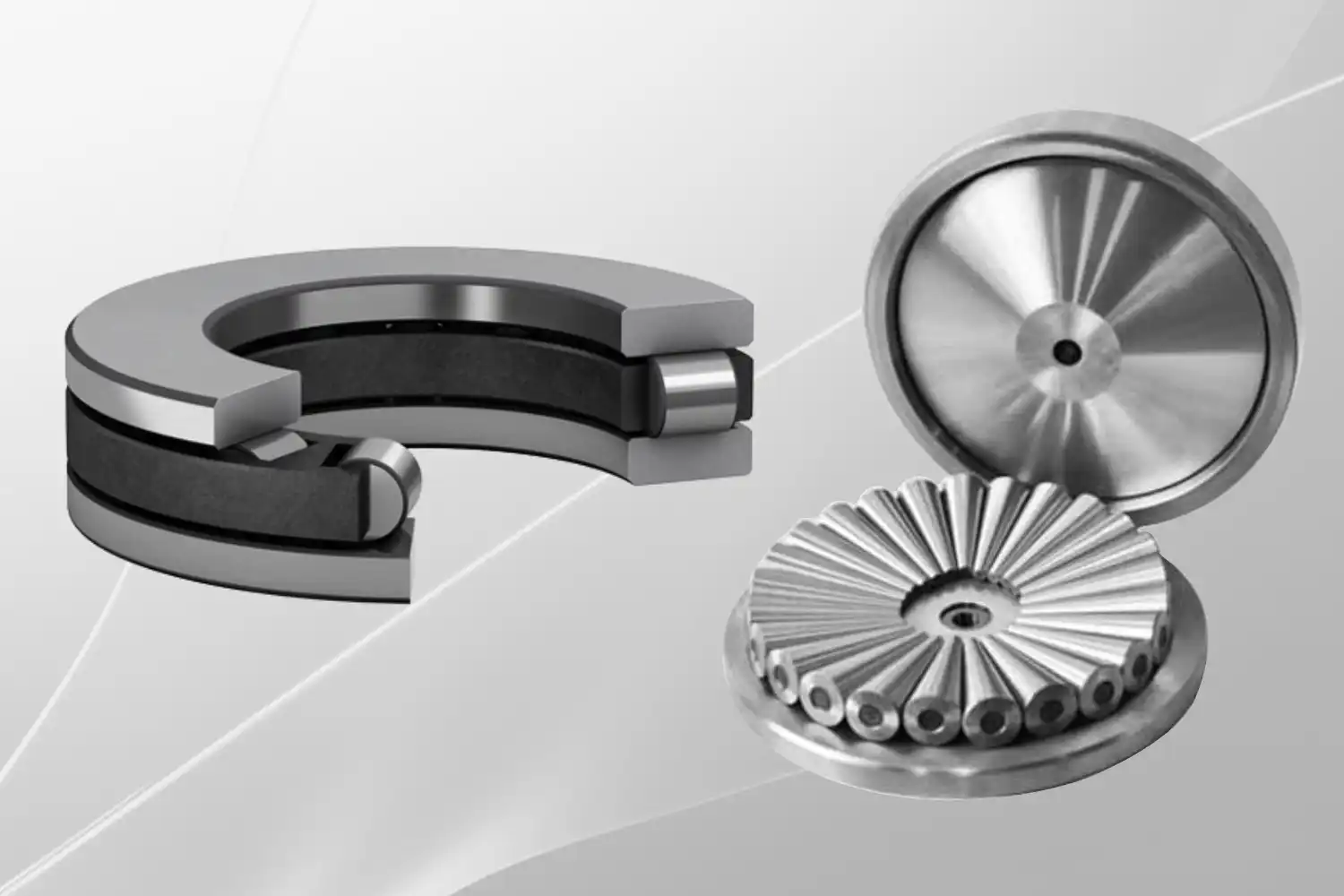
Thrust roller bearings represent a specialized category of axial bearings engineered to handle substantial unidirectional loads. These components feature rolling elements positioned between washers, creating a robust load-bearing interface. The design philosophy centers on maximizing contact area between rollers and raceways. This configuration enables these bearings to support loads exceeding 500 tons in large industrial applications.
Three primary thrust roller bearing types dominate industrial applications:
- Cylindrical roller thrust bearings - optimal for pure axial loads
- Tapered roller thrust bearings - enhanced load capacity with angular contact
- Spherical roller thrust bearings - accommodate misalignment while supporting heavy loads
Bearing cage materials vary based on application demands. Metal-machined solid cages provide standard reliability, while specialized materials like brass enhance performance in specific environments. If you need maximum load capacity for heavy machinery applications, thrust roller bearings deliver superior performance compared to ball bearing alternatives.
Cylindrical Thrust Bearing Design and Characteristics
Cylindrical thrust bearings utilize uniform cylindrical rolling elements positioned perpendicular to the shaft axis. This arrangement creates line contact between rollers and races, distributing loads efficiently across the bearing surface. The separable design allows independent installation of bearing components. This feature simplifies maintenance procedures and enables shaft positioning without complete bearing removal.
Key performance characteristics include:
- Load capacity ranging from 50 to 200 tons, depending on size specifications
- Operating speeds limited to 500-1500 RPM due to roller slippage
- Temperature tolerance up to 150°C with appropriate lubrication
- Axial displacement limitation in a single direction only
Standard sizes feature inner diameters from 200-380mm and outer diameters reaching 670mm. Weight specifications range from 75-274kg, accommodating large-scale industrial equipment requirements. If you need precise axial positioning with moderate load requirements, the cylindrical Thrust Roller Bearing provides excellent control and reliability.
Load Capacity and Performance Comparison
Load capacity represents the most critical differentiator between bearing types. Test data from industrial applications reveals significant performance variations under identical operating conditions. Cylindrical roller thrust bearings demonstrate superior load handling compared to ball thrust alternatives. Dynamic load ratings reach 850 kN for standard 300mm bore bearings, while static load capacity exceeds 1200 kN. Tapered roller thrust bearings achieve even higher load capacities through angular contact geometry. The same 300mm bearing size supports dynamic loads up to 950 kN with static ratings reaching 1500 kN.
| Bearing Type | Dynamic Load (kN) | Static Load (kN) | Speed Limit (RPM) |
|---|---|---|---|
| Cylindrical Roller Thrust | 850 | 1200 | 1500 |
| Tapered Roller Thrust | 950 | 1500 | 1200 |
| Ball Thrust | 320 | 450 | 3000 |
Speed limitations arise from roller slippage phenomena. Linear velocity differences between roller ends create sliding motion, generating heat and limiting rotational speeds. If you need maximum load support for rolling mill applications, tapered roller configurations deliver optimal performance with enhanced safety margins.
Speed Limitations and Operating Parameters
Operating speed constraints significantly impact bearing selection for specific applications. Roller geometry directly influences maximum permissible speeds and thermal characteristics. Cylindrical roller thrust bearings typically operate below 1500 RPM in industrial applications. Higher speeds generate excessive heat through roller slippage, reducing bearing life and lubrication effectiveness. The slippage phenomenon occurs because roller ends travel different distances during rotation. This creates micro-sliding at contact points, producing friction and thermal buildup. Speed optimization strategies include:
- Advanced lubrication systems reduce friction coefficients
- Specialized cage designs minimize roller interaction
- Temperature monitoring prevents thermal damage
- Load balancing reduces stress concentrations
Bearing clearance specifications affect both speed capability and load distribution. Proper clearance selection balances thermal expansion with operational precision requirements. If you need higher speed operation above 2000 RPM, ball thrust bearings provide better performance despite reduced load capacity.
Material Selection and Durability Factors
Material composition, Thrust Roller Bearing longevity, and performance under demanding industrial conditions. Standard bearing steels include GCr15, GCr15SiMn, and G20Cr2Ni4A grades.GCr15 steel provides excellent hardness retention and wear resistance. This material achieves 60-62 HRC hardness after heat treatment, ensuring extended service life in normal operating conditions.GCr15SiMn offers enhanced fatigue resistance through silicon-manganese alloying. This composition reduces crack propagation and improves bearing durability under cyclic loading.G20Cr2Ni4A represents premium bearing steel with superior toughness. Nickel-chromium alloying creates fine grain structure, enabling operation under shock loads and harsh environments.
Durability enhancement features include:
- Vacuum degassing removes harmful inclusions
- Controlled heat treatment optimizing microstructure
- Surface finishing reduces stress concentrations
- Quality testing, ensuring dimensional accuracy
Cage materials complement bearing steel performance. Brass cages provide excellent thermal conductivity and corrosion resistance in marine applications. If you need extended bearing life in corrosive environments, stainless steel variants with specialized surface treatments deliver optimal protection.
Application-Specific Selection Guidelines
Application requirements drive bearing selection more than theoretical performance specifications. Each industrial environment presents unique challenges requiring tailored solutions. Rolling mill applications demand maximum load capacity with moderate speeds. Tapered roller thrust bearings excel in these conditions, supporting roll-changing forces exceeding 1000 tons. Mining equipment operates under extreme shock loads and contaminated environments. Sealed bearing designs with robust cage structures prevent premature failure from debris infiltration. Marine propulsion systems require corrosion resistance and reliability. Specialized materials and lubrication systems ensure performance in saltwater environments. Selection criteria priority ranking:
- Load magnitude and direction requirements
- Speed and acceleration specifications
- Environmental conditions and contamination levels
- Maintenance accessibility and procedures
- Cost constraints and lifecycle expectations
Gearbox applications balance load capacity with speed requirements. Hybrid designs combining different bearing types optimize overall system performance. If you need versatile performance across varying conditions, consult bearing specialists to determine optimal configurations for your specific application.
Installation and Maintenance Considerations
Proper installation procedures significantly impact bearing performance and service life. Precision alignment and controlled assembly forces prevent premature failure modes. Bearing alignment tolerances typically require accuracy within 0.05mm for optimal performance. Misalignment creates uneven load distribution, accelerating wear patterns and reducing operational life. Lubrication system design affects both installation complexity and maintenance requirements. Centralized lubrication enables remote monitoring and automated delivery systems.
Installation best practices include:
- Clean room assembly, preventing contamination
- Torque-controlled fastening ensures proper preload
- Alignment verification using precision instruments
- Initial lubrication application before operation
Maintenance intervals depend on operating conditions and load factors. Heavy-duty applications may require inspection every 2000 operating hours, while lighter loads extend intervals to 8000 hours. Temperature monitoring provides early warning of lubrication degradation or alignment issues. Vibration analysis detects developing problems before catastrophic failure occurs. If you need minimal maintenance requirements, sealed bearing designs with extended lubrication intervals reduce operational costs significantly.
Huigong's Advanced Thrust Roller Bearing Solutions
Huigong delivers exceptional thrust roller bearing manufacturer capabilities backed by over 25 years of industrial experience. Our comprehensive product portfolio addresses the most demanding applications in heavy industry and precision manufacturing. Huigong thrust roller bearing advantages include:
- Advanced metallurgical processes using premium GCr15SiMn and G20Cr2Ni4A steels
- Precision manufacturing with dimensional tolerances achieving ±0.005mm accuracy
- Comprehensive size range covering 200-380mm inner diameters and 400-670mm outer diameters
- Load capacity optimization supporting applications from 75kg to 274kg bearing weights
- Custom cage designs, including machined solid metal and specialized brass configurations
- Rigorous quality testing using CMM, metallographic analysis, and friction torque verification
- Extended service life through vacuum degassing and controlled heat treatment processes
- Application-specific lubrication recommendations optimizing performance and durability
- Technical support from 29% engineering staff with intermediate and senior qualifications
- Annual production capacity reaching 30,000 sets of specialized mill bearings
- Comprehensive testing capabilities, including UT, MT, and E, T non-destructive evaluation
- Custom engineering solutions for unique industrial equipment requirements
Our Luoyang facility spans 39,330 square meters with 150+ precision manufacturing equipment sets. This infrastructure enables consistent quality delivery for large-scale industrial projects. The HSC250AP5 thin-section bearing demonstrates our engineering capabilities in super-large applications. This 25-inch inner diameter bearing showcases advanced lightweight design principles while maintaining exceptional load capacity. Quality assurance protocols include metallographic microscope inspection and roundness measurement verification. These procedures ensure every bearing meets stringent industrial specifications before shipment. Engineering collaboration begins during project planning phases. Our technical team works closely with customers to optimize bearing selection and installation procedures for maximum performance. When your operations demand reliable thrust roller bearings for sale with proven performance records, Huigong provides comprehensive solutions backed by extensive manufacturing expertise. Our commitment to technical innovation and quality excellence ensures your critical equipment operates efficiently under the most demanding conditions. Contact us at sale@chg-bearing.com to discuss your specific bearing requirements and discover how our advanced manufacturing capabilities can enhance your operational reliability.
Conclusion
Selecting between thrust roller bearings and cylindrical thrust bearings requires careful consideration of load requirements, speed limitations, and environmental conditions. Cylindrical roller thrust bearings excel in pure axial load applications with moderate speeds, while tapered variants provide enhanced capacity for extreme loading conditions. Both designs offer advantages over ball thrust alternatives when maximum load support takes priority over speed capability. Success depends on matching bearing characteristics to specific application demands, proper installation procedures, and appropriate maintenance protocols. Consultation with experienced bearing specialists ensures optimal selection for critical industrial equipment.
References
1. Harris, T.A. & Kotzalas, M.N. "Essential Concepts of Bearing Technology: Rolling Bearing Analysis, Fifth Edition." CRC Press, 2019.
2. Hamrock, B.J., Schmid, S.R. & Jacobson, B.O. "Fundamentals of Fluid Film Lubrication: Second Edition." Marcel Dekker Inc., 2004.
3. ISO 104:2015 "Rolling bearings - Thrust bearings - Boundary dimensions, general plan." International Organization for Standardization.
4. Eschmann, P., Hasbargen, L. & Weigand, K. "Ball and Roller Bearings: Theory, Design and Application." John Wiley & Sons, 1999.
5. ANSI/ABMA Standard 11-1990 "Load Ratings and Fatigue Life for Ball Bearings." American Bearing Manufacturers Association.
6. Lundberg, G. & Palmgren, A. "Dynamic Capacity of Rolling Bearings." Journal of Applied Mechanics, American Society of Mechanical Engineers, 1947.