

High‑Performance Tapered Roller Thrust Solutions for Industry
High-performance tapered roller thrust solutions are the best industrial bearing technology because they are designed to handle very high axial loads in tough manufacturing settings. These special bearings use tapered rollers that are precisely made and arranged at the best angles to spread out the huge thrust forces evenly across the contact surfaces. Heavy machinery, construction equipment, and the steel industry all depend on these reliable methods to keep their operations running even when things get tough. Because of their special shape, tapered roller thrust bearings can handle loads that are heavier than what most bearings can handle. They can also keep their dimensions stable and align themselves precisely, which is important for industrial uses.
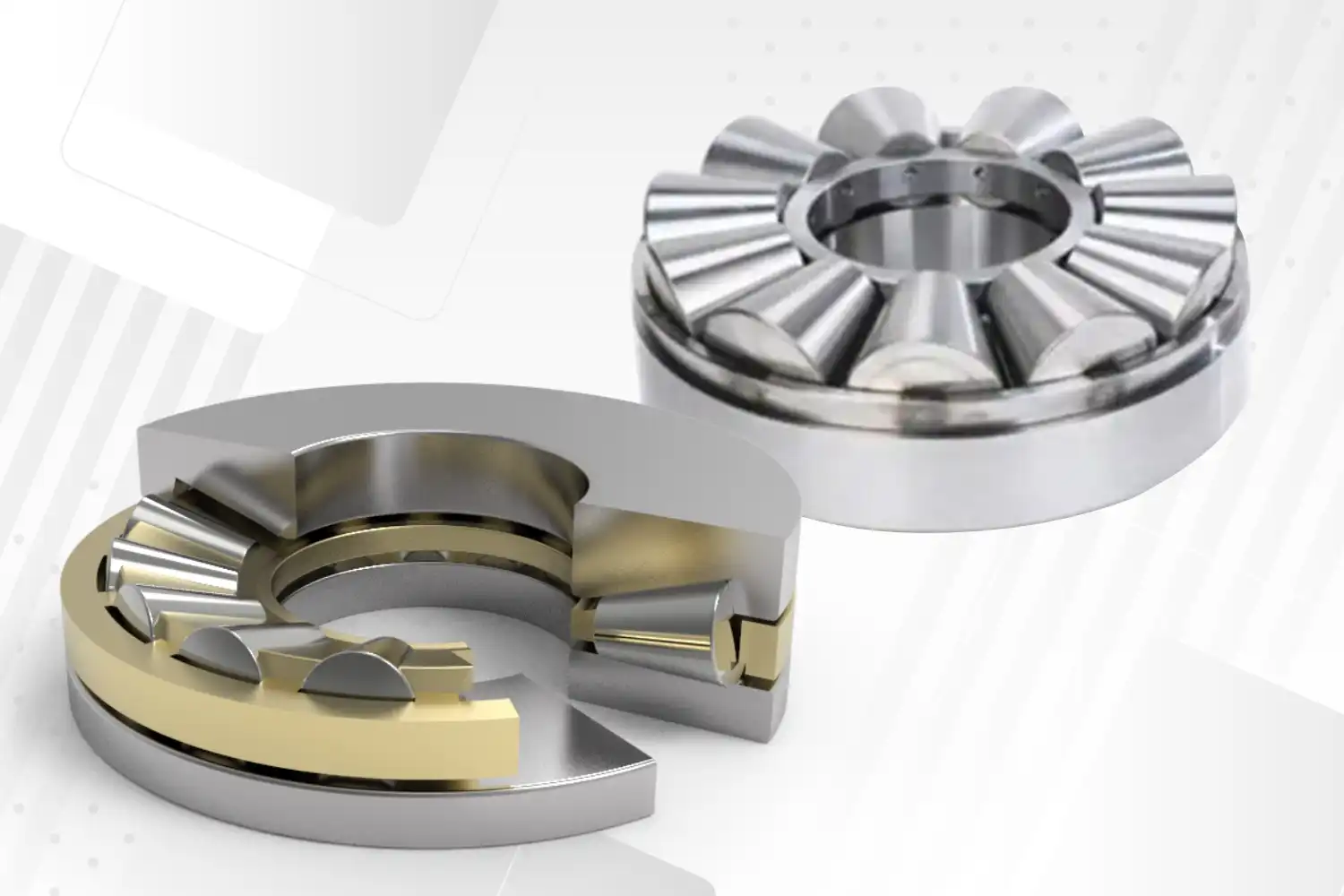
Understanding Tapered Roller Thrust Bearings: Design, Function, and Advantages
The engineering excellence behind tapered roller thrust bearings lies in their sophisticated design architecture, which fundamentally differs from conventional bearing solutions. These bearings consist of precisely manufactured tapered rollers, inner and outer ring assemblies, and robust cage systems that work in harmony to manage directional forces.
Advanced Geometric Design and Load Distribution
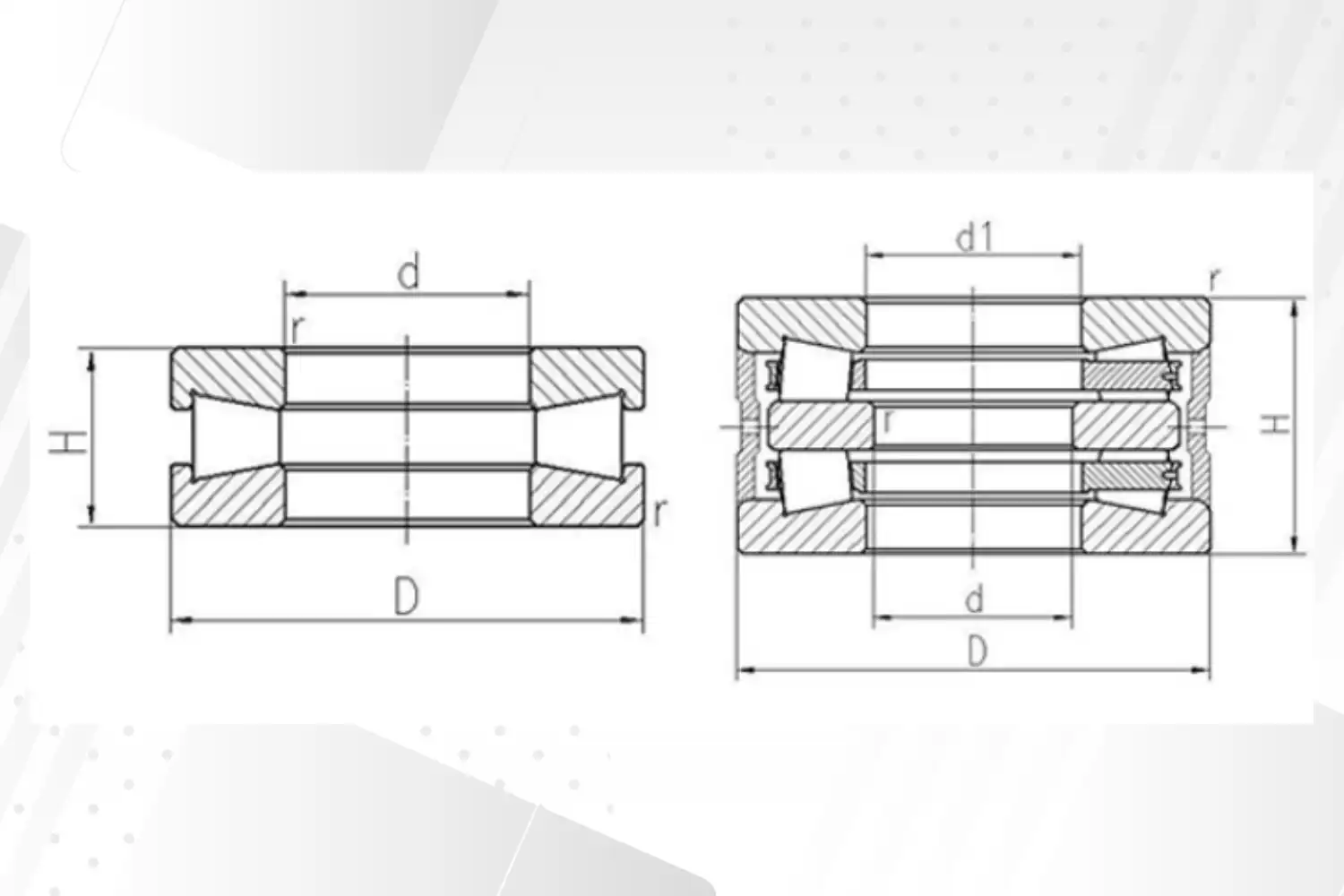
The tapered geometry creates a unique load distribution pattern that sets these bearings apart from cylindrical alternatives. Each roller maintains contact along its entire length, ensuring uniform stress distribution across the raceway surfaces. This design principle eliminates point loading concentrations that typically cause premature failure in standard thrust bearings. The angular arrangement of rollers allows for true rolling motion with minimal sliding friction, reducing heat generation and extending operational life significantly. Modern tapered roller thrust bearings incorporate steel or brass solid cages that maintain precise roller spacing under extreme operating conditions. The cage design prevents roller skewing and ensures consistent load sharing among all rolling elements. This engineering approach results in load capacities ranging from 75kg to 274kg in our industrial-grade solutions, with inner diameters spanning 200-380mm and outer diameters reaching 400-670mm.
Superior Performance Characteristics
Compared to cylindrical roller thrust bearings, tapered roller thrust solutions deliver substantially higher load capacity while maintaining lower relative slippage and reduced limiting speeds. This performance advantage stems from the optimized contact geometry that maximizes the effective load-bearing area. The bearings can only carry axial loads and limit axial displacement in one direction, making them ideal as axial locating bearings for single-direction applications. The superior load distribution characteristics translate directly into extended service life and reduced maintenance requirements. Industries utilizing these bearings report significant improvements in equipment uptime and reduced total cost of ownership compared to alternative bearing technologies.
Choosing the Right Tapered Roller Thrust Bearing for Your Needs
Selecting appropriate tapered roller thrust bearings requires a comprehensive analysis of operational parameters and environmental conditions that directly impact bearing performance and longevity.
Critical Selection Parameters
A load capacity study is the first step in choosing the right bearings. Engineers have to look at both static and dynamic load needs, taking into account both peak operational forces and patterns of continuous loading. Tapered roller thrust bearings can handle a wide range of axial loads, depending on the contact angle and roller geometry. For the best performance, it is important to do accurate load estimates. Both speed rates and temperature ranges are important factors to consider when making a choice. Most of the time, tapered roller thrust bearings can't go as fast as ball thrust bearings, but they are better for high-force, moderate-speed uses because they can handle more weight and stay stable at high temperatures. For consistent performance over the service life, operating temperatures must match the specs for the bearing material and the lubrication needs.
Dimensional Standards and Compatibility
Following international standards makes sure that equipment from different makers can be used together and is reliable. Standardised dimensional tolerances in ISO and DIN standards make it easier to fit and align things correctly during installation. These standards also set quality standards for the properties of materials, the accuracy of making, and the way they work. Understanding the connection between dimensional accuracy and operational success is helpful for people who work in procurement. Tighter spec bearings cost more, but they offer better accuracy and longer service life in important situations. Buying high-precision bearings usually pays off in a big way because they cut down on downtime and repair costs.
Installation, Maintenance, and Performance Optimization of Tapered Roller Thrust Bearings
Proper installation and maintenance protocols directly influence bearing performance and service life, making these procedures critical success factors for industrial operations.
Installation Best Practices
Accurate alignment during installation stops wear patterns from starting tapered roller thrust too soon and makes sure that the load is spread evenly across the rolling surfaces. Technicians can get the exact tolerances needed for top performance by using specialised tools and measuring tools. When installing bearings, the right way to handle them keeps the surfaces from getting dirty or damaged. When installing something, you need to pay close attention to how clean and ready the mounting area is. Any dirt or flaws on the surface can create stress peaks that speed up wear or cause a catastrophic failure. Professional fitting methods involve cleaning all parts thoroughly and checking that they are the right size before putting them together for good.
Maintenance and Lubrication Strategies
Effective lubrication methods extend the life and performance of bearings while cutting down on the time needed for maintenance. To handle the high contact stresses that happen at the roller-raceway surfaces, tapered roller thrust bearings need lubricants with extreme pressure additives. Mineral oils with a high viscosity or lithium-complex greases are great for protecting low-speed, high-load industry equipment. Scheduling regular inspections lets you find wear patterns or performance degradation early on, before they cause a catastrophic failure. Monitoring vibrations, keeping an eye on temperatures, and visual checks all give useful information for predictive repair plans. These proactive methods cut down on unplanned downtime and make bearings last a lot longer than reactive repair methods.
Industry Trends and Future Outlook for Tapered Roller Thrust Bearings
The bearing industry continues evolving through technological advancement and changing industrial requirements, driving innovation in materials, manufacturing processes, and performance capabilities.
Advanced Materials and Coatings
Specialised surface treatments and high-strength alloys improve the performance of bearings in harsh operating circumstances. Modern covering technologies make things less likely to wear down and reduce friction, which increases their useful life and lowers their energy use. Because of these new materials, bearings can work effectively in more demanding situations that weren't thought to be possible with regular bearings before. The main goal of research and development is to make materials that stay the same size even when heated and cooled many times, while also being more resistant to wear. These improvements have a direct effect on heavy industry uses where equipment works all the time under different loads.
Industry 4.0 Integration
Adding smart sensors to regular bearings turns them into smart parts that tapered roller thrust can check on their state in real time and plan maintenance ahead of time. Embedded sensors constantly check parameters like temperature, vibration, and load, letting you know about possible problems before they affect operations. This technology integration helps with predictive maintenance plans that cut down on downtime and make the best use of repair schedules. Digital connectivity lets maintenance teams keep an eye on the performance of bearings in various locations at the same time through remote monitoring. This centralised tracking method makes maintenance more efficient and lets you make decisions based on data when planning to replace bearings and make upgrades.
Conclusion
Tapered roller thrust solutions with high performance are necessary parts for industrial applications that need to manage axial loads reliably under tough operating circumstances. Due to their superior load distribution and strong construction, these bearings are designed in a way that makes them essential for heavy machinery, building equipment, and manufacturing systems. The best performance and longer service life are guaranteed by careful selection, installation, and maintenance. This adds a lot of value by cutting down on downtime and upkeep costs. As technology in industry keeps getting better, tapered roller thrust bearings change to meet higher performance standards and add smart tracking features that make operations more reliable and efficient.
FAQ
1. What load capacity can tapered roller thrust bearings handle?
Tapered roller thrust bearings demonstrate exceptional load-carrying capabilities, with our industrial-grade solutions supporting weights ranging from 75kg to 274kg depending on size and configuration. The actual load capacity depends on factors including contact angle, roller geometry, and operating conditions. These bearings excel in applications requiring high axial load capacity with precise positioning requirements.
2. How do tapered roller thrust bearings compare to cylindrical roller thrust bearings?
Tapered roller thrust bearings provide superior load capacity compared to cylindrical alternatives while maintaining lower relative slippage and reduced limiting speeds. The tapered geometry enables better load distribution and true rolling motion, resulting in extended service life and improved reliability. However, they operate effectively only for unidirectional axial loads, making them ideal for specific positioning applications.
3. What industries commonly use tapered roller thrust bearings?
These specialized bearings find extensive application in construction machinery, automotive systems, power generation equipment, and heavy manufacturing operations. Rolling mill screw-down mechanisms, crane hooks, and differential assemblies represent typical applications where the unique characteristics of tapered roller thrust bearings provide optimal performance under extreme loading conditions.
4. What maintenance requirements do these bearings have?
Regular lubrication with extreme pressure additives, periodic inspection for wear patterns, and monitoring of operating temperatures constitute essential maintenance practices. Proper lubrication prevents metal-to-metal contact under high loads, while regular inspections enable early detection of potential issues before they impact operations.
Partner with Huigong for Superior Tapered Roller Thrust Solutions
Huigong stands as your trusted tapered roller thrust bearing manufacturer, delivering precision-engineered solutions that exceed the demanding requirements of heavy industry applications. Our extensive experience in rolling mill bearings and large-scale industrial components positions us uniquely to understand your specific operational challenges and provide tapered roller thrust customized solutions that enhance equipment reliability and performance.
With over two decades of manufacturing excellence and more than 50 invention patents, Huigong combines advanced engineering capabilities with proven industrial expertise. Our comprehensive quality management systems, including ISO9001 and ISO14001 certifications, ensure consistent product quality that meets international standards. Our technical team collaborates closely with procurement professionals and engineers to develop tailored bearing solutions that optimize load capacity, extend service life, and reduce total cost of ownership.
Contact our technical specialists at sale@chg-bearing.com to discuss your specific requirements and discover how our high-performance tapered roller thrust bearings can enhance your operational efficiency and equipment reliability.
References
1. Harris, T.A. and Kotzalas, M.N. "Advanced Concepts of Bearing Technology: Rolling Bearing Analysis, Fifth Edition." CRC Press, 2006.
2. Hamrock, B.J., Schmid, S.R., and Jacobson, B.O. "Fundamentals of Fluid Film Lubrication, Second Edition." Marcel Dekker, 2004.
3. Eschmann, P., Hasbargen, L., and Weigand, K. "Ball and Roller Bearings: Theory, Design and Application, Third Edition." John Wiley & Sons, 1999.
4. Tallian, T.E. "Failure Atlas for Hertz Contact Machine Elements, Second Edition." ASME Press, 1999.
5. Palmgren, A. "Ball and Roller Bearing Engineering, Third Edition." SKF Industries, 1959.
6. Jones, A.B. "Analysis of Stresses and Deflections in Multi-Row Angular Contact Ball Bearings." Journal of Basic Engineering, ASME Transactions, 1960.