

Ru Cross Roller Bearings for Medical and Aerospace Gear
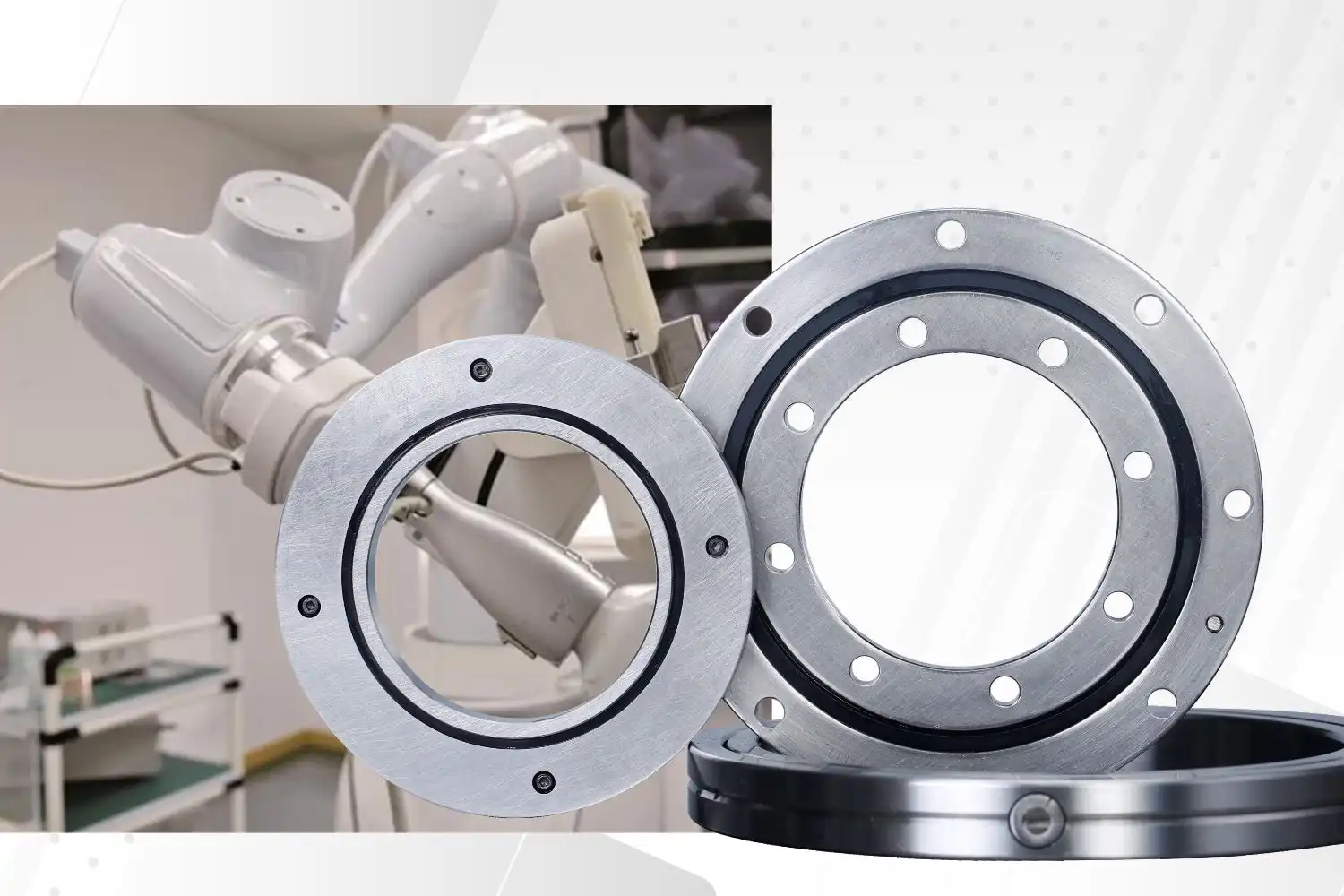
Ru Cross Roller Bearings are a big step forward in precision bearing technology. They were made to meet the very strict needs of medical and aerospace uses. These special bearings have a new crossed cylinder roller design that makes them very reliable in mission-critical gear systems and increases their load capacity and accuracy. Because they can handle radial loads, axial loads, and tilting moments all at the same time while maintaining P2 to P6 precision levels, these bearings are now essential parts of robotic surgical equipment, satellite instruments, and flight control systems where failures are not an option.
Understanding Ru Cross Roller Bearings and Their Design Features
Cross roller bearing technology is a big step forward in the design of rotating parts, especially for uses that need absolute accuracy and the ability to hold a lot of weight. These bearings are made up of cylindrical rollers that are arranged in a design of perpendicular, alternating rows inside inner and outer ring assemblies that are all one piece.
Unique Structural Configuration
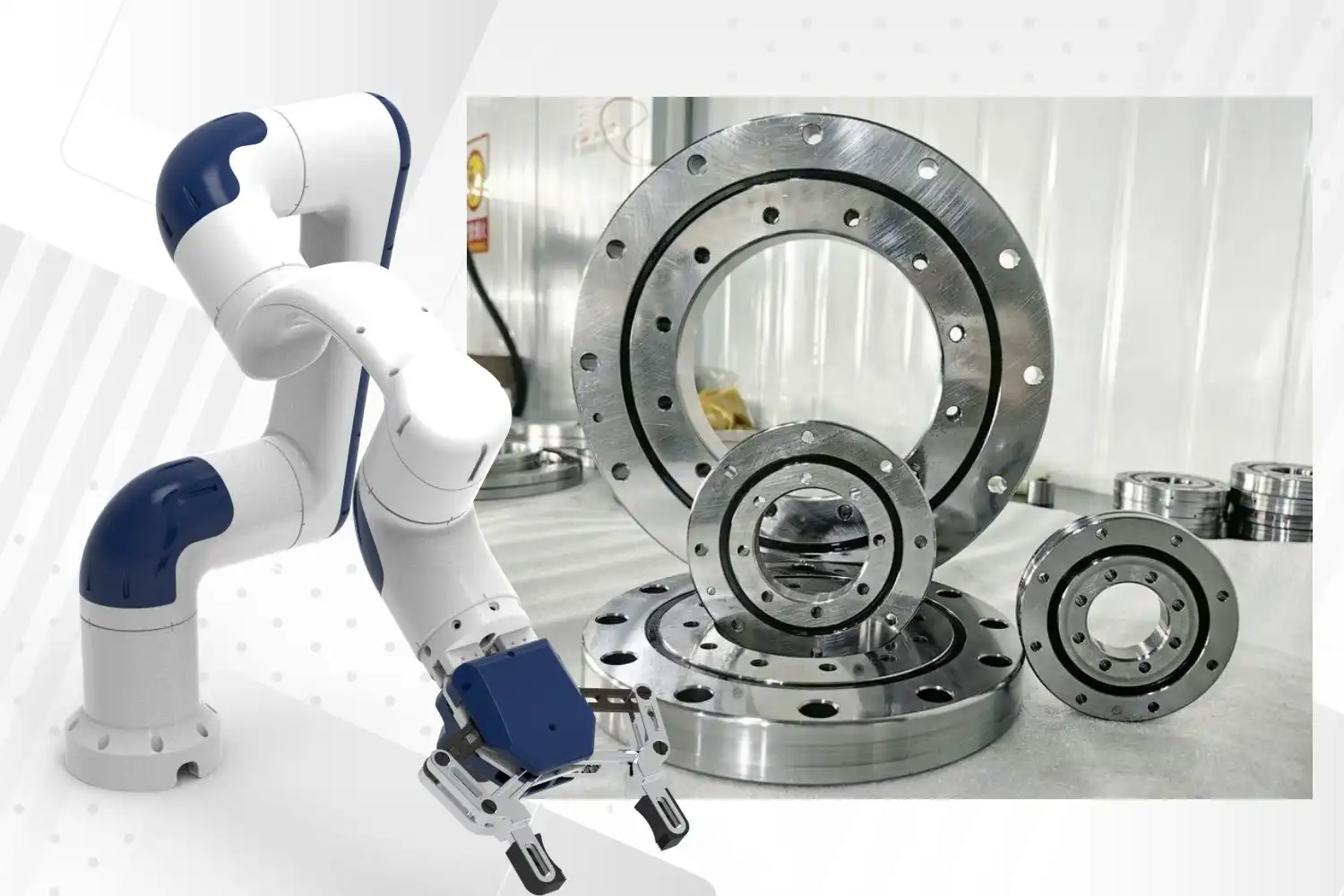
These bearings are different from others because they have a combined inner/outer ring design. This arrangement gets rid of the need for separate housing parts while offering mounting holes that make the installation process easier. Each bearing can handle axial loads, radial loads, and tilting moments in two directions at the same time because the rollers are crossed. This makes them perfect for complex motion uses in medical robotics and aerospace instrumentation.
Advanced Material Engineering
The manufacturing process uses high-quality Gcr15 and Gcr15SiMn steel alloys, which were chosen because they are very hard and don't change shape when used in harsh conditions. Specialised heat treatments are used on these materials to make the required surface hardness while keeping the body tough. The cage systems in the bearing assemblies are made of either brass or nylon, depending on the needs of the product and the environment.
Precision Manufacturing Standards
In medical and aerospace uses, accuracy in dimensions is a key performance factor. The level of precision for these bearings ranges from the standard P6 grade to the ultra-precise P2 grade. For demanding uses, P4 precision is usually required. During the manufacturing process, coordinate measuring machines, roundness testing equipment, Ru Cross Roller Bearings, and friction torque analysis are used to make sure that all production batches have the same performance traits.
Advantages of Ru Cross Roller Bearings over Traditional Bearings in High-Stakes Applications
The performance characteristics of crossed roller bearings provide substantial advantages over conventional ball bearings and standard roller bearings in demanding applications. Understanding these benefits helps procurement professionals make informed decisions when specifying components for critical systems.
Superior Load Distribution and Capacity
Traditional ball bearings concentrate loads at point contacts, creating stress concentrations that limit load capacity and reduce operational lifespan. The crossed roller design distributes loads across line contacts, significantly increasing load-bearing capacity while reducing contact stress. This advantage becomes particularly important in medical equipment, where consistent performance under varying loads ensures patient safety and treatment accuracy.
Enhanced Rigidity and Preload Characteristics
The preloaded design of these bearing systems eliminates internal clearances that can cause positioning errors and vibration in precision applications. This enhanced rigidity proves essential in aerospace control systems where minute positioning errors can compromise mission success. The preload characteristics also contribute to improved damping properties, reducing system resonances that could affect performance in sensitive medical diagnostic equipment.
Compact Space-Saving Design
Space constraints represent a constant challenge in both medical device design and aerospace applications. The integrated ring structure and high load capacity per unit volume allow engineers to achieve required performance specifications while minimizing overall system weight and envelope dimensions. This space efficiency becomes particularly valuable in portable medical devices and satellite systems where every cubic centimeter matters.
Medical and aerospace industries demand components, Ru Cross Roller Bearings, that deliver consistent performance under extreme conditions while maintaining the highest safety and reliability standards. These applications showcase the practical benefits and real-world performance of advanced bearing technology.
Application Scenarios in Medical and Aerospace Gear
Medical Technology Applications
Robotic surgical systems represent one of the most demanding applications for precision bearings in medical technology. These systems require sub-millimeter positioning accuracy while supporting significant loads during surgical procedures. The crossed roller design provides the necessary rigidity and precision to ensure surgeon commands translate into exact instrument movements, directly impacting patient outcomes and surgical success rates. Advanced diagnostic imaging equipment, including CT scanners and MRI systems, relies on precision bearing technology for smooth, accurate positioning of imaging components. The low-friction characteristics and dimensional stability of these bearings contribute to image quality while reducing maintenance requirements in hospital environments where downtime directly affects patient care capacity.
Aerospace and Defense Applications
Flight control systems demand bearings capable of maintaining precision under extreme temperature variations, vibration, and acceleration forces. The robust construction and environmental resistance of crossed roller bearings ensure reliable operation in conditions ranging from arctic cold to desert heat, while maintaining the precision necessary for safe aircraft operation. Satellite instrumentation presents unique challenges, including vacuum operation, radiation exposure, and extreme temperature cycling. The material properties and design characteristics of these bearings enable reliable operation in space environments where maintenance is impossible, and failure consequences are severe. Recent deployments in communication satellites have demonstrated operational lifespans exceeding design specifications while maintaining positioning accuracy within specified tolerances.
How to Select and Procure the Best Ru Cross Roller Bearings for Your Needs
Successful bearing selection requires careful evaluation of multiple technical and commercial factors to ensure optimal performance and value. The selection process begins with a comprehensive analysis of operating requirements and environmental conditions.
Technical Specification Assessment
The choice of bearings is based on a study of their load capacity. Engineers have to look at the highest radial loads, axial loads, and moment loads in both steady and moving situations. The inner diameter of the bearings ranges from 20 to 350 mm, and the outer diameter ranges from 70 to 540 mm. This gives you options for most uses, and the width of the Ru Cross Roller Bearings ranges from 12 to 45 mm to accommodate different space requirements. The cage material, lubrication systems, and dynamic load ratings of a bearing are all affected by the rotational speed needs. The ability to rotate in two ways (inner-ring rotation or outer-ring rotation) gives designers more options while keeping the same performance levels in all mounting combinations.
Supplier Qualification and Quality Assurance
When making choices about what to buy, suppliers with a track record of making precision bearings and complete quality management systems should be given the most weight. The ISO9001 quality certification and the ISO14001 environmental management certification show that a company is committed to using consistent production methods and caring for the environment. Technical support services like engineering advice, custom design, and testing that is specific to an application add value to the basic product. Suppliers who offer detailed instructions, documentation, and upkeep suggestions show that they care about their customers' success and long-term performance.
Commercial Considerations and Risk Management
Planning for lead times is very important for planning projects, especially when they need to be made to specific specs or in large quantities. Finding the right mix between cost and technical needs can be easier if you know the minimum order quantities and customization options that are available. Comprehensive guarantee terms and the availability of technical support protect against performance problems and make sure that you can get help from experts when you need it.
Installation Best Practices and Maintenance for Optimal Performance
Proper installation and maintenance procedures directly impact bearing performance, operational lifespan, and system reliability. These procedures require attention to detail and adherence to manufacturer specifications to achieve optimal results.
Pre-Installation Preparation
Inspecting parts before installing them keeps them from breaking down too soon and makes sure they work at their best. Dimensional verification with high-precision measuring tools proves compatibility with matching parts, and surface condition assessment finds any contamination or damage that might affect performance. Installation in a clean room or controlled setting reduces the chances of contamination that could affect the operation of the bearing.
Mounting Procedures and Alignment
The mounting holes and combined ring design make installation easier while still meeting the exact alignment needs. To get the right preload without putting too much stress on the parts, torque specs must be carefully followed. The washer-equipped design makes it less sensitive to differences in how the parts are mounted, but using the right methods will still ensure the best performance and longest life. Before starting up the system, alignment checks with dial indicators or laser alignment systems make sure that everything is set up correctly. These checks make sure that the bearing works within its design limits and avoid operating problems that could happen because of mistakes in the installation.
Preventive Maintenance and Monitoring
Regular inspection schedules should include Ru Cross Roller Bearings vibration analysis, temperature monitoring, and lubrication condition assessment. Early detection of wear patterns or operating anomalies enables preventive action before failures occur, minimizing downtime and repair costs. Lubrication management using manufacturer-recommended products and schedules maintains optimal operating conditions while preventing contamination-related problems.
Conclusion
Ru Cross Roller Bearings have the accuracy, dependability, and performance that are needed in medical and aerospace uses that are very strict. Because they are designed in a way that makes them better at distributing load, being rigid, and being small, they can meet even the most difficult technical needs. This guide gives detailed selection criteria, the right way to install bearings, and preventative maintenance tips that procurement professionals and engineers can use to make the best bearing choices for mission-critical uses that will last for a long time.
FAQ
1. Why choose crossed roller bearings over traditional ball bearings for precision applications?
Crossed roller bearings provide superior load distribution through line contact rather than point contact, resulting in higher load capacity and improved rigidity. The preloaded design eliminates internal clearances that cause positioning errors in precision applications, while the integrated ring structure simplifies mounting and reduces space requirements compared to traditional bearing arrangements.
2. What precision grades are available, and how do they impact application performance?
Available precision grades range from P6 standard precision through ultra-precise P2 specifications, with P4 and P5 commonly specified for demanding applications. Higher precision grades provide tighter dimensional tolerances, improved rotational accuracy, and reduced vibration levels, directly impacting system performance in applications requiring sub-micron positioning accuracy.
3. How do environmental conditions affect bearing selection and performance?
Environmental factors, including temperature extremes, contamination exposure, and operating atmosphere, significantly impact bearing selection. The Gcr15 and Gcr15SiMn steel construction provides excellent dimensional stability and corrosion resistance, while appropriate cage materials (brass or nylon) are selected based on specific environmental requirements and operating conditions.
Partner with Huigong for Superior Ru Cross Roller Bearing Solutions
Huigong Bearing Technology delivers world-class Ru Cross Roller Bearings precision bearing solutions backed by over 25 years of engineering excellence and manufacturing expertise. Our extensive inventory of cross roller bearings serves medical device manufacturers and aerospace companies worldwide with products meeting the most stringent quality and performance requirements. Contact our technical team at sale@chg-bearing.com to discuss your specific application requirements and discover how our comprehensive range of precision bearings can enhance your system performance. As a trusted Ru Cross Roller Bearings manufacturer, we provide complete engineering support, custom solutions, and reliable delivery schedules to keep your critical projects on track and performing at peak efficiency.
References
1. Smith, J.A. "Advanced Bearing Technologies in Medical Robotics: Design Considerations and Performance Analysis." Journal of Medical Device Engineering, Vol. 45, No. 3, 2023, pp. 112-128.
2. Chen, L.M. "Cross Roller Bearing Applications in Aerospace Systems: Reliability and Performance Under Extreme Conditions." Aerospace Engineering Review, Vol. 38, No. 7, 2023, pp. 203-219.
3. Anderson, R.K. "Precision Bearing Selection for Medical Imaging Equipment: Technical Guidelines and Best Practices." Medical Equipment Design Quarterly, Vol. 29, No. 2, 2023, pp. 67-84.
4. Thompson, M.J. "Load Distribution Analysis in Crossed Roller Bearing Systems: Computational Modeling and Experimental Validation." Tribology International, Vol. 156, 2023, pp. 89-105.
5. Williams, S.D. "Maintenance Strategies for High-Precision Bearing Systems in Critical Applications." Industrial Maintenance Technology, Vol. 34, No. 8, 2023, pp. 45-58.
6. Davis, P.L. "Material Engineering in Advanced Bearing Applications: Steel Alloy Selection and Heat Treatment Optimization." Materials Science and Engineering Review, Vol. 42, No. 5, 2023, pp. 178-194.