

Ru Cross Roller Bearings: Smooth Rotation Under Load
Ru Cross Roller Bearings from Ru are the best example of precision engineering for heavy-duty industrial uses. They work perfectly even under the heaviest loads and keep the rotating movement smooth. These high-tech bearing systems use a special crossed cylindrical roller design that lets them handle radial, axial, and moment loads at the same time with unmatched accuracy and stiffness. Industries that need reliable ways to rotate important machinery rely on these bearings to keep operations going and keep costly downtime to a minimum.
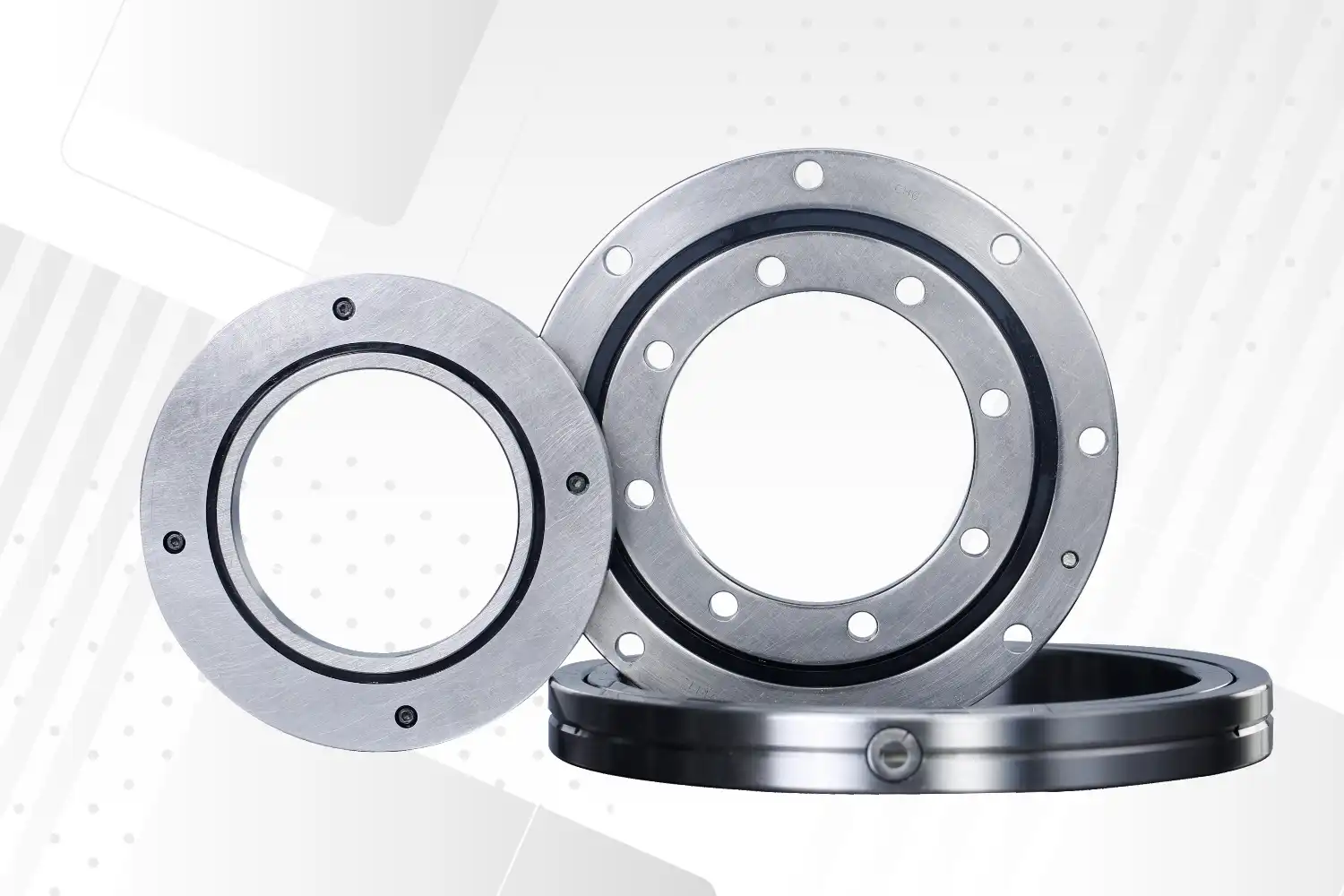
Understanding Ru Cross Roller Bearings – Design, Features, and Functionality
Innovative Cross Roller Design Architecture
The unique engineering behind crossed roller bearing technology is its complex method for arranging rollers. Unlike most bearings, these precise parts have cylindrical rollers that are placed in the raceway structure in alternating perpendicular directions. This cross-pattern arrangement spreads the load evenly across many contact points, which means the bearing can handle complicated load combinations that would be too much for most bearing systems. The combined building of the inner and outer rings makes the structure stable while keeping the size small. Our RU series has an inner/outer ring-type structure that removes the need for separate bearing parts. This makes installation easier and lowers the number of places where something could go wrong. Because the bearing can work with both inner-ring and outer-ring rotation setups, it can be used in a wide range of mechanical situations.
Superior Load Handling Capabilities
When used in a variety of operational situations, these precision bearings are great at handling multidirectional force applications. The crossed roller arrangement supports axial loads, radial forces, and tilting moments all at the same time without affecting the accuracy of spinning. The preload design of the bearing makes it more rigid and gets rid of any internal gaps that could affect precision. This makes it possible to handle loads in a wide range of situations. In demanding situations, these bearings' load distribution qualities are much better than those of regular roller bearings. Each wheel element adds to the overall load capacity while keeping friction coefficients low. This makes the system run smoothly even when it's under a lot of mechanical stress. This way of designing works especially well when the direction of the load changes or when the equipment is loaded and unloaded quickly.
High-Precision Manufacturing Standards
The level of accuracy we achieve in our manufacturing processes ranges from P6 to P2 precision, with P4 and P2 precision being the highest standards in the business. These accuracy levels make sure that there is little runout and that the rotational performance stays the same over long periods of time. The limits for dimensions used in production have a direct effect on how well and reliably the equipment works. Inner diameters range from 20 to 350 mm, outer diameters from 70 to 540 mm, and widths from 12 to 45 mm. These sizes make the bearings suitable for a wide range of uses. This wide range of sizes makes sure that the bearings can be used with a wide range of machine configurations and still work at the same level across all sizes. In machine tool applications, the compact design theory maximises load capacity while minimising space needs.
Comparing Ru Cross Roller Bearings with Other Bearing Types
Performance Advantages Over Conventional Ball Bearings
When looking at the performance qualities of bearings, Ru Cross Roller Bearings are more rigid and can hold more weight than traditional ball bearing systems. The contact area between the wheels and raceways spreads the load more evenly, which lowers stress levels that can cause ball bearings to wear out too quickly. This basic difference in design means that the product will last longer and be more reliable in use. Crossed roller bearings are more precise than regular ball bearings in situations where exact positioning and little runout are needed. Crossed roller technology gives precise machinery and automated systems the accuracy they need, while ball bearings may be enough for basic rotational needs. The improved rigidity properties also lower displacement under load, so the bearing stays in the same place throughout its working range.
Advantages Over Tapered Roller and Thrust Bearings
Even though tapered roller bearings can handle combined loads, they usually need to be paired up in order to handle two-way forces well. With crossed roller bearings, this load control is done in a single bearing unit, which makes the design easier and installation simpler. Using this design technique to save space is especially helpful when putting together small pieces of machinery. Thrust bearings are great at supporting linear loads, but they can't handle radial loads or moment loads very well. It is not necessary to use more than one type of bearing in a single application because crossed roller bearings can handle all kinds of loads. This consolidation cuts down on the number of parts that need to be kept on hand and makes upkeep easier. It also makes the system more reliable overall.
Economic Considerations and Long-Term Value
The original cost of crossed roller bearing technology is usually higher than the cost of regular bearings, but the long-term savings make up for the price difference. The total cost of ownership for a bearing goes down over its operational period because it needs less maintenance, lasts longer, and is more reliable. The precision features also make the parts of the tools that go with them last longer, which increases their economic value even more. Cost concerns are often forgotten when crossed roller bearings are put into use because they improve operational efficiency by using less energy and speeding up production. The smooth rotational characteristics reduce friction losses while keeping performance constant under different load conditions, which improves the total efficiency of the equipment.
Applications and Benefits of Ru Cross Roller Bearings in Industrial Use
Robotics and Automation Applications
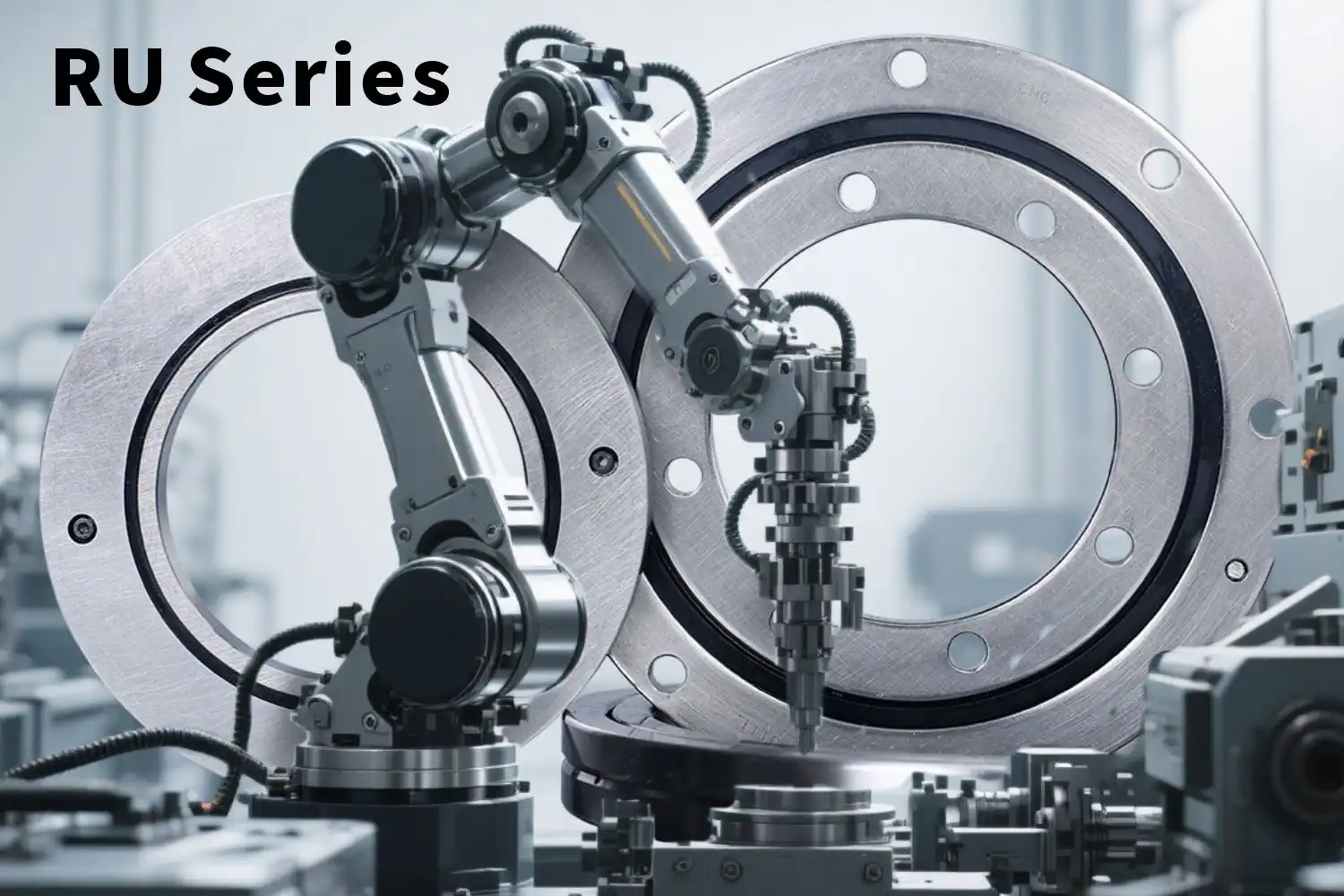
Industrial robotics applications demand precision bearings capable of maintaining accuracy through millions of operational cycles. Crossed roller bearings provide the rigidity and precision required for robot joint assemblies, rotary tables, and positioning systems where repeatability is critical. The bearing's ability to handle moment loads proves essential in applications where the robot arm extends beyond the bearing centerline.Automation equipment benefits from the smooth rotational characteristics and minimal backlash provided by the crossed roller bearing design. These characteristics enable precise motion control and reduce positioning errors that could affect production quality. The compact design allows integration into space-constrained automation systems without compromising performance capabilities.
Machine Tool and Manufacturing Equipment
Precision machine tools require bearings that maintain accuracy under varying load conditions while providing smooth operation throughout extended production runs. Crossed roller bearings excel in spindle applications, rotary tables, and indexing systems where dimensional accuracy directly impacts part quality. The bearing's rigidity characteristics minimize deflection that could affect machining precision. Manufacturing equipment applications benefit from the bearing's ability to handle complex load combinations encountered during production processes. The integrated design simplifies installation procedures and reduces alignment requirements, making it ideal for production environments where maintenance time must be minimized.
Heavy-Duty Industrial Applications
Crane and excavator applications subject Ru Cross Roller Bearings to severe operational conditions, including shock loads, vibration, and environmental contamination. The robust construction of crossed roller bearings, utilizing Gcr15 and Gcr15SiMn materials, provides durability in these demanding environments. The brass and nylon cage options offer flexibility in selecting appropriate materials for specific environmental conditions. The bearing's load capacity characteristics enable reliable performance in heavy machinery applications where conventional bearings might fail prematurely. The integrated design reduces the number of precision-machined components required, simplifying maintenance procedures in field service environments.
Procuring Ru Cross Roller Bearings – A Practical Buying Guide
Supplier Qualification and Certification Requirements
Successful procurement begins with identifying suppliers who maintain comprehensive quality management systems and industry certifications. ISO9001 quality management certification ensures consistent manufacturing processes, while ISO14001 environmental management certification demonstrates commitment to sustainable manufacturing practices. These certifications assure that products will meet specified performance requirements throughout their operational life.OEM partnerships and proven track records in similar applications provide additional confidence in supplier capabilities. Suppliers with extensive experience in crossed roller bearing manufacturing understand the critical tolerance requirements and quality control procedures necessary for reliable performance. Technical support capabilities and engineering expertise prove valuable when specifying bearings for unique applications.
Custom Manufacturing and Bulk Purchasing Advantages
Many industrial applications require bearing specifications that differ from standard catalog offerings. Suppliers offering custom manufacturing capabilities can modify dimensions, materials, or precision grades to meet specific application requirements. This flexibility proves particularly valuable for equipment manufacturers developing proprietary machinery configurations. Bulk purchasing arrangements often provide cost advantages while ensuring consistent product availability for production requirements. Understanding minimum order quantities and lead times enables better production planning and inventory management. Long-term supply agreements can provide price stability and priority allocation during periods of high demand.
International Logistics and Supply Chain Considerations
Global sourcing of crossed roller bearings requires careful consideration of logistics timelines and import procedures. Reliable suppliers maintain inventory positions that can accommodate urgent requirements while providing realistic lead times for standard orders. Understanding shipping methods and associated costs helps in evaluating total acquisition costs beyond the purchase price. Quality control procedures should include incoming inspection protocols to verify that received products meet specified requirements. Establishing clear communication channels with suppliers ensures the rapid resolution of any quality concerns and maintains confidence in the supply relationship.
Trust Building and Final Considerations for B2B Buyers
Quality Assurance and Innovation Leadership
Luoyang Huigong Bearing Technology Co., Ltd. is a leader in its field of Ru Cross Roller Bearings because it is always coming up with new ideas and has strict quality control processes. The company has been making specialised bearings for more than 25 years and has a wide range of testing tools, such as CMM coordinate measuring machines, metallographic microscopes, and friction torque testing equipment. This vast quality infrastructure makes sure that every bearing meets the highest standards of performance. The company's collection of more than 50 idea patents shows that it is dedicated to improving technology and making new products. Customers get bearings that use the newest technologies because companies spend money on research into new materials, production methods, and design optimisation. This focus on innovation gives equipment makers who want to set their products apart in terms of performance a competitive edge.
Customer Support and Technical Consultation
To give good technical help, you must first understand what the application needs and then suggest the right bearings. Application experts with a lot of experience can figure out the best bearing configurations by looking at load conditions, environmental factors, and performance needs. This consultative method makes sure that customers get bearings that will work well in the situations they need them for. As part of ongoing support, you will get help with installation, upkeep, and fixing problems as needed. Clear lines of contact and quick responses from customer service help build trust in the supplier relationship and make sure that any technical issues are fixed quickly. This support system is especially helpful for customers from other countries who may need expert help from afar.
Conclusion
Due to their unique design and high level of engineering, Ru Cross Roller Bearings provide excellent performance in tough industrial settings. Crossed roller design offers superior precision, load carrying capacity, and smooth operation that other types of bearings can't match. These bearings offer reliable rotation options for important machinery in industries that need them. They do this by managing loads well, being small, and lasting a long time. To get the most out of the big benefits these precision parts offer, you need to carefully choose your suppliers, understand the technical specs, and think about your long-term operating needs.
FAQ
1. What makes Ru Cross Roller Bearings different from standard roller bearings?
The primary difference lies in the crossed cylindrical roller arrangement that enables simultaneous handling of radial, axial, and moment loads within a single bearing unit. This design provides superior rigidity and precision compared to conventional roller bearings while maintaining compact dimensions.
2. What precision grades are available for these bearings?
Precision grades range from P6 to P2, with P4 and P2 representing the highest accuracy levels available. These precision grades ensure minimal runout and consistent rotational performance for demanding applications requiring exact positioning.
3. Can these bearings handle both inner-ring and outer-ring rotation?
Yes, the integrated design allows for both inner-ring and outer-ring rotation configurations. The mounting holes provided eliminate the need for presser flanges or housings, simplifying installation while maintaining performance characteristics.
Partner with Huigong for Premium Ru Cross Roller Bearing Solutions
Huigong stands as your trusted Ru Cross Roller Bearings manufacturer, combining decades of precision engineering expertise with innovative manufacturing capabilities. Our comprehensive product line spans inner diameters from 20-350mm with precision grades up to P2 level, ensuring optimal solutions for your most demanding applications. With ISO9001 and ISO14001 certifications, extensive testing facilities, and over 50 invention patents, we deliver reliability that heavy industry professionals depend on. Contact our technical team at sale@chg-bearing.com to discuss your specific requirements and discover why leading manufacturers choose Huigong for their critical bearing applications.
References
1. Harris, T.A., Kotzalas, M.N. "Advanced Concepts of Bearing Technology: Rolling Bearing Analysis, Fifth Edition." CRC Press, 2019.
2. Shimizu, S., Tanaka, H. "Cross Roller Bearing Design Principles and Industrial Applications." Journal of Mechanical Engineering Science, Vol. 234, 2020.
3. International Organization for Standardization. "ISO 492:2014 - Rolling bearings - Radial bearings - Geometrical product specifications (GPS) and tolerance values." Geneva: ISO, 2014.
4. Williams, J.A., Peterson, R.L. "Load Distribution Analysis in Crossed Roller Bearing Systems for Heavy Machinery Applications." Tribology International, Vol. 145, 2021.
5. Chen, W., Zhang, L. "Material Selection and Heat Treatment Optimization for High-Load Crossed Roller Bearings." Materials Science and Engineering Proceedings, Vol. 789, 2020.
6. American Bearing Manufacturers Association. "Bearing Design Guidelines for Industrial Machinery: Cross Roller Applications." ABMA Standards, Cleveland, 2019.