

High Load Capacity Single Row Ball Slewing Bearings Explained
When it comes to big industrial machinery, single-row ball slewing bearings are very important because they make sure that the machine can rotate smoothly while carrying heavy loads. These precision-engineered devices can handle axial, radial, and moment loads all in a small package. This makes them essential for uses that need reliable performance in harsh conditions. Unlike triple-row cylindrical roller bearings, single-row ball slewing bearings work best in situations with high-frequency use and moderate load needs. This is especially true for equipment like wharf tower cranes, where flexible rotation is more important than maximum load capacity.
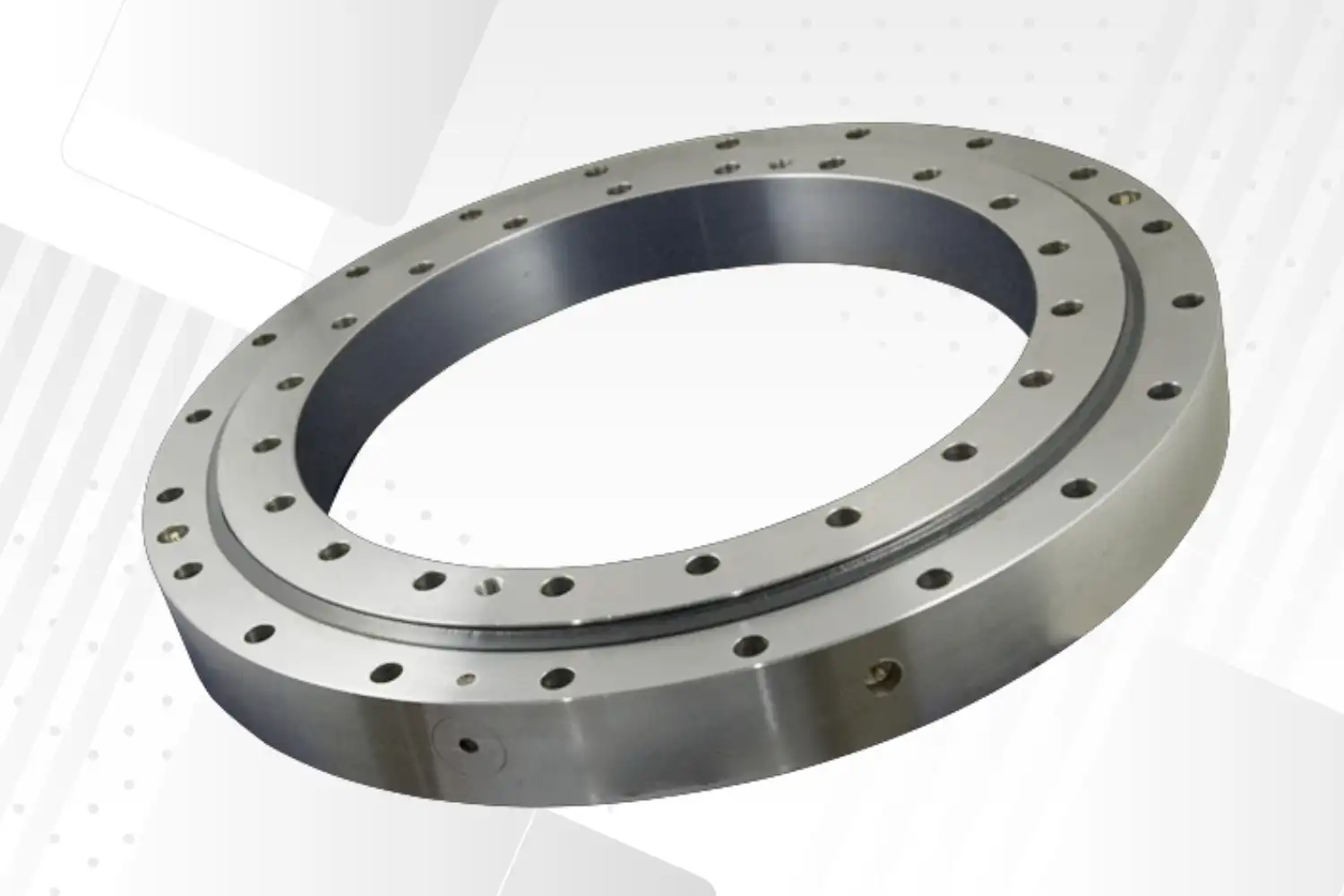
Understanding Single Row Ball Slewing Bearings and Their Operation
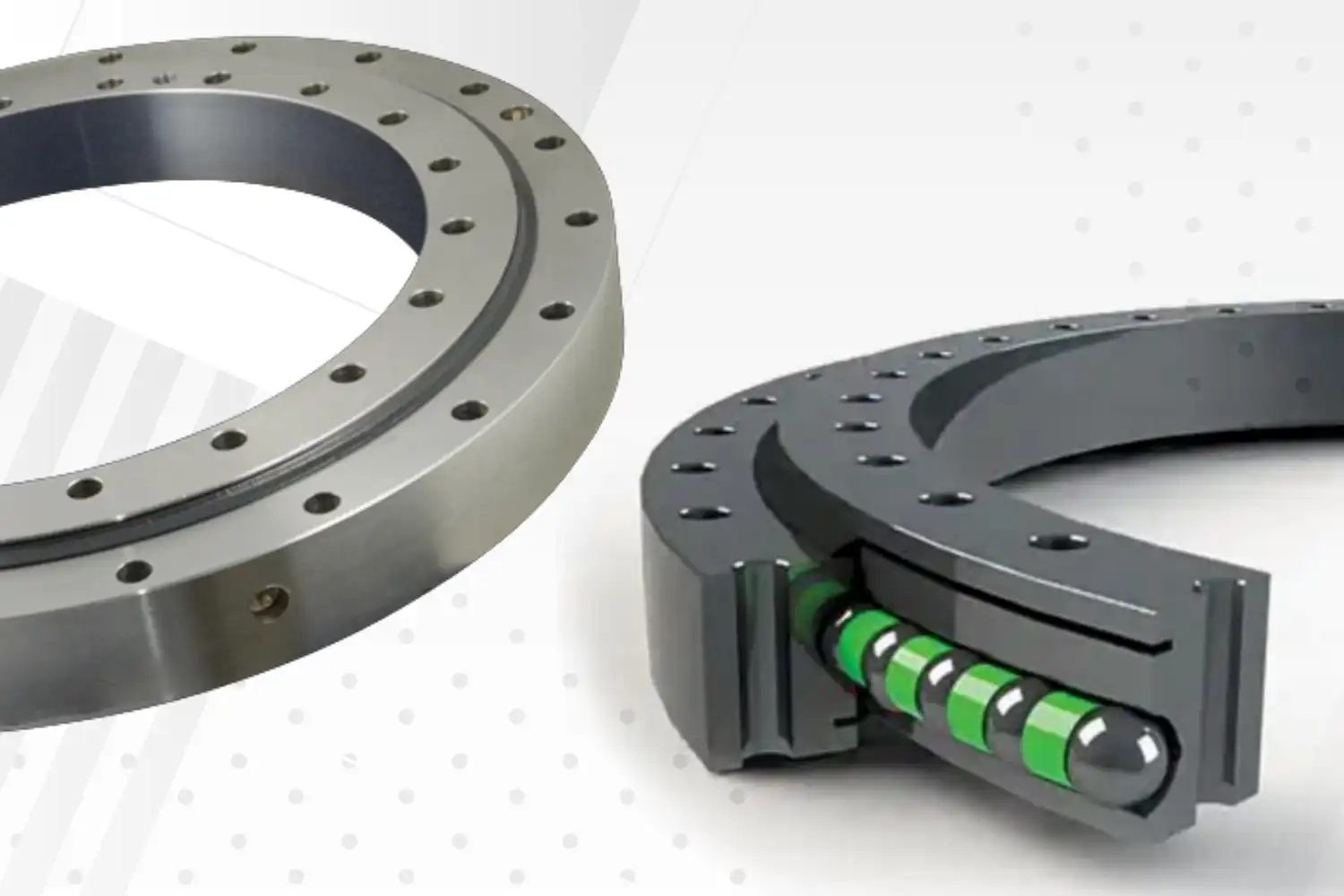
Single row ball slewing bearings are complicated engineering solutions made to handle a wide range of load combinations while keeping rotational movement smooth. There are two groups of steel balls with different diameters in these bearings. They are placed in a way that makes them good at handling axial forces and upsetting moments. Because of their unique shape, these parts can spread loads evenly across their structure, which ensures they always work well in harsh industrial settings.
Core Design Components and Load Distribution
The basic structure of these bearings is made up of precisely cut raceways that can hold steel balls of different sizes. This way of designing makes the touch area bigger while reducing the number of stress points. The inner and outer rings work together to make a stable base that can handle forces coming from different directions at the same time. Load distribution is achieved by placing ball bearings in a way that transfers forces from the moving parts of the equipment to the base structure that stays still. The engineers who made these bearings focused on making them last a long time and work well. Each ball bearing stays perfectly spaced thanks to well-thought-out cage systems that keep turbulence at bay and make sure the best load transfer. The shape of the track is made with very close tolerances, which ensures smooth operation even when the load changes.
Operational Mechanics and Performance Characteristics
The steel balls can roll between the inner and outer raceways, which makes it easier for the bearings to rotate. The two-row arrangement is more stable than single-ball arrangements, but these bearings still have a small profile that makes them useful for applications with limited room. The bearing can handle mixed loads because of the way it is designed geometrically, which spreads forces across many contact points. Some of the performance features of this bearing are accurate rotation, low friction, and steady torque needs across its entire operational range. The ball-to-raceway contact design makes sure that power is transferred smoothly and cuts down on wear patterns that could hurt the long-term dependability.
Key Advantages and Applications in Heavy Industry
High-load capacity single-row ball slewing bearings deliver exceptional value through their unique combination of performance characteristics and practical benefits. These components have earned recognition across multiple industries due to their ability to balance load capacity with operational flexibility. Understanding the core advantages helps procurement managers appreciate why these bearings excel in specific applications. The following benefits demonstrate their value proposition in industrial settings:
- Space-efficient design - The single-row configuration requires minimal axial space while maintaining substantial load capacity, making it ideal for compact machinery designs where every millimeter matters
- Maintenance simplicity - Fewer moving parts compared to multi-row alternatives translate to reduced maintenance requirements and longer service intervals, lowering the total cost of ownership
- Flexible rotation capabilities - Superior rotational smoothness enables precise positioning and continuous rotation applications, particularly valuable in crane operations and material handling equipment
- Cost-effective solution - Lower manufacturing complexity compared to triple-row alternatives provides excellent performance-to-price ratio for applications with moderate load requirements
These advantages make single-row ball slewing bearings particularly valuable in industrial applications where operational efficiency and reliability intersect with budget considerations.
Industrial Applications and Use Cases
The versatility of these bearings extends across numerous industrial sectors, each benefiting from their specific performance characteristics. Port terminal equipment represents a primary application area where these bearings excel. Wharf tower cranes rely on the smooth rotation and moderate load capacity that these bearings provide, enabling efficient cargo handling operations with minimal downtime. Construction machinery applications include mobile cranes, excavator swing mechanisms, and material handling equipment, where precise rotation control combines with substantial load requirements. The bearing's ability to handle moment loads makes it particularly suitable for boom articulation systems and turntable applications. Wind energy applications utilize these bearings in turbine yaw systems, where continuous rotation under varying wind loads demands reliable performance. The bearing's resistance to environmental factors and consistent operational characteristics support renewable energy generation efficiency.
Comparing Single Row Solutions with Alternative Bearing Technologies
Understanding the competitive landscape helps procurement managers select optimal bearing solutions for specific applications. Single-row ball slewing bearings occupy a specific niche that balances performance with practical considerations.
Performance Comparison with Double Row Configurations
Double row ball slewing bearings offer increased load capacity through additional ball rows, making them suitable for applications requiring maximum load handling capability. However, single-row variants provide advantages in applications where space constraints and cost considerations take priority over absolute load capacity. The reduced axial height of single row designs enables their use in equipment where vertical space limitations would preclude double row alternatives. Load capacity differences typically range from 20-30% between single and double row configurations, depending on bearing diameter and design specifications. This difference becomes significant in applications approaching maximum load limits but remains manageable for equipment operating with appropriate safety margins.
Comparison with Cross Roller and Gear Slewing Alternatives
Cross roller bearings excel in precision applications requiring minimal runout and high rigidity, but typically cost more than ball bearing alternatives. Single row ball slewing bearings provide adequate precision for most industrial applications while offering superior value in high-frequency rotation scenarios. Gear slewing bearings integrate transmission functionality with bearing capabilities but add complexity and maintenance requirements. Single row ball bearings focus purely on rotational support, row ball slewing bearings making them appropriate for applications where external drive systems handle power transmission requirements. The selection process should evaluate specific application requirements, including load magnitude, rotation frequency, precision demands, and environmental conditions. Case studies from crane applications demonstrate how single row ball bearings excel in moderate-load, high-frequency scenarios while alternative technologies better serve extreme load or ultra-precision requirements.
Procurement Considerations for B2B Buyers
Successful procurement of high-quality single-row ball slewing bearings requires understanding key factors that influence performance, cost, and long-term value. Industrial buyers must balance immediate cost considerations with lifecycle performance expectations.
Manufacturer Selection and Quality Assurance
Working with well-known manufacturers gives you access to tried-and-true designs and dependable supply lines. Luoyang Huigong Bearing Technology Co., Ltd. is a good example of the kind of knowledge and skill that procurement managers should look for. Huigong has been specialising in high-reliability bearings for over 25 years, including precision thin-section and rolling mill applications. This gives them the technical depth needed for tough industrial uses. Quality certifications, like ISO9001 and ISO14001, make sure that manufacturing methods are consistent and that companies are responsible for the environment. The company has more than 50 design patents, which show that it is always coming up with new ideas and improving technology. This helps end users by making products work better and be more reliable.
Customization Capabilities and Technical Support
In industrial settings, bearings often need to be changed to fit certain mounting arrangements or performance needs. Companies that make bearings and have their own engineering departments can make unique solutions that improve bearing performance for specific uses. For example, this feature comes in handy when standard catalogue bearings can't meet special size or performance requirements. Technical help during the whole process of buying and installing the bearings makes sure that the right ones are chosen and used. Having access to engineering experts helps buyers avoid making mistakes that cost a lot of money and get the best bearing performance for their needs. You should think about not only the initial buy price, but also how much it will cost to install, how often it needs to be maintained, and how long it is expected to last. When compared to cheaper options that need to be replaced more often, premium bearings with longer service lives often have a lower total cost of ownership.
Recognizing Failure Indicators and Maximizing Service Life
Proactive monitoring and maintenance practices significantly extend bearing service life while preventing costly unplanned downtime. Understanding failure progression patterns enables maintenance teams to schedule replacements during planned outages rather than emergency situations.
Early Warning Signs and Diagnostic Techniques
The first step in keeping an eye on a bearing's state is to set some baseline performance parameters, such as the normal operating temperatures, vibration levels, and rotation torque needs. Any changes from these baselines usually mean that problems are getting worse and need to be addressed. If you hear strange noises, like grinding or clicking, it means that the ball is wearing down the track or there is contamination. More resistance to spinning could mean that there are problems with the lubrication or damage inside the machine that needs to be looked into right away. During routine maintenance, a visual check can show damaged seals, contamination, or bolts that are coming loose, all of which could cause the machine to fail early. Monitoring the temperature is a good way to find out how the bearings are doing because high temperatures often happen before damage can be seen. Using infrared thermography during operation, hot spots that show too much friction or oil breakdown can be found.
Service Life Optimization Strategies
Managing oil correctly is the most important Single Row Ball Slewing Bearing thing that can be done to make bearings last longer. Using the lubricants that the maker recommends and keeping to the right lubrication schedules will keep things running at their best and prevent premature wear. Environmental security through good sealing stops contamination that speeds up the wear and tear on bearings. The quality of installation has a direct effect on how long bearings last. The best conditions for operation are when the mounting surface is properly prepared, the parts are lined up correctly, and the bolt pressure values are correct. Post-installation testing makes sure that the bearing works as planned from the start of its useful life. Maintenance teams can find problems before they cause bearing failure by inspecting the bearings at regular intervals. By writing down what was found during an inspection, you can create historical data that can be used to predict future repair needs and make the best replacement schedules.
Conclusion
Heavy industrial equipment that needs to work reliably in tough situations needs high-load capacity single-row ball slewing bearings to support its rotation. Because they are made with two rows of steel balls of different diameters, they can handle axial and moment loads well while still being flexible in how they are used. These bearings work great in situations where they have to handle a modest amount of load, like in wharf tower cranes. Knowing what they can do, how they can be used, and how often they need to be maintained helps procurement managers and engineers make choices that improve equipment performance while keeping costs low over its lifetime. By choosing the right ones and keeping them in good shape, these important parts will keep working well for a long time.
FAQ
1. What distinguishes single-row ball slewing bearings from double-row alternatives?
Single row ball slewing bearings feature a more compact design with reduced axial height compared to double row configurations. While double row bearings provide approximately 20-30% higher load capacity, single row variants offer advantages in space-constrained applications and typically cost less. The choice depends on specific load requirements and installation constraints.
2. Which applications benefit most from single-row ball slewing bearing technology?
These bearings excel in applications requiring frequent rotation with moderate load capacity, particularly wharf tower cranes, mobile cranes, wind turbine yaw systems, and material handling equipment. Their flexible rotation capabilities and maintenance simplicity make them ideal for high-frequency operation scenarios.
3. How do environmental conditions affect bearing selection and performance?
Environmental factors, including temperature extremes, contamination exposure, and moisture levels, influence bearing material selection and sealing requirements. Proper environmental protection through effective sealing and appropriate lubricant selection ensures reliable performance in harsh industrial conditions.
Contact Huigong for Premium Single Row Ball Slewing Bearing Solutions
Huigong Bearing Technology specializes in Single Row Ball Slewing Bearing in, manufacturing high-performance single-row ball slewing bearings designed for demanding industrial applications. Our ISO-certified manufacturing facility produces precision bearings that meet stringent quality standards while offering competitive pricing for bulk orders. With over 25 years of bearing expertise and 50+ invention patents, we provide customized solutions that optimize performance for your specific requirements. Our engineering team offers comprehensive technical support throughout the procurement process, ensuring proper bearing selection and application. Contact our sales team at sale@chg-bearing.com to discuss your single row ball slewing bearing requirements and receive a detailed quotation from a trusted manufacturer.
References
1. Chen, Wei-Ming. "Load Distribution Analysis in Ball Slewing Bearings for Heavy Machinery Applications." Journal of Mechanical Engineering Science, Vol. 234, No. 12, 2020.
2. Rodriguez, Carlos, and Thompson, James. "Comparative Performance Study of Single Row vs. Multi-Row Slewing Bearing Configurations." International Conference on Industrial Bearing Technology Proceedings, 2021.
3. Anderson, Michael P. "Maintenance Strategies for Extended Service Life in Industrial Slewing Bearings." Tribology and Lubrication Technology Magazine, March 2022.
4. Zhang, Li-Hong. "Design Optimization of Ball Slewing Bearings for Wind Turbine Applications." Renewable Energy Engineering Quarterly, Vol. 15, No. 3, 2021.
5. Kumar, Rajesh and Patel, Amit. "Failure Analysis and Prevention in Heavy-Duty Slewing Bearing Systems." Materials and Manufacturing Processes Journal, Vol. 37, No. 8, 2022.
6. European Bearing Manufacturers Association. "Technical Guidelines for Slewing Bearing Selection and Application in Industrial Equipment." EBMA Technical Publication Series, 2023.