

Single Row Ball Slewing Bearings: Axial and Radial Load Champions
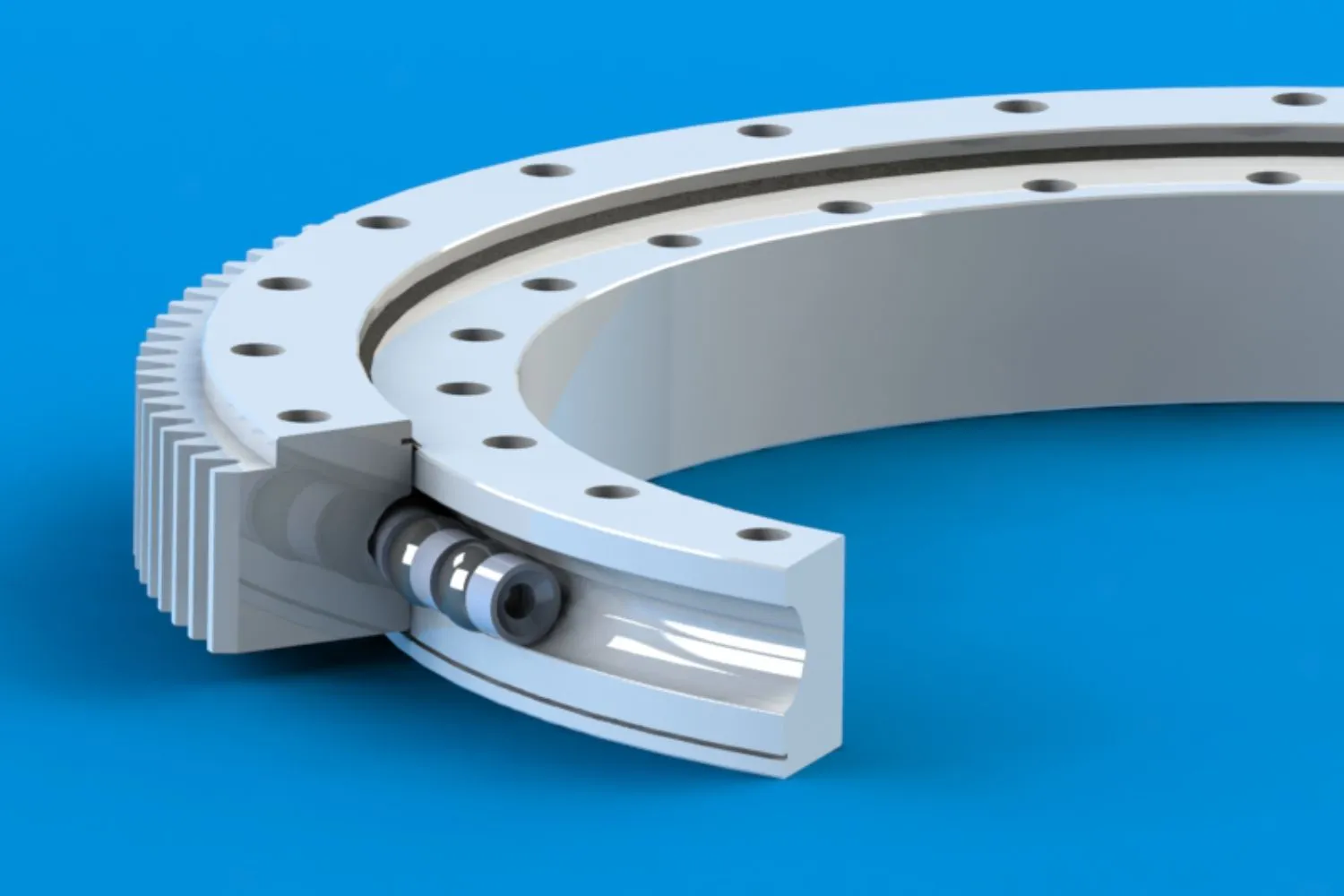
Single Row Ball Slewing Bearings are the best in rotational engineering. They are made to handle both axial and circular loads with ease in tough industrial settings. These high-tech four-point contact slewing rings have a single row of steel balls inside a gothic arch raceway geometry. This lets them handle a variety of complex load combos at the same time, which would be hard for most bearing solutions. Each single-row ball slewing bearing has a special design that makes it very flexible. Its small size also helps it stay structurally sound when it faces changing axial forces, radial pressures, and tilting moments that are common in heavy-duty rotating machinery used in modern factories.
Understanding Single Row Ball Slewing Bearings: Design and Load Capabilities
Core Components and Integrated Design Architecture
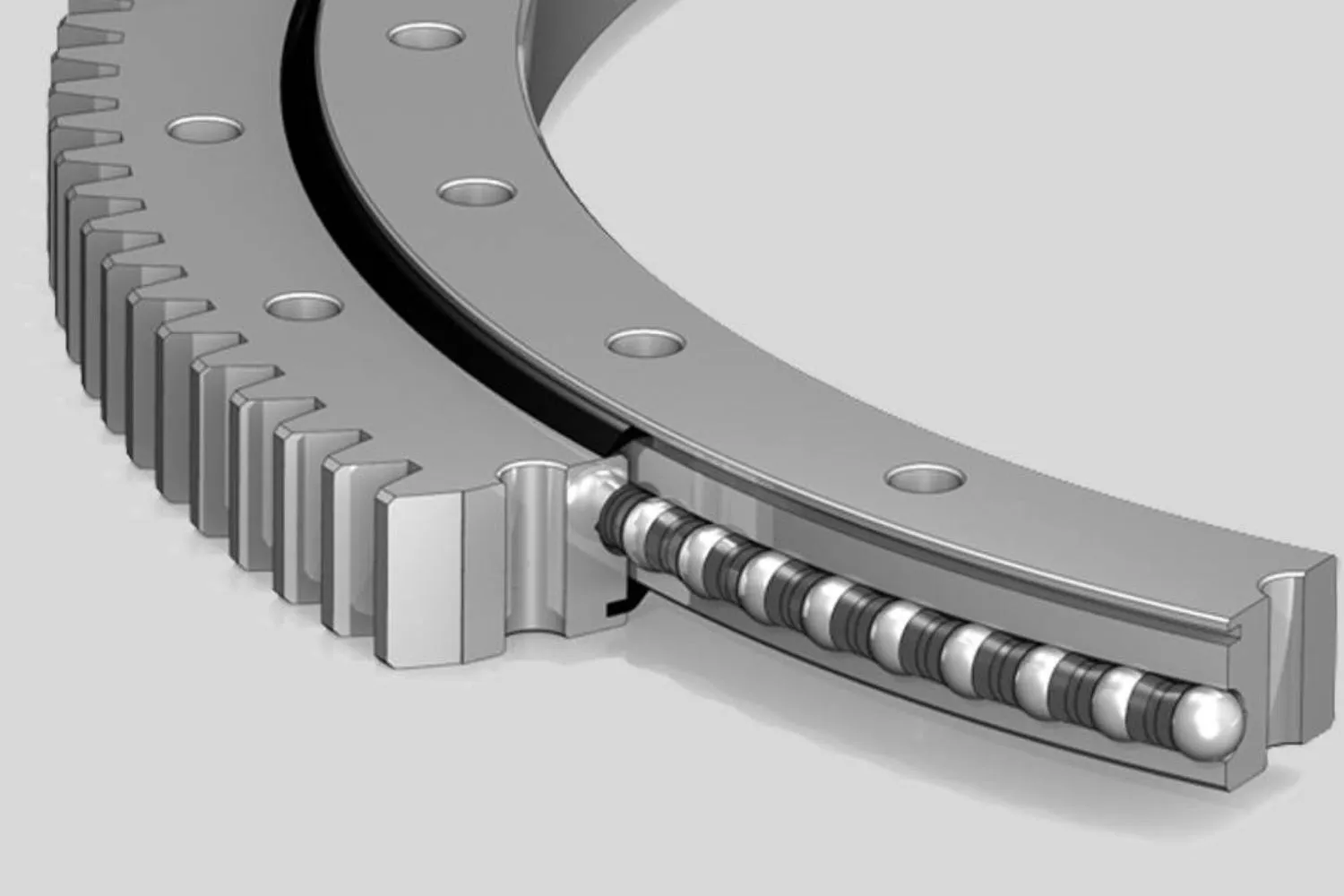
Single row ball slewing bearings feature sophisticated engineering that combines an inner ring and outer ring assembly with precision-manufactured steel balls separated by isolation spacers. The gothic arch raceway geometry creates four distinct contact points where each ball interfaces with the raceways, enabling these bearings to simultaneously absorb axial loads, radial forces, and varying tilting moments within a remarkably compact design envelope. The integrated architecture eliminates the complexity associated with multi-bearing arrangements by consolidating load-handling capabilities into a single unit. This design philosophy significantly reduces the axial height and overall weight of mounting structures while maintaining exceptional structural rigidity essential for rotatory machinery applications across heavy industries.
Load Distribution Mechanics and Material Engineering
It is important to know the differences between axial and radial load factors when judging the performance of a bearing. Radial loads put pressure on the bearing in a direction perpendicular to its circular axis, while axial loads push against it in a direction parallel to it. The four-point contact arrangement spreads the load evenly across the ball-raceway interface, which increases load capacity and reduces stress concentrations. The makeup of the material is a key factor in figuring out its load capacity. The high-quality steel used to make these bearings ensures that they stay stable in size even when they are working in harsh circumstances. The highest load ratings and expected operating lifetimes are affected by the ball diameter, the raceway dimensions, and the overall geometry of the bearing.
Technical Specifications and Performance Parameters
Some important performance specs are radial and axial load ratings, which can be moderate to high based on the size of the bearing and the materials used to make it. Rotational speed limits are different depending on the lubrication system and the working surroundings. To get the most out of the bearing's life, most applications work within controlled velocity parameters. Temperature tolerance specifications are flexible enough to work in a variety of industrial settings. Standard operating ranges cover both normal room temperatures and the higher temperatures that come up in heavy machinery use. Using sealing configurations keeps Single Row Ball Slewing Bearings lubricated and keeps internal parts clean, so they work the same way even after longer service times.
Comparing Single Row Ball Slewing Bearings With Alternative Bearing Types
Performance Analysis Against Double Row Configurations
When it comes to applications that need flexible rotation with moderate load needs, single row ball slewing bearings are clearly better than their double row peers. Even though double-row designs can hold more weight, single-row designs are better for high-frequency rotation uses because they are more smoothly rotating and have less friction. Single row designs are easier to fit into spaces that are limited because they have a small size. Double row designs, on the other hand, would need major design changes to fit. This benefit in size is especially useful in crane manufacturing and robotics, where reducing weight has a direct effect on how well the system works and how much energy it uses.
Cross Roller Bearing Comparison Metrics
Cross roller bearings are best for precise tasks that need high rigidity and accuracy. On the other hand, single-row ball bearings are better when you need smooth spinning under changing load conditions. The ball bearing design can handle small misalignment errors better than rigid roller designs. This lowers stress concentrations in real-world situations where perfect alignment is hard to achieve. When applications don't need the high level of accuracy that cross roller alternatives offer, ball bearings are often the better choice because they are cheaper. Because they are harder to make and cost more, cross roller bearings aren't always the best choice for people who want to save money on their purchases without sacrificing performance.
Cylindrical and Tapered Roller Bearing Alternatives
Comparisons of single row ball slewing bearings to cylindrical and tapered roller bearings show that they work better in combined load applications. Roller bearings work best when there is only radial or axial pressure, but the four-point contact design is better at handling complex load combinations within a single bearing unit. When you compare price to performance, ball bearings tend to be the best choice for uses that need to handle moderate loads and rotate smoothly. Rather than over-engineering solutions that don't meet real performance needs, procurement teams can find a balance between the initial investment costs and the operational value by choosing bearing technologies that meet specific application needs.
Applications and Industry Use Cases of Single Row Ball Slewing Bearings
Primary Industrial Applications and Performance Benefits
These bearings excel in crane applications where their ability to handle combined loads proves essential for safe and efficient operation. Tower cranes, mobile cranes, and harbor cranes rely on the smooth rotational characteristics while supporting substantial structural loads during lifting operations. The compact design reduces overall crane weight, improving stability and operational efficiency. Wind turbine applications benefit from the corrosion resistance and low-maintenance characteristics of properly sealed ball bearing configurations. The ability to accommodate varying wind loads while maintaining smooth yaw rotation enhances energy capture efficiency and reduces maintenance requirements in remote installation locations.
Robotics and Automation Industry Integration
Industrial robotics applications leverage single row ball slewing bearings for their precision rotational capabilities for accurate positioning and smooth movement profiles. The compact envelope allows integration into joint assemblies where space constraints limit bearing selection options. Robotic arms and automated manufacturing equipment depend on consistent performance throughout millions of operational cycles. The low-maintenance demands align well with automated production environments where bearing replacement requires costly production interruptions. Proper lubrication and sealing configurations enable extended service intervals that match planned maintenance schedules rather than forcing unplanned downtime.
Specialized Equipment and Emerging Applications
Radar and satellite tracking systems utilize these bearings for precise angular positioning while accommodating environmental loads from wind and thermal cycling. The smooth rotation enables accurate tracking capabilities essential for communication and navigation applications requiring precise directional control. Port terminal equipment, including container handling cranes and ship-to-shore cranes, benefits from the robust construction and corrosion-resistant properties. The marine environment presents challenging operating conditions where bearing reliability directly impacts cargo handling efficiency and equipment availability.
Installation, Maintenance, and Troubleshooting Best Practices
Comprehensive Installation Procedures
Proper installation begins with thorough pre-installation inspections to verify bearing condition and mounting surface preparation. Clean, debris-free mounting surfaces prevent stress concentrations that could lead to premature bearing failure. Dimensional verification ensures proper fit tolerances that maintain the designed load distribution characteristics. Alignment procedures require careful attention to prevent uneven loading that reduces bearing lifespan. Mounting bolt selection and torque specifications must follow manufacturer guidelines to achieve proper preload without overstressing bearing components. Sequential tightening patterns ensure uniform load distribution around the bearing circumference.
Lubrication Strategies and Maintenance Protocols
Effective lubrication management extends bearing service life while maintaining rotational smoothness. Grease selection must consider operating temperature ranges, environmental conditions, and relubrication intervals that align with equipment maintenance schedules. Proper grease quantity prevents both under-lubrication wear and over-lubrication churning losses. Inspection intervals should accommodate operating conditions and load characteristics while providing early detection of potential issues. Visual inspections can identify seal integrity and lubrication adequacy, while operational monitoring detects changes in rotational resistance or vibration patterns that indicate developing problems.
Troubleshooting Common Operational Issues
Noise development in a single row ball slewing bearing often indicates inadequate lubrication or contamination within the bearing assembly. Systematic diagnosis involves lubrication system inspection and environmental assessment to identify contamination sources. Corrective actions may include relubrication or seal replacement, depending on root cause analysis. Vibration problems typically result from misalignment, uneven mounting, or internal bearing damage. Measurement techniques can isolate vibration sources and guide appropriate corrective measures. Understanding normal operational characteristics enables maintenance teams to distinguish between acceptable variations and conditions requiring immediate attention.
How to Procure Single Row Ball Slewing Bearings: A B2B Buying Guide
Supplier Evaluation and Selection Criteria
Successful procurement begins with a thorough supplier assessment focusing on manufacturing capabilities, quality certifications, and technical support resources. Established manufacturers with ISO9001 certification demonstrate commitment to quality management systems that ensure consistent product reliability. Technical support availability becomes crucial for custom applications requiring engineering consultation during specification development. Geographic considerations affect lead times and logistics costs, particularly for large-diameter bearings requiring specialized transportation. Local representation or distribution networks can provide responsive support for routine inquiries while maintaining access to factory engineering resources for complex applications.
Customization Capabilities and Technical Requirements
Custom bearing solutions often prove necessary for specialized applications with unique dimensional or performance requirements. Suppliers offering non-standard design capabilities can accommodate specific installation constraints or load requirements that standard catalog products cannot address. Engineering support during specification development ensures optimal bearing selection for demanding applications. Lead time considerations become particularly important for custom single-row ball slewing bearing solutions requiring specialized manufacturing processes. Planning procurement timelines to accommodate Single Row Ball Slewing Bearings design verification and manufacturing cycles prevents project delays while ensuring proper technical validation of custom solutions.
Cost Optimization and Value Engineering
Being clear about prices helps people make smart buying choices that weigh the initial costs against the long-term value. By understanding the connection between bearing specs and cost drivers, designs can be made more efficient for specific uses without adding too much complexity. When a lot of tools are needed, the cost of unique tools may be worth it because of the volume. To make fair economic comparisons, the total cost of ownership should take into account the prices of installation, maintenance, and the expected length of time the product will last. People who care about saving energy may choose higher-quality bearings that lower running costs by being more efficient and needing less maintenance.
Conclusion
Single row ball slewing bearings keep showing how useful they are as flexible options for difficult rotating tasks in many different industries. Their special four-point contact design makes them very good at handling loads while keeping the smooth rotational properties needed for precise uses. By replacing various bearing arrangements with single-unit solutions, the compact envelope and integrated design principles make hard engineering problems easier to solve. As industrial equipment keeps getting better at being more efficient and needing less maintenance, these bearings meet the needs of current applications for dependability and performance. Paying close attention to the needs of the application, following the right installation steps, and planning ahead for upkeep that makes the bearing work better for as long as it lasts are all important parts of a successful implementation.
FAQ
1. What advantages do single row designs offer over double row configurations?
Single row ball slewing bearings provide superior rotational smoothness and flexibility compared to double row alternatives, making them ideal for applications requiring frequent rotation cycles. The compact design reduces overall system weight and complexity while maintaining adequate load capacity for moderate-load applications.
2. How do you determine appropriate load capacity requirements?
Load capacity determination requires careful analysis of maximum axial forces, radial loads, and tilting moments encountered during operation. Safety factors should account for dynamic loading conditions and shock loads that exceed normal operating parameters. Consulting with bearing manufacturers ensures proper capacity selection for specific applications.
3. Can single-row ball slewing bearings accommodate custom specifications?
Custom bearing solutions can address unique dimensional requirements, specialized materials, or enhanced sealing configurations for demanding environments. Leading manufacturers offer engineering support for non-standard applications, enabling optimized solutions for specialized industrial equipment.
4. What maintenance practices maximize bearing service life?
Proper lubrication management, regular inspection protocols, and environmental protection through effective sealing extend bearing operational life. Following manufacturer guidelines for lubrication intervals and using appropriate grease formulations for specific operating conditions ensures optimal performance throughout the service cycle.
5. Which industries benefit most from single-row ball bearing technology?
Construction equipment, material handling systems, renewable energy applications, and precision positioning equipment represent primary markets for these bearings. Applications requiring smooth rotation under combined loading conditions particularly benefit from the four-point contact design characteristics.
Partner with Huigong for Premium Single Row Ball Slewing Bearing Solutions
Huigong delivers exceptional engineering excellence through our comprehensive Single Row Ball Slewing Bearing manufacturing capabilities, backed by over 25 years of precision bearing innovation. Our advanced production facilities utilize state-of-the-art CNC groove grinding machinery to ensure perfect four-point contact geometry that maximizes bearing performance and operational longevity.
As a trusted Single Row Ball Slewing Bearing supplier, we offer complete customization services to meet your specific dimensional and performance requirements, supported by our team of experienced engineers Single Row Ball Slewing Bearings and ISO9001 certified quality management systems. Our proven track record serving global heavy industry applications demonstrates our commitment to delivering reliable solutions that exceed demanding operational expectations.
Contact our technical specialists at sale@chg-bearing.com to discuss your project requirements and discover how our premium bearing solutions can optimize your equipment performance. Request detailed specifications, custom quotations, or sample bearings to experience the Huigong advantage in precision bearing technology.
References
1. Harris, T.A. & Kotzalas, M.N. "Advanced Concepts of Bearing Technology: Rolling Bearing Analysis, Fifth Edition." CRC Press, 2019.
2. Schaeffler Technologies AG & Co. "Rolling Bearings: Technical Handbook for Industrial Applications." Industrial Publishing Group, 2020.
3. American Bearing Manufacturers Association. "Load Ratings and Fatigue Life for Ball Bearings." ABMA Standards Publication, 2021.
4. International Organization for Standardization. "Rolling Bearings - Dynamic Load Ratings and Rating Life." ISO 281:2018 Standard Specification.
5. Society of Mechanical Engineers. "Guidelines for Slewing Bearing Selection and Application in Heavy Machinery." SME Technical Paper Series, 2022.
6. European Bearing Association. "Best Practices for Slewing Ring Bearing Installation and Maintenance." EBA Technical Bulletin, 2023.