

Why Choose Double Row Tapered Roller Bearings for Your Machine?
It is clear that double-row tapered roller bearings are the best choice for heavy industrial uses where machines need to be able to handle a lot of weight. These precision-engineered parts have two rows of tapered rollers in a single housing. This gives them a much higher radial and vertical load capacity than single-row options. Their special design makes sure that the load is evenly spread across all of their bearing surfaces. This makes them essential for demanding uses in steel production, mining, and large-scale precision machinery, where the dependability of the equipment directly affects how well the business runs and how much money it makes.
Understanding Double Row Tapered Roller Bearings
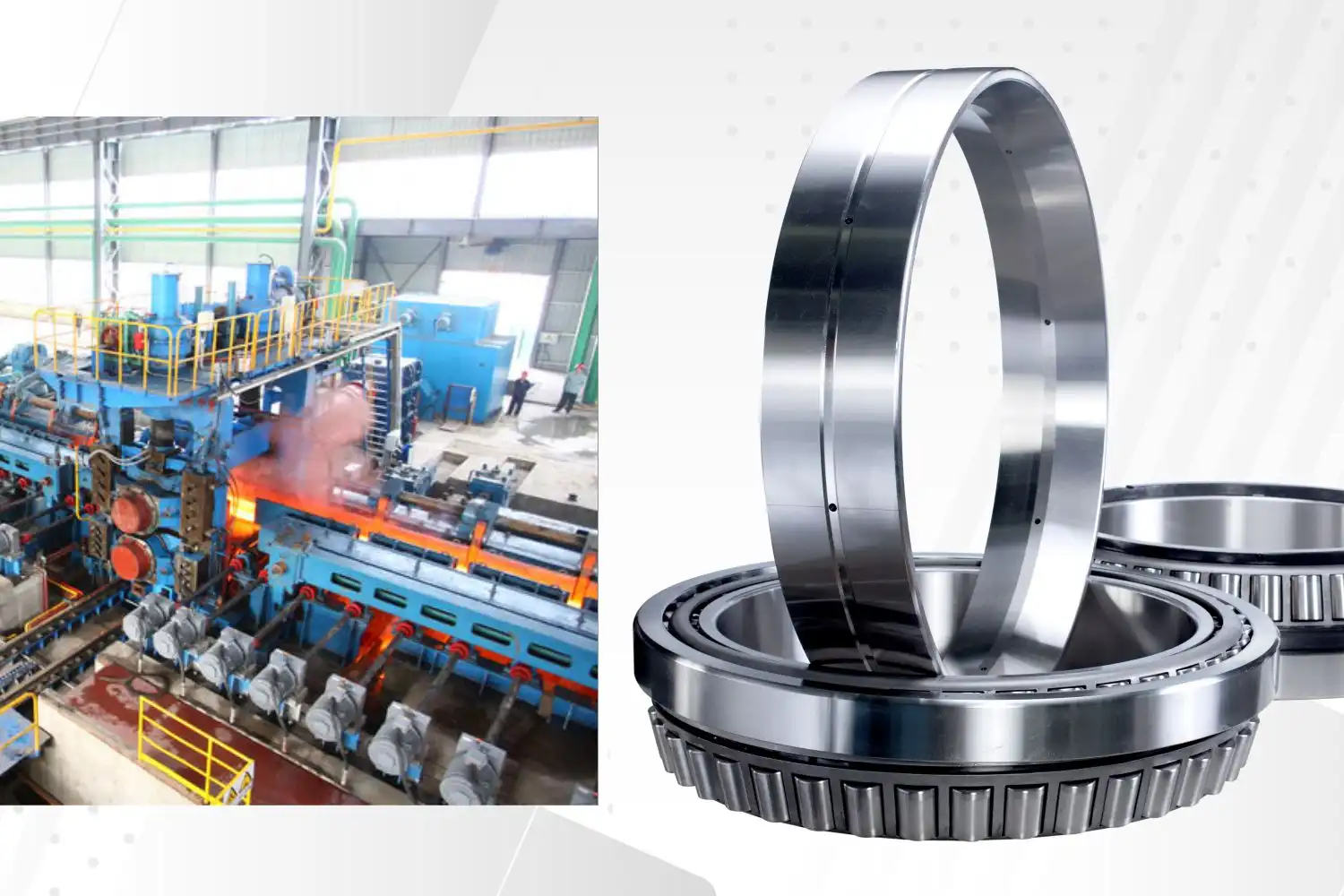
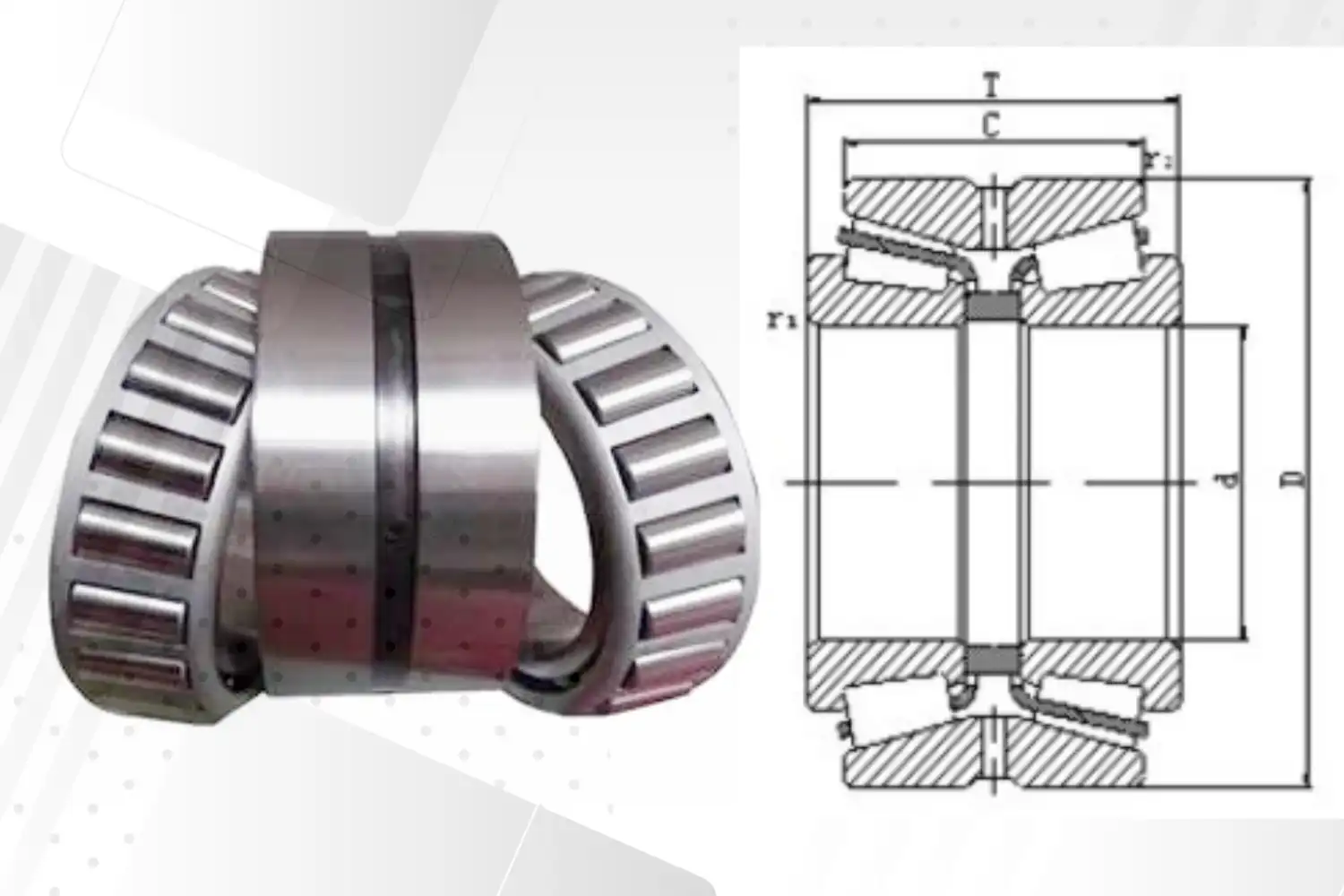
These double-row tapered roller bearings are a high-tech engineering solution that meets the tough needs of current industrial machinery. The basic design includes two rows of tapered rollers placed between perfectly machined inner and outer races. This makes a strong load-bearing assembly that can handle combined forces.
Advanced Load Distribution Mechanism
The best thing about them is their special load distribution system, which makes sure that all of the bearing areas are under the same amount of pressure. In contrast to other types of bearings, the tapered roller design makes multiple contact points that work together to support heavy circular loads while also handling large axial forces. This design has two functions: it lowers stress concentrations and wear patterns, which means it lasts longer even in difficult conditions.
Engineering Principles Behind Superior Performance
The tapered rollers' convergence angle makes the best load path, which naturally lines up with the force vectors that are found in heavy machinery use. Because of its shape, the bearing can handle loads that would quickly be too much for ball bearings or cylindrical roller options. The exact manufacturing standards used throughout the bearing assembly make sure that it rotates smoothly and has little friction. This helps the system use less energy and make less heat while it's running. Purchasing managers and engineers can better choose bearings for tough industrial uses if they understand these basic design rules. Being able to see how loads move and how stresses are distributed helps you choose the right bearings, especially when the cost of machine downtime can reach thousands of dollars per hour.
Comparing Double Row Tapered Roller Bearings With Alternative Bearings
The bearing selection process requires careful evaluation double-row tapered roller bearings of performance characteristics across different bearing types. Double row tapered roller bearings offer distinct advantages when compared to alternative bearing solutions commonly used in industrial applications.
Performance Against Ball Bearings
Ball bearings excel in high-speed applications with moderate loads, but they fall short when heavy radial and axial loads are present simultaneously. Double row tapered roller bearings demonstrate superior load-carrying capacity, often handling three to four times the radial load of equivalent-sized ball bearings. This increased capacity translates to improved equipment reliability and reduced maintenance frequency in heavy-duty environments.
Advantages Over Cylindrical and Angular Contact Bearings
Cylindrical roller bearings provide excellent radial load capacity but cannot handle axial forces effectively. Angular contact bearings offer some axial load capability but require complex mounting arrangements for optimal performance. Double row tapered roller bearings combine the best aspects of both designs, offering balanced performance that simplifies installation while delivering superior load handling capabilities.
Single Row Versus Double Row Comparison
The transition from single row to double row tapered roller bearings represents a significant upgrade in load capacity and machine stability. Double row designs effectively double the load-carrying capacity while maintaining compact dimensions, making them ideal for space-constrained applications where maximum performance is required. These comparative advantages equip procurement teams with clear benchmarks for matching bearing types with specific application requirements, ensuring cost-efficiency and sustained operational excellence across diverse industrial environments.
Key Applications and Maintenance Tips for Double Row Tapered Roller Bearings
Industrial sectors worldwide rely on double row tapered roller bearings for their exceptional performance in demanding applications. Understanding proper application guidelines and maintenance protocols ensures maximum return on investment and extended equipment life.
Primary Industrial Applications
Rolling mills are one of the toughest places for these bearings to work because they have to handle huge forces while still being able to precisely position themselves. Steel production sites put bearings to the test by putting them under constant loads and harsh conditions. Similarly, gears in heavy machinery benefit from being able to handle two loads at once. This is especially true in situations where shaft deflection under load could affect the performance of a single-row bearing. In places where mining and tunnelling equipment works, bearing failure can mean expensive downtime and safety issues. Double-row tapered roller bearings are reliable in these serious situations because they are built to last. Large construction machines and hoisting equipment also count on these bearings because they can handle different loads and keep running smoothly.
Essential Maintenance Protocols
Sticking to strict maintenance schedules that are made for each operating situation is necessary to get the most out of the service life. As part of regular inspections, you should check for vibrations, measure temperatures, and look at grease to find early signs of contamination or wear. It is still very important to use the right greases or oils for the job, taking into account the weather, speed, and environment.TDI bearing configurations have an adjustable clearance function that lets maintenance teams make up for normal wear patterns. This makes the bearings last a lot longer. This ability to be adjusted is especially useful in situations where shaft deflection or heat expansion changes the clearances between bearings while they are running. These maintenance insights help both maintenance teams and procurement specialists make good plans for less downtime and predictable bearing lifecycle costs, which helps reach goals for total equipment effectiveness.
Procurement Considerations for Double Row Tapered Roller Bearings
Successful bearing procurement requires careful evaluation of supplier capabilities, material specifications, and technical support services. The complexity of heavy industrial applications demands partnerships with manufacturers who understand the critical nature of bearing performance.
Evaluating Supplier Credentials and Capabilities
Well-known companies like Huigong show their dedication to quality by having extensive testing facilities and strict quality control procedures. Materials like GCr15, GCr15SiMn, and G20Cr2Ni4A are easy to get, which means they will work well in a wide range of situations and environments. Sizes ranging from 150mm to 1500mm in diameter can fit a wide range of equipment, from small tools to huge industrial machines. When choosing bearings for special uses or harsh operating circumstances, technical consulting services are very helpful. Suppliers who allow customisation can change standard designs to meet specific performance needs. This makes sure that the equipment works well and lasts a long time.
Understanding Lead Times and Bulk Purchasing Options
Industrial procurement schedules must account for manufacturing lead times, particularly for large or specialized bearing configurations. Bulk purchasing arrangements often provide cost advantages while ensuring adequate inventory for planned maintenance activities. The ability to coordinate delivery schedules with maintenance windows minimizes equipment downtime and supports production continuity.
Material Quality and Performance Specifications
The choice of bearing materials has a direct effect on how well they work and how long they last. High-grade steel alloys are better at resisting fatigue and keeping their shape under big loads. Tight tolerances are made possible by precision manufacturing methods. This means that bearings run smoothly and last longer. Making sure that the specifications of the bearings match exactly with the performance needs of the machine makes sure that the choices made about buying them support operational goals and get the best total cost of ownership over the life of the equipment.
Why Double Row Tapered Roller Bearings Are the Preferred Choice for Heavy Load Applications
The superiority of double row tapered roller bearings in heavy load applications stems from their unique combination of load-carrying capacity, durability, and operational reliability. Real-world performance data consistently demonstrates their value in critical industrial applications.
Unmatched Load Capacity and Equipment Reliability
When it comes to carrying weight, the dual-row design layout is better than most other types of bearings while still being small. This higher capacity directly leads to more reliable equipment and less upkeep, which are both very important in heavy industries where unplanned downtime can cost tens of thousands of dollars per hour.
Performance Validation Through Industry Case Studies
When steel companies switch from single-row to double-row tapered roller bearings, the bearings last 40 to 60 percent longer, according to reports from continuous casting equipment users. Similar improvements have been seen in the availability of equipment and the cost of maintenance in mining activities. These results from real life show that these bearings really do work better than others, which is why they are the best choice for tough jobs.
Innovation Trends and Future Developments
Progress in material science is mostly focused on double-row tapered roller bearings, expanding the temperature ranges where things can be used while also lowering the friction coefficients. Better closing technologies make it harder for contaminants to get in. This is especially important in heavy industry, where dusty or wet conditions are common. Tighter tolerances and better surface finishing are made possible by modern manufacturing methods. These factors help bearings last longer and make less noise. New developments in surface cleaning and better lubrication systems keep pushing the limits of performance, keeping these bearings at the cutting edge of heavy-duty bearing technology. Double row tapered roller bearings are a good purchase for long-term equipment reliability because they work well and are always getting better.
Conclusion
Because they can hold a lot of weight and are very reliable, double row tapered roller bearings are the best choice for heavy industrial uses. Their special two-row design makes them better at handling radial and axial loads than other types of bearings. High-tech materials and precise manufacturing also make them last longer in harsh settings. Their proven performance in important areas like rolling mills, mining equipment, and heavy machinery proves their worth for purchasing managers and engineers who want to make sure their equipment is reliable while keeping the total cost of ownership as low as possible.
FAQ
1. What size ranges are available for double row tapered roller bearings?
Double row tapered roller bearings are available in inner diameter sizes ranging from 150mm to 1500mm, accommodating applications from medium-scale industrial equipment to massive heavy machinery installations.
2. Which materials are used in manufacturing these bearings?
High-grade steel alloys, including GCr15, GCr15SiMn, and G20Cr2Ni4A, are utilized to ensure optimal performance across different operating environments and load conditions, providing superior fatigue resistance and dimensional stability.
3. What are the main applications for double row tapered roller bearings?
These bearings are primarily used in rolling mills, gearboxes, hoisting equipment, mining machines, and tunneling machinery, where combined radial and axial loads require exceptional bearing performance and reliability.
4. How do TDO and TDI bearing configurations differ?
TDO bearings perform similarly to two single-row tapered roller bearings mounted back-to-back, while TDI bearings feature a cup spacer design with adjustable clearance, making them ideal for roll neck applications with medium loads.
5. What maintenance practices extend bearing service life?
Regular inspection protocols, including vibration monitoring, temperature measurement, proper lubrication schedules, and clearance adjustments, help maximize bearing performance and service life in demanding industrial applications.
Partner with Huigong for Superior Double Row Tapered Roller Bearing Solutions
Huigong stands as your trusted double row tapered roller bearing manufacturer, combining over 25 years of engineering expertise with state-of-the-art manufacturing capabilities. Our precision-engineered bearings, manufactured from premium GCr15, GCr15SiMn, and G20Cr2Ni4A materials, deliver exceptional performance across a size range from 150mm to 1500mm inner diameter. Located in Luoyang's advanced industrial zone with 39,330 square meters of manufacturing space, we maintain rigorous quality standards through comprehensive testing facilities, including CMM, metallographic microscopes, and friction torque testers. Our technical team provides customized solutions for rolling mills, gearboxes, mining equipment, and heavy machinery applications. Contact our engineering specialists at sale@chg-bearing.com to discuss your specific requirements and discover how our double row tapered roller bearing solutions can enhance your equipment reliability and operational efficiency.
References
1. Harris, Tedric A. and Kotzalas, Michael N. "Advanced Concepts of Bearing Technology: Rolling Bearing Analysis." CRC Press, 2006.
2. Tallian, Tibor E. "Failure Atlas for Hertz Contact Machine Elements." ASME Press, 1999.
3. Eschmann, Paul, Hasbargen, Ludwig, and Weigand, Karl. "Ball and Roller Bearings: Theory, Design and Application." John Wiley & Sons, 1985.
4. Palmgren, Arvid. "Ball and Roller Bearing Engineering." SKF Industries Inc., 1959.
5. Jones, A.B. "A General Theory for Elastically Constrained Ball and Radial Roller Bearings Under Arbitrary Load and Speed Conditions." Journal of Basic Engineering, ASME Transactions, 1960.
6. Hamrock, Bernard J. and Dowson, Duncan. "Ball Bearing Lubrication: The Elastohydrodynamics of Elliptical Contacts." John Wiley & Sons, 1981.