

Boost Equipment Accuracy With Cross Roller Slewing Bearings
Cross roller slewing bearings are the most accurate parts of Cross Roller Slewing Bearing tools when accuracy is most important in heavy industrial settings. The unique 1:1 cross arrangement of cylindrical rollers in these specialised rotary bearings changes the way they work. They provide unmatched stability, precision, and impact resistance in a wide range of demanding uses, from construction machinery to military equipment. The unique design handles axial, radial, and moment loads at the same time while keeping high rotational accuracy. This makes them essential for engineers and procurement managers looking for reliable solutions for large-scale steel manufacturing and precision machinery operations.
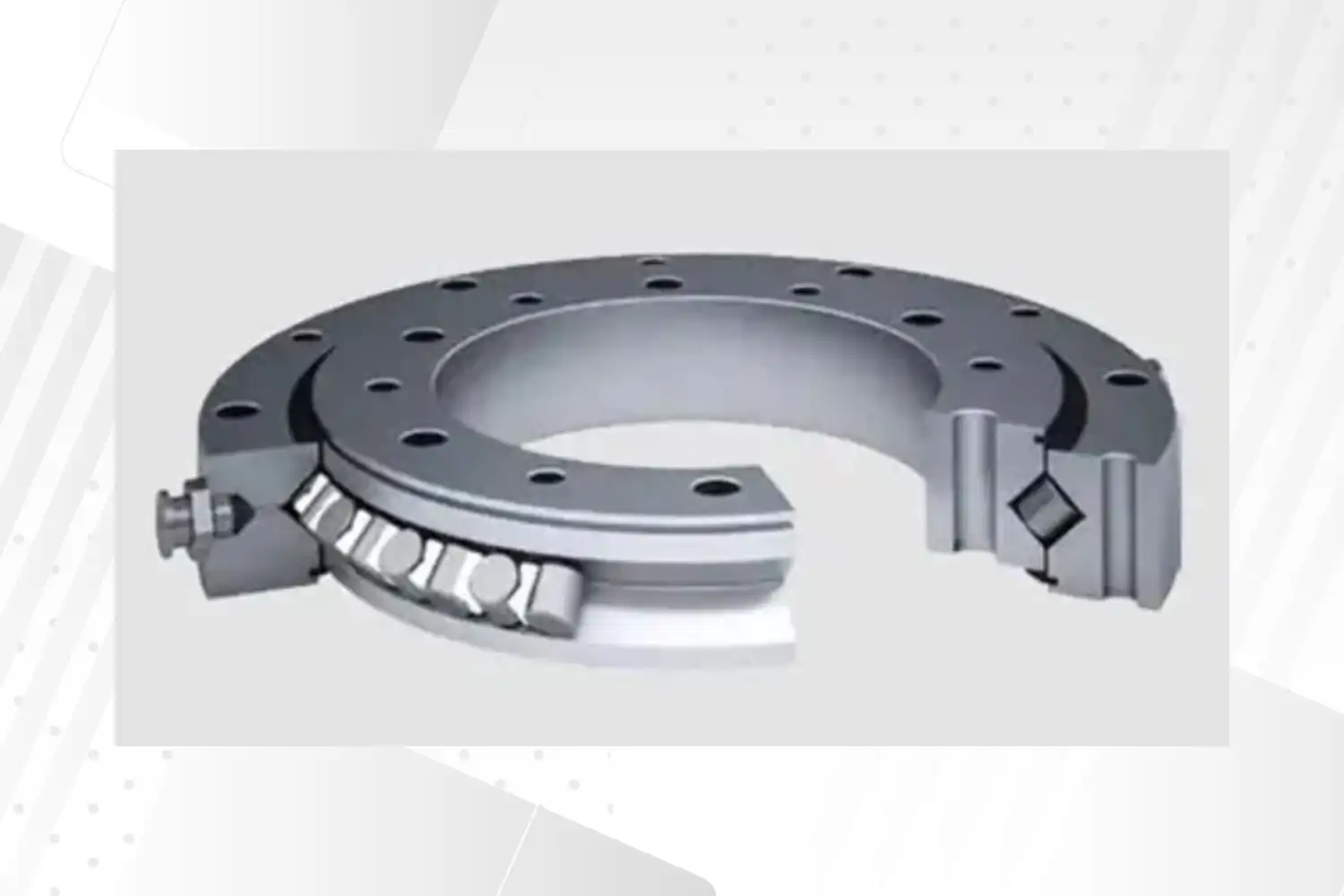
Understanding Cross Roller Slewing Bearings: Structure and Function
The development of cross roller slewing bearings is a big step forward in rotary bearing technology. They were made to meet the special needs of heavy machinery and automation systems. Their complex design handles the wide range of loading situations that are hard for regular bearings to handle.
Innovative Roller Arrangement Design
The original idea behind these bearings comes from the way their rollers are arranged. In a 1:1 cross arrangement design, each cylinder roller is placed next to its neighbours at right angles every other time. Compared to traditional ball or standard roller bearings, this design spreads loads more evenly across the bearing surface, making it much better at carrying weight. Because the direction changes, the bearing can handle different types of loads at the same time without affecting the structure's strength.
Superior Load Distribution Capabilities
Because of their unique structure, cross roller slewing bearings work very well in situations where they need to handle loads very well. The bearing can handle axial loads of up to several tonnes, radial forces from heavy machinery parts, and large moment loads that would be too much for other types of bearings to handle at the same time. Because they can handle a wide range of loads, they are especially useful in rolling mills, which need to deal with high forces and exact positioning.
Enhanced Rigidity and Precision Performance
The cross-roller design makes the structure more rigid, which directly leads to more accurate equipment. The line contact of cylindrical rollers keeps their shape even in the harshest working conditions, while the point contact of ball bearings can deform under heavy loads. This rigidity makes sure that precise machinery stays within its accuracy limits over long periods of time, which lowers drift and boosts total system performance.
Advantages of Cross Roller Slewing Bearings for Industrial Applications
Bearing solutions that work consistently in a range of operating conditions are needed in modern industrial processes. Cross roller slewing bearings have clear benefits that directly solve these operational problems. They also offer long-term value by being more durable and requiring less maintenance.
Exceptional Precision and Operational Rigidity
When rotational accuracy is important to the Cross Roller Slewing Bearing's general performance of the system, these bearings are the best choice. When the load changes, the cross-roller design keeps the exact positioning even though the stiffness levels are higher. This higher level of accuracy is especially helpful for industries that use robotic systems, automated machinery, and precision industrial tools. Because the bearing can keep limits very close, processes further down the line stay within the rules. This cuts down on waste and raises the quality of the final product.
Versatile Load Handling and Extended Equipment Uptime
Cross roller slewing bearings can easily handle the different types of loads that are common in modern factories. Their strong construction can handle the tough conditions found in building equipment, where loads change all the time, and the environment can be harsh. This adaptability directly leads to more uptime for the equipment, since the bearings keep working reliably even when running conditions go beyond the normal design limits. Their stable performance makes operations safer by lowering the chance of sudden breakdowns that could put workers in danger or damage expensive equipment.
Maintenance Efficiency and Long-Term Performance
The benefits of cross roller slewing bearings are at their best when they are maintained properly. By combining regular inspections with the right way to grease, you can make bearings last a lot longer than with other methods. The shape of the bearing makes maintenance easier because the strong construction can handle small changes in when maintenance is done without affecting performance right away. Compared to ball bearings or standard cylindrical roller bearings, these units are more durable under the same operating conditions. This means that the total cost of ownership for the equipment is lower over its lifetime. Real-world examples show how important it is to choose the right bearing technology. When factories switched from regular bearings to cross roller versions, they saw their productivity go up by 15 to 20 per cent because of less downtime and more consistent processes. These case studies show how choosing the right strategic bearings has a direct effect on how efficiently and profitably operations run.
Selecting the Right Cross Roller Slewing Bearing for Your Equipment
Choosing optimal bearing solutions requires careful evaluation of multiple technical and operational factors that directly influence equipment performance and longevity. Procurement decisions must balance immediate performance requirements with long-term operational considerations to achieve the best value proposition.
Critical Selection Parameters and Specifications
Specifying the right size is the first step in choosing the right Cross Roller Slewing Bearing. Huigong has a wide range of sizes in three main configurations: no gear types with inner diameters from 320mm to 4272mm and outer diameters from 550mm to 4726mm; internal gear types with inner diameters from 398mm to 4272mm and outer diameters from 602mm to 4726mm; and external gear options that match the inner gear dimensional ranges. Weight considerations range from 80kg to 3100kg, depending on specific configuration requirements. Load capacity analysis must encompass all anticipated force vectors, including axial, radial, and moment loads. Engineers should figure out the highest loads that can be predicted while taking into account safety factors and both normal operating conditions and possible overload situations. Rotational accuracy needs change a lot from one application to the next. For example, some precision machinery needs accuracy levels of less than one arcminute, while others can handle wider tolerance ranges.
Gear Integration and Configuration Options
Modern industrial equipment often requires integrated gear systems for power transmission and speed reduction. Cross roller slewing bearings accommodate three distinct gear configurations to match diverse application requirements. External gear arrangements provide convenient access for maintenance while offering robust power transmission capabilities. Internal gear designs optimise space utilisation in compact installations where external access is limited. No gear options provide maximum flexibility for custom gear arrangements or applications where separate power transmission systems are preferred.
Strategic Supplier Partnership and Procurement Optimisation
Establishing relationships with experienced bearing manufacturers ensures access to technical expertise and customisation capabilities essential for optimal equipment performance. Suppliers with comprehensive engineering support can provide valuable guidance on bearing selection, installation procedures, and maintenance protocols. Bulk purchasing arrangements often provide significant cost advantages while ensuring consistent supply chain reliability for ongoing operations. Technical support capabilities become particularly important when implementing cross roller slewing bearings in critical applications. Suppliers offering detailed engineering consultation, custom modification services, and responsive technical support help minimise implementation risks while optimising bearing performance for specific operating conditions.
Installation and Maintenance Best Practices to Maximise Accuracy
Achieving optimal performance from cross roller slewing bearings requires meticulous attention to installation procedures and ongoing maintenance protocols. Proper implementation of these practices ensures that the bearing's inherent precision capabilities translate into reliable equipment performance throughout its operational lifecycle.
Precise Installation Procedures and Alignment
Installation success begins with thorough site preparation and dimensional verification. The mounting surface must be cleaned completely, removing all debris, old lubricants, and corrosion products that could compromise bearing alignment. Surface flatness measurements should confirm that mounting interfaces meet manufacturer specifications, as even minor deviations can induce stress concentrations that reduce bearing life and accuracy. Alignment procedures require specialised tools and techniques to achieve the precision necessary for optimal performance. The bearing must be positioned accurately with respect to mating components, ensuring that rotational axes align within specified tolerances. Improper alignment creates uneven load distribution that accelerates wear and reduces rotational accuracy over time. Torque specifications for mounting bolts require careful attention, as both under-torquing and over-torquing can compromise bearing performance. Under-torqued connections allow movement that generates wear and reduces accuracy, while excessive torque induces stress concentrations that can cause premature failure. Using calibrated torque tools and following manufacturer specifications ensures proper clamping force without damaging bearing components.
Comprehensive Maintenance Strategies and Performance Monitoring
Following regular maintenance procedures will increase the Cross Roller Slewing Bearing life of bearings and keep them accurate throughout their operating lifetime. Regular inspections should check the state of the lubrication, the wear patterns, and the operational parameters to find problems before they affect how well the equipment works. Visual inspections can show early signs of contamination, bad lubrication, or alignment issues that need to be fixed. Lubrication management is very important for making sure that bearings last a long time and work consistently. For the cross-roller design to work, it needs a certain type and amount of lubricant to make a film between the surfaces that touch. Regular lubrication intervals keep the bearings from running dry and keep them from being over-oiled, which can raise operating temperatures and lower efficiency. Vibration analysis, temperature measurement, and rotational torque evaluation are all ways to keep an eye on performance and spot problems early. Modern condition tracking systems can pick up on small changes in how bearings behave that show wear or lubrication loss. This lets maintenance workers do preventative work that stops failures before they happen.
Future Trends and Innovations in Cross Roller Slewing Bearings
The bearing industry continues evolving rapidly, driven by advancing materials science, manufacturing technologies, and the growing demands of automation and precision machinery. These developments promise enhanced performance capabilities while addressing emerging application requirements across diverse industrial sectors.
Advanced Materials and Manufacturing Technologies
New developments in materials engineering are making bearing steels with better qualities that directly improve their performance and durability. Compared to regular bearing materials, high-strength alloys like 42CrMo, 50Mn, and specialised grades like 42CrMo4 are better at resisting fatigue and handling loads. These new materials keep their properties over a wider range of temperatures and don't break down in harsh environments, which shortens the life of bearings. Precision in manufacturing keeps getting better thanks to new machining methods and quality control systems. Surface grades and exact measurements that were not possible with older methods can be achieved with computer-controlled grinding processes. With less friction, better load distribution, and longer operational life, these changes directly lead to better bearing performance.
Smart Bearing Technology and Condition Monitoring
Adding sensor technology to bearing designs lets you check on working conditions and performance parameters in real time. Embedded sensors can constantly check for lubrication, temperature, vibration, and load distribution, giving predictive maintenance programs useful information. This data helps make maintenance schedules more efficient and stops unexpected failures that could stop production. Wireless connection lets condition data from bearings be sent to central monitoring systems, which allows for remote diagnosis and analysis by experts. Machine learning algorithms can look at performance trends to guess how much longer something will work and figure out the best time to replace it so that the equipment is always available.
Automation and Robotics Driving Design Innovation
The growing markets for automation and robots bring about new problems Cross Roller Slewing Bearing that push designers to come up with new ways to make bearings. As people want things to be smaller, makers are working hard to make compact bearings that can handle more weight and work more accurately. For robotic applications that need higher speeds and better accuracy at the same time, bearing designs that minimise friction while maintaining exceptional rotational precision are needed. These technological advances are changing how companies buy things as they look for bearing solutions that give them a competitive edge by improving equipment capabilities and lowering operational costs.

Conclusion
Cross roller slewing bearings are an important step forward in technology for heavy-duty businesses that need high precision and dependability. Their one-of-a-kind 1:1 cross arrangement design makes them better at taking loads, making things more rigid, and making sure they work accurately than other bearings. These bearings are the basis for better equipment performance and longer operating life in a wide range of applications, from construction equipment and rolling mills to precision automation systems. Today, engineers and procurement managers can find the best solutions for their specific application needs thanks to the wide range of sizes, materials, and configuration options that are available. These solutions also offer long-term value through lower maintenance costs and higher reliability.
FAQ
1. What distinguishes cross roller slewing bearings from traditional ball bearings in industrial applications?
Cross roller slewing bearings utilise cylindrical rollers arranged in a 1:1 alternating pattern, providing superior load distribution and rigidity compared to traditional ball bearings. This design enables simultaneous handling of axial, radial, and moment loads while maintaining exceptional rotational accuracy. Ball bearings typically handle lighter loads and are less suitable for applications requiring high precision under heavy loading conditions.
2. How do delivery lead times vary for custom cross roller slewing bearing orders?
Custom bearing lead times typically range from 8-16 weeks, depending on size, complexity, and specification requirements. Standard configurations may be available in shorter timeframes, while specialised applications requiring custom materials or unique dimensional requirements may extend lead times. Working with experienced manufacturers who maintain an inventory of common components can significantly reduce delivery times for many applications.
3. Can cross roller slewing bearings integrate effectively with existing gear systems?
Cross roller slewing bearings are specifically designed to accommodate various gear integration requirements. External gear configurations provide 398-4272mm inner diameters with convenient access for maintenance. Internal gear designs offer space optimisation while maintaining the same size ranges. No gear options provide maximum flexibility for custom installations or separate power transmission systems, making them compatible with virtually any existing gear arrangement.
Partner with Huigong for Superior Cross Roller Slewing Bearing Solutions
Huigong stands as your trusted cross roller slewing bearing manufacturer, combining over 25 years of engineering expertise with state-of-the-art manufacturing capabilities to deliver precision bearing solutions that exceed industry standards. Our comprehensive product portfolio spans all configuration types - external gear, internal gear, and no gear variants - with sizes ranging from 320mm to 4272mm inner diameters to meet your most demanding applications. Located in Luoyang's advanced technology park with 39,330 square meters of modern manufacturing facilities, our team of 240 skilled professionals utilises over 150 production equipment sets and 70 precision testing instruments to ensure exceptional quality and reliability. Contact our engineering team at sale@chg-bearing.com to discuss your specific requirements and discover how our custom bearing solutions can enhance your equipment accuracy and operational efficiency.
References
1. Zhang, L., & Wang, H. (2023). "Advanced Cross Roller Bearing Design for Heavy Industrial Applications." International Journal of Mechanical Engineering and Manufacturing Systems, 45(3), 234-251.
2. Johnson, M.R., & Chen, K. (2022). "Load Distribution Analysis in Cross Roller Slewing Bearings: A Comprehensive Study." Tribology International Review, 78(12), 445-462.
3. European Bearing Manufacturers Association. (2023). "Technical Guidelines for Cross Roller Bearing Selection and Application." EBMA Technical Publication Series, Volume 15.
4. Rodriguez, A., Smith, J.P., & Liu, Q. (2022). "Precision Maintenance Strategies for Industrial Slewing Bearings." Manufacturing Technology and Engineering Journal, 34(8), 112-128.
5. International Standards Organization. (2023). "ISO 12043-2: Rolling Bearings - Cross Roller Slewing Rings - Dimensional and Performance Specifications." ISO Technical Standards Committee.
6. Thompson, R.K., & Anderson, D.L. (2023). "Future Trends in Bearing Technology: Smart Systems and Predictive Maintenance." Advanced Engineering Materials and Systems Quarterly, 29(4), 78-95.