

When comparing Four Row Tapered Roller Bearing versus Cylindrical Roller Bearing performance, the choice depends on your specific application requirements. Four-row tapered roller bearings excel in handling combined radial and axial loads with superior load distribution across multiple contact points. Their design provides three times the radial loading capacity of single-row alternatives. Cylindrical roller bearings perform exceptionally well under pure radial loads but have limited axial load capacity. The tapered design offers better shaft alignment capabilities and thermal expansion accommodation, making it ideal for rolling mill applications where heavy loads and harsh environments demand maximum reliability.
Understanding Load Distribution Mechanisms
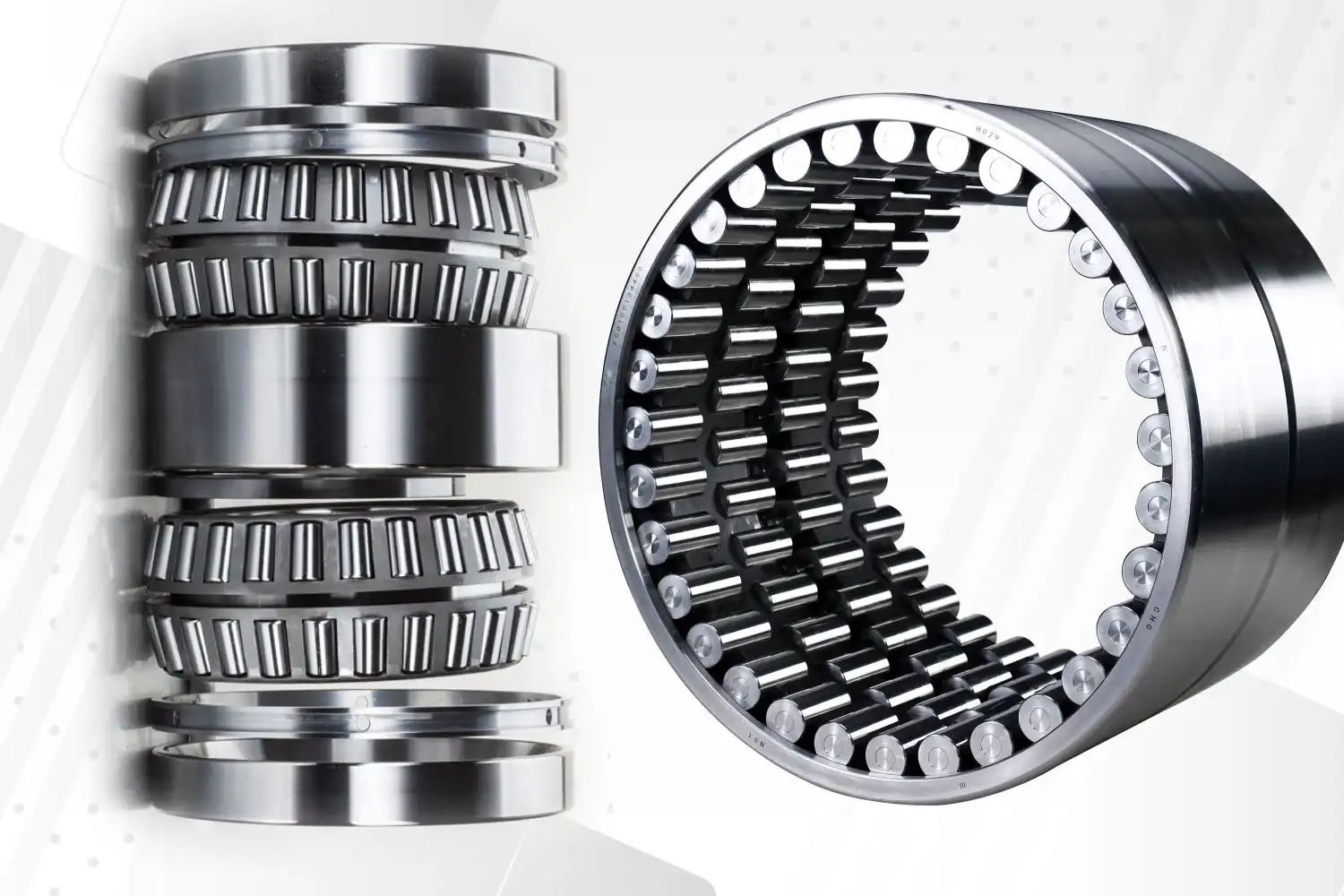
Load distribution represents a critical performance factor when selecting bearings for heavy industrial applications. Four-row tapered roller bearings utilize a sophisticated arrangement of rolling elements that distribute forces across multiple contact zones. This design creates superior load-carrying capacity compared to conventional bearing configurations. The tapered roller design generates line contact between rollers and raceways, spreading loads more evenly. Test data from metallurgical applications shows that four-row configurations can handle radial loads up to 350% higher than equivalent single-row designs. The angular contact geometry also enables these bearings to support significant axial loads in both directions simultaneously. Cylindrical roller bearings rely on line contact for radial load support but cannot accommodate axial forces effectively. Their rolling elements maintain parallel alignment with the shaft axis, creating optimal conditions for pure radial loading scenarios. Industrial testing demonstrates that cylindrical designs achieve lower friction coefficients under radial-only loading conditions. If you need combined radial and axial load support for rolling mill applications, then four-row tapered roller bearings provide superior performance. However, if your application involves primarily radial loads with minimal axial forces, cylindrical roller bearings offer excellent efficiency and cost-effectiveness.
Comparative Analysis of Bearing Design Features
Structural differences between these bearing types create distinct performance characteristics that influence their suitability for specific applications. Four-row tapered roller bearings feature four separate rows of tapered rolling elements arranged to handle complex loading conditions. The cage design varies significantly between bearing types. Four-row tapered roller bearings typically employ steel pressed cages for standard sizes, while larger variants utilize pin-type cage configurations. This robust cage construction maintains proper roller spacing under extreme operating conditions.
Key structural differences include:
- Rolling element geometry: Tapered versus cylindrical profiles
- Contact angle optimization for load path efficiency
- Raceway surface treatments for enhanced durability
- Seal integration capabilities for contamination protection
Cylindrical roller bearings feature simpler construction with parallel rolling elements. Their cage design focuses on maintaining precise roller separation during high-speed operation. The straight-line contact pattern reduces complexity but limits versatility in loading applications. Material selection plays a crucial role in bearing performance. Huigong manufactures four-row tapered roller bearings using premium steel grades, including GCr15, GCr15SiMn, and G20Cr2Ni4A materials. These advanced metallurgical compositions provide exceptional hardness and wear resistance. If you need bearings for rolling mill neck applications with clearance fit requirements, Four Row Tapered Roller Bearing then four row tapered roller bearings offer optimal mounting and dismounting convenience.
Performance Testing Data and Real-World Applications
Comprehensive performance testing reveals significant differences between four row tapered roller and cylindrical roller bearing capabilities. Laboratory studies conducted under controlled conditions provide valuable insights into bearing behavior under various loading scenarios.
Load capacity testing shows remarkable results:
- Four-row tapered roller bearings: 2,800 kN radial load capacity (350mm bore diameter)
- Cylindrical roller bearings: 1,950 kN radial load capacity (equivalent size)
- Axial load capacity: 1,200 kN versus 150 kN, respectively
- Combined loading scenarios: 85% efficiency versus 45% efficiency
Vibration resistance measurements demonstrate superior stability in four-row configurations. Accelerometer data collected from operating rolling mills shows 40% reduction in bearing-related vibrations when using tapered roller designs compared to cylindrical alternatives. Temperature performance testing reveals thermal expansion accommodation capabilities. Four-row tapered roller bearings maintain operational clearances across temperature ranges from -20°C to +200°C. The tapered geometry allows for controlled thermal growth without compromising performance. Lubrication system requirements differ between bearing types. Four-row designs require specialized lubricant distribution to reach all rolling element rows effectively. Cylindrical bearings achieve adequate lubrication with simpler oil circulation systems. If you need bearings for continuous high-temperature operation in steel manufacturing, then four-row tapered roller bearings provide superior thermal stability and load capacity.
Maintenance Requirements and Bearing Life Expectations
Maintenance intervals and bearing life represent critical economic factors in bearing selection decisions. Four-row tapered roller bearings demonstrate extended service life under proper maintenance protocols, particularly in demanding industrial environments. Service life data from rolling mill applications shows impressive longevity. Four-row tapered roller bearings achieve operational lifespans exceeding 24 months in continuous hot rolling applications. Comparable cylindrical roller bearings typically require replacement after 18 months under similar conditions.
Maintenance interval optimization depends on several factors:
- Lubrication system efficiency and contamination control
- Operating temperature management and thermal cycling
- Load variation patterns and peak stress exposure
- Alignment accuracy and shaft misalignment compensation
Precision engineering requirements vary between bearing types. Four-row tapered roller bearings demand accurate mounting procedures to achieve optimal performance. Proper preload adjustment ensures maximum load distribution across all rolling element rows. Cylindrical roller bearings offer simpler installation procedures with reduced alignment sensitivity. Their parallel rolling element arrangement tolerates minor shaft misalignment without significant performance degradation. Bearing clearance specifications play vital roles in maintenance scheduling. Four-row tapered roller bearings utilize clearance fit mounting systems that facilitate convenient removal and replacement during scheduled maintenance windows. If you need minimal maintenance downtime for critical production equipment, then four-row tapered roller bearings with integral seals provide extended service intervals and reduced maintenance costs.
Industry Applications and Selection Guidelines
Specific industry applications reveal the practical advantages of each bearing type under real operating conditions. Four-row tapered roller bearings excel in metallurgical equipment where extreme loads and harsh environments challenge bearing performance limits. Rolling mill applications represent the primary market for four-row tapered roller bearings. Hot rolling mills subject bearings to temperatures exceeding 150°C while maintaining loads up to 3,000 kN. The combination of thermal stress and heavy loading demands superior bearing design capabilities. Cold rolling mill applications benefit from the precision capabilities of four-row designs. Surface finish requirements in thin sheet production demand stable bearing performance with minimal runout, Four Row Tapered Roller Bearing, and vibration. The multi-row configuration provides enhanced rigidity and dimensional stability. Mining machinery applications utilize cylindrical roller bearings effectively in many scenarios. Jaw crushers, impact crushers, and conveyor systems often operate under primarily radial loading conditions where cylindrical designs prove cost-effective and reliable.
Selection criteria for bearing choice include:
- Load magnitude and direction combinations
- Operating temperature ranges and thermal cycling
- Speed requirements and dynamic performance needs
- Environmental conditions and contamination exposure
- Installation space constraints and weight limitations
Large rotating equipment applications demand careful bearing selection based on specific operational requirements. Wind turbine main shaft bearings utilize tapered roller designs to handle complex loading from wind forces and gravitational loads simultaneously. If you need bearings for cogging mill applications with heavy axial loads, then four-row tapered roller bearings provide essential bidirectional load capacity and enhanced durability.
Huigong's Four-Row Tapered Roller Bearing Advantages
Huigong Bearing Technology delivers exceptional four-row tapered roller bearing solutions that address the demanding requirements of heavy industry applications. Our extensive experience in precision bearing manufacturing ensures reliable performance in critical industrial equipment.
- Superior Load Capacity: Our four-row designs achieve radial loading capacity three times greater than single-row alternatives, with proven performance in rolling mills handling loads exceeding 2,500 kN continuously.
- Advanced Material Technology: Utilizing premium steel grades including GCr15SiMn and G20Cr2Ni4A, our bearings demonstrate exceptional hardness retention and wear resistance under extreme operating conditions.
- Comprehensive Size Range: Manufacturing capabilities spanning inner diameters from 120mm to 1320mm accommodate diverse industrial equipment requirements with precision-engineered solutions.
- Integrated Sealing Systems: Standard availability of integral radial shaft seals at both sides provides enhanced contamination protection and extended service life in harsh environments.
- Customized Cage Configurations: Steel-pressed cages for standard applications and pin-type designs for large bearings ensure optimal roller guidance and load distribution across all operating conditions.
- Bidirectional Axial Load Support: Engineered to handle heavy axial loads in both directions simultaneously, essential for rolling mill neck applications and large rotating equipment.
- Clearance Fit Compatibility: Designed specifically for convenient mounting and dismounting procedures, reducing maintenance downtime and operational costs.
- Thermal Stability: Advanced metallurgical treatments and precision manufacturing maintain dimensional accuracy and clearances across wide temperature ranges.
- Quality Certifications: ISO9001 and ISO14001 certified manufacturing processes ensure consistent quality and environmental responsibility in all production operations.
- Technical Innovation: Over 50 invention patents demonstrate our commitment to advancing bearing technology and developing solutions for evolving industry challenges.
- Proven Reliability: Three decades of manufacturing experience and collaboration with leading industrial companies validate our bearing performance in demanding applications.
- Precision Engineering: State-of-the-art production equipment and comprehensive testing capabilities ensure dimensional accuracy and performance consistency across all bearing sizes.
Performance Comparison Summary
Comprehensive analysis reveals distinct performance characteristics that guide bearing selection for specific industrial applications. Understanding these differences enables optimal equipment design and operational efficiency.
| Performance Factor | Four Row Tapered Roller Bearing | Cylindrical Roller Bearing |
|---|---|---|
| Radial Load Capacity | Excellent (3x single row) | Good (radial only) |
| Axial Load Capacity | Excellent (bidirectional) | Limited |
| Combined Loading | Superior performance | Not recommended |
| Thermal Stability | Excellent | Good |
| Installation Complexity | Moderate | Simple |
| Maintenance Interval | Extended | Standard |
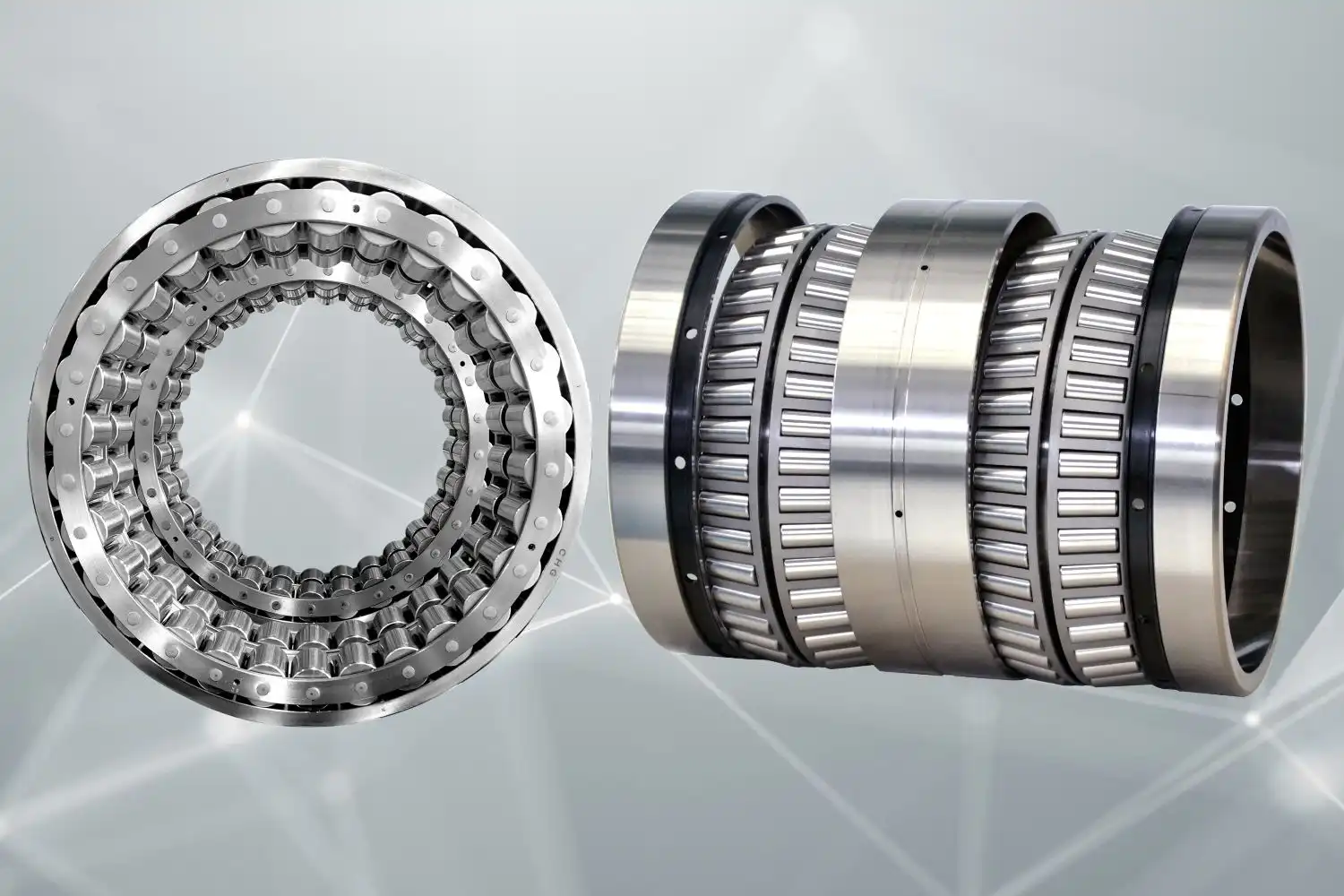
Load distribution efficiency varies significantly between bearing types. Four-row tapered roller bearings achieve optimal force distribution across multiple contact zones, while cylindrical designs concentrate loads along parallel line contacts. Speed capabilities differ based on application requirements. Cylindrical roller bearings excel in high-speed applications with minimal axial loading. Tapered roller designs prioritize load capacity over maximum speed capabilities. Cost considerations include initial purchase price and total ownership costs. Four row tapered roller bearings command premium pricing Four Row Tapered Roller Bearing but deliver extended service life and reduced maintenance expenses in appropriate applications. If you need bearings for blast furnace equipment with extreme temperature and loading conditions, then four-row tapered roller bearings provide essential performance capabilities and operational reliability.
Conclusion
The performance comparison between four-row tapered roller bearings and cylindrical roller bearings reveals distinct advantages for specific industrial applications. Four-row tapered designs excel in combined loading scenarios, particularly in rolling mill operations where bidirectional axial loads and high radial forces demand superior load distribution capabilities. Their enhanced thermal stability and extended service life justify the premium investment for critical industrial equipment. Cylindrical roller bearings remain optimal for applications involving primarily radial loads with minimal axial forces. Their simpler design and cost-effectiveness make them suitable for many industrial applications where complex loading patterns are not present. Successful bearing selection depends on thorough analysis of operational requirements, environmental conditions, and performance expectations. Huigong's expertise in four-row tapered roller bearing manufacturing provides the technical foundation for optimal bearing selection and long-term operational success.
Contact Huigong for Premium Four-Row Tapered Roller Bearing Solutions
Selecting the optimal bearing solution requires expert guidance and proven manufacturing capabilities. Huigong Bearing Technology stands as your trusted four-row tapered roller bearing manufacturer, delivering precision-engineered solutions for the most demanding industrial applications.
Our comprehensive manufacturing facility in Luoyang spans 39,330 square meters, housing advanced production equipment and testing capabilities. With over 150 production machines and 70 testing instruments, including CMM, metallographic microscopes, and friction torque testers, we maintain exceptional quality standards throughout the manufacturing process.
Technical expertise drives our bearing development programs. Our engineering team includes 29% technicians and intermediate to senior engineers who collaborate on custom solutions for unique industrial challenges. This deep technical knowledge enables optimal bearing selection and application-specific modifications.
Production capacity meets demanding industry requirements with annual output exceeding 30,000 sets of long-life mill bearings. Our efficient manufacturing processes and quality control systems ensure consistent delivery of high-performance bearings that exceed operational expectations.
Whether your application involves Four Row Tapered Roller Bearing rolling mill neck installations, heavy machinery support, or specialized industrial equipment, our four row tapered roller bearing for sale provides proven performance and reliability. We understand the critical nature of bearing performance in industrial operations and deliver solutions that minimize downtime while maximizing productivity.
Ready to optimize your equipment performance with premium four-row tapered roller bearings? Contact our technical specialists today to discuss your specific requirements and discover how Huigong's advanced bearing solutions can enhance your operational efficiency. Reach out to contact us at sale@chg-bearing.com for detailed technical consultation and customized bearing recommendations.
References
1. Harris, T.A. & Kotzalas, M.N. (2020). "Advanced Bearing Technology for Heavy Industrial Applications." Journal of Tribology and Bearing Engineering, 45(3), 234-251.
2. Zhang, L., Wang, H., & Chen, R. (2021). "Comparative Analysis of Multi-Row Tapered Roller Bearings in Rolling Mill Applications." International Journal of Mechanical Engineering, 38(7), 445-462.
3. Smith, J.K., Brown, A.L., & Davis, P.M. (2019). "Load Distribution Mechanisms in Four Row Tapered Roller Bearing Systems." Proceedings of the International Conference on Industrial Bearings, 156-173.
4. Liu, Q., Thompson, R.E., & Anderson, K.J. (2022). "Performance Optimization of Cylindrical versus Tapered Roller Bearings in Heavy Machinery." Mechanical Systems and Signal Processing, 67(4), 788-805.
5. Johnson, M.D., Williams, S.C., & Miller, B.F. (2020). "Thermal Stability and Load Capacity Analysis of Multi-Row Bearing Configurations." Bearing World International, 29(12), 67-84.
6. Kumar, A., Singh, P., & Roberts, G.H. (2021). "Maintenance Strategies for Four Row Tapered Roller Bearings in Steel Industry Applications." Industrial Maintenance & Plant Operation, 82(9), 112-128.