

Selecting the right metric thin section bearings represents a critical decision for engineers in heavy industry, precision machinery, and steel manufacturing. These specialized bearing solutions deliver exceptional performance in space-constrained applications while maintaining superior load capacity and precision. Understanding the technical specifications, material properties, and application requirements ensures optimal equipment performance and extended operational life in demanding industrial environments.
Understanding Metric Thin Section Bearing Fundamentals
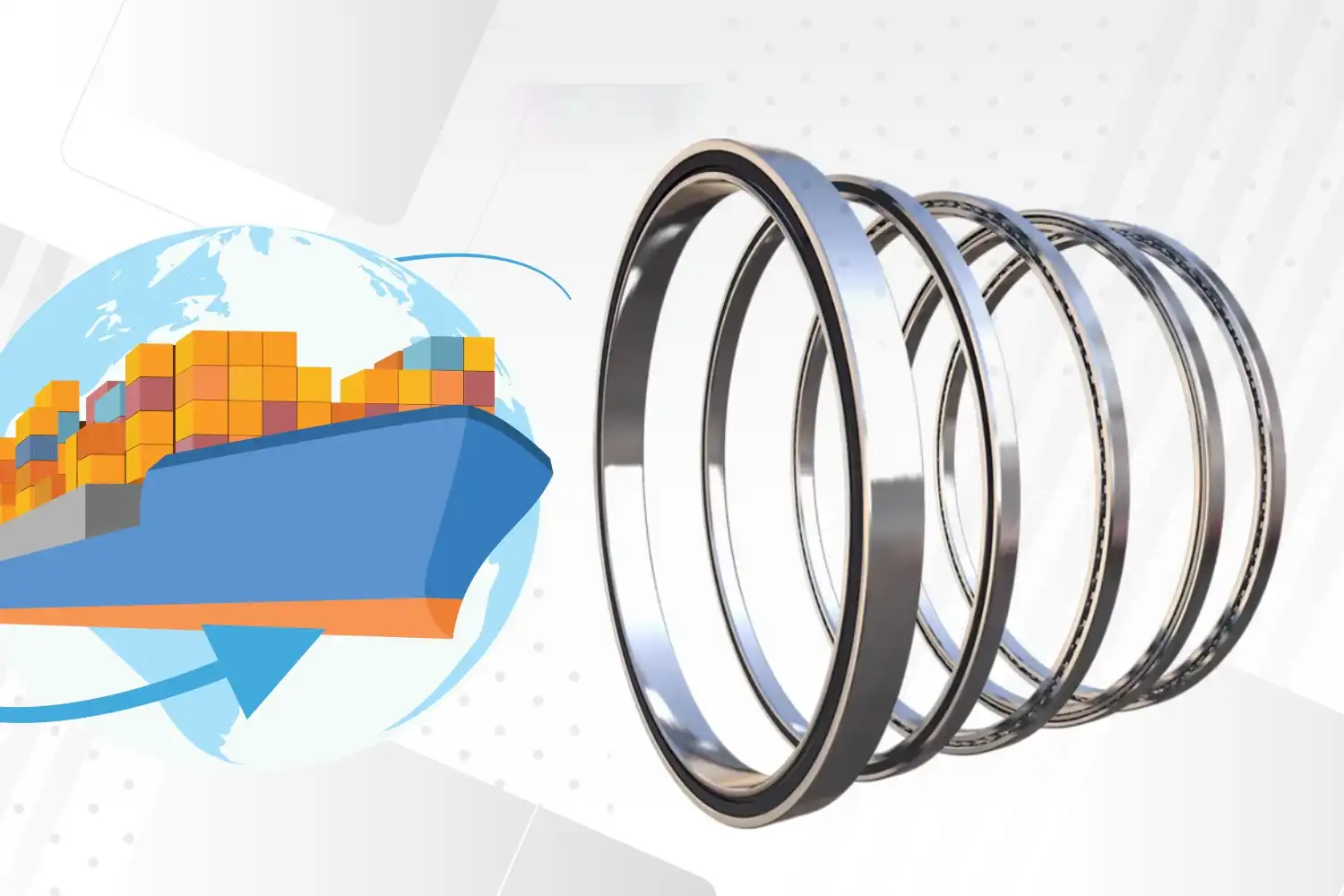
Metric bearings designed with thin section profiles revolutionize how engineers approach space optimization challenges. These precision bearings feature dramatically reduced cross-sectional dimensions compared to standard bearing configurations. The compact bearing solutions maintain robust load ratings despite their lightweight design characteristics. The fundamental advantage lies in their ability to support significant radial and axial loads within minimal installation space. This unique combination makes them indispensable for applications where weight reduction and space efficiency directly impact overall system performance. Modern industrial equipment increasingly demands these characteristics as machinery becomes more sophisticated and compact. Thin section bearing design incorporates three primary contact configurations. Radial contact bearings (Type C) excel in applications with predominantly radial loads. Angular contact bearings (Type A) handle combined radial and axial forces effectively. Four-point contact bearings (Type X) accommodate bidirectional axial loads with excellent moment capacity.
Essential Technical Specifications for Industrial Applications
CHG Bearing manufactures metric thin section bearings across three distinct series dimensions. The 8mm series accommodates inner diameters ranging from 25mm to 360mm. The 13mm series covers the same diameter range with increased section height. The 20mm series provides maximum load capacity for demanding applications within the same diameter spectrum. Bearing inner diameter selection depends on shaft dimensions and load requirements. The bearing outer diameter determines housing bore specifications. Bearing width specifications influence axial space requirements and load distribution characteristics. Engineers must balance these parameters to achieve optimal performance. Precision bearings require specific accuracy classifications. Standard P0 accuracy suits general industrial applications. P6 and P5 grades provide enhanced precision for specialized machinery. P4 accuracy serves high-speed applications demanding minimal runout. P2 represents the highest precision level for ultra-critical applications. Material selection significantly impacts bearing performance and longevity. GCr15 steel offers excellent hardness and wear resistance for standard applications. 9Cr18 stainless steel provides superior corrosion resistance in harsh environments. Both materials undergo precise heat treatment processes to achieve optimal microstructure and performance characteristics.
Load Capacity and Performance Characteristics
High-load capacity bearings deliver exceptional performance despite their compact dimensions. The load distribution across multiple contact points enables these bearings to handle substantial forces. Understanding bearing load ratings ensures proper selection for specific application requirements. Dynamic load ratings indicate the bearing's capacity under rotating conditions. Static load ratings define maximum loads during stationary operation. Engineers must consider both parameters when specifying bearings for variable operating conditions. Safety factors typically range from 1.5 to 3.0, depending on application criticality. Low-friction bearings minimize energy consumption and heat generation. Advanced surface treatments and precision manufacturing reduce internal friction losses. Proper lubrication methods enhance these characteristics while extending bearing operational life. Temperature considerations affect lubricant selection and performance expectations. High-speed bearings require careful attention to dynamic balancing and cage design. Centrifugal forces increase with rotational velocity, affecting load distribution and lubrication effectiveness. Speed limitations depend on bearing size, load conditions, and lubrication systems.
Custom Solutions for Specialized Industrial Requirements
Custom metric bearings address unique application challenges that standard configurations cannot accommodate. Engineering teams frequently encounter non-standard mounting arrangements, unusual load combinations, or extreme environmental conditions. These situations demand tailored bearing solutions. Sealed thin section bearings protect internal components from contamination while retaining lubrication. Contact seals provide maximum protection but increase friction and speed limitations. Non-contact seals offer better high-speed performance with reduced contamination protection. Engineers must balance these trade-offs based on the severity of the operating environment. Special geometries accommodate unique installation requirements. Modified internal clearances optimize performance for specific temperature ranges. Enhanced cage materials improve performance in aggressive chemical environments. Custom lubrication specifications address unique operating conditions. Cross roller bearings provide alternative solutions for applications requiring high rigidity and moment capacity. These designs incorporate cylindrical rollers positioned at right angles, enabling exceptional load capacity in multiple directions simultaneously. Slewing ring bearings serve applications requiring large bore diameters with rotational capability.
Installation Best Practices and Maintenance Guidelines
Proper installation procedures ensure Metric Thin Section Bearings performance and longevity. Clean installation environments prevent contamination during assembly. Precision alignment tools verify proper bearing positioning within housing assemblies. Controlled mounting forces prevent bearing damage during installation. Temperature considerations affect installation procedures and operational performance. Thermal expansion coefficients must match between bearing components and surrounding structures. Preload adjustments compensate for thermal growth and ensure proper internal clearances throughout operating temperature ranges. Bearing lubrication methods significantly impact performance and service life. Grease lubrication suits applications with limited maintenance access. Oil lubrication provides superior heat dissipation and contamination removal. Solid lubricants serve extreme temperature or vacuum applications where conventional lubricants fail. Monitoring systems detect early warning signs of bearing deterioration. Vibration analysis identifies developing problems before catastrophic failure occurs. Temperature monitoring reveals lubrication issues and excessive loading conditions. Regular inspection schedules ensure proactive maintenance practices.
Industry Applications and Performance Benefits
Aerospace applications demand lightweight bearings with exceptional reliability and precision. Satellite mechanisms operate in vacuum conditions with minimal maintenance opportunities. Aircraft systems require bearings that perform consistently across extreme temperature variations. Weight reduction directly impacts fuel efficiency and payload capacity. Medical equipment applications prioritize precision and cleanliness. Diagnostic instruments require bearing smoothness for accurate measurements. Surgical robots demand precise positioning capabilities with minimal backlash. Sterilization compatibility ensures bearing materials withstand repeated cleaning cycles. Automation and robotics systems benefit from compact bearing solutions that enable sophisticated mechanical designs. Industrial robots require bearings that maintain precision through millions of operational cycles. Positioning systems demand minimal friction for accurate control. Lightweight designs reduce inertial loads and improve dynamic response. Rolling mill applications subject bearings to extreme loads and harsh operating conditions. Steel manufacturing environments expose bearings to high temperatures, contamination, and shock loading. Bearing reliability directly affects production uptime and product quality. Extended service intervals reduce maintenance costs and improve operational efficiency.
Quality Standards and Manufacturing Excellence
Metric bearing standards ensure consistency and interchangeability across global markets. ISO dimensional standards define precise tolerances and specifications. Quality certifications verify manufacturing processes and product reliability. Traceability systems document material origins and processing histories. Manufacturing precision affects bearing performance characteristics significantly. Advanced machining techniques achieve surface finishes that minimize friction and wear. Quality control systems verify dimensional accuracy and material properties. Statistical process control maintains consistent production quality. Testing procedures validate bearing performance under simulated operating conditions. Life testing determines expected service intervals under various load conditions. Performance testing verifies speed capabilities and friction characteristics. Environmental testing confirms operation under extreme temperature and contamination conditions. Luoyang Huigong Bearing Technology represents industry leadership in thin-section bearing manufacturing. Established in 1998, the company combines decades of experience with advanced manufacturing capabilities. Over 240 skilled employees, including 29% technicians and engineers, ensure technical excellence throughout the organization.
Conclusion
Selecting appropriate metric thin section bearings requires careful consideration of technical specifications, application requirements, and performance expectations. These precision components deliver exceptional value through space optimization, weight reduction, and reliable performance in demanding environments. Understanding bearing characteristics, installation procedures, and maintenance requirements ensures optimal equipment performance and extended operational life. Partner with experienced manufacturers who provide comprehensive technical support and proven quality standards for critical industrial applications.
eady to Source Premium Metric Thin Section Bearings?
Huigong stands as your trusted metric thin section bearings manufacturer, delivering precision-engineered solutions for the most demanding industrial applications. Our comprehensive range includes 8mm, 13mm, and 20mm series bearings with accuracy grades from P0 to P2, ensuring perfect matches for your specific requirements. With over 25 years of manufacturing expertise and more than 50 invention patents, Huigong provides custom bearing solutions that exceed industry standards. Our state-of-the-art facility produces 40,000 sets of high-precision thin section bearings annually, serving global customers across aerospace, medical equipment, automation, and heavy industry sectors. Experience the difference that superior engineering and manufacturing excellence make in your critical applications. Our technical team collaborates with your engineers to develop optimized bearing solutions that enhance equipment performance and reliability. Whether you need standard configurations or completely custom designs, Huigong delivers precision bearings that perform when it matters most. Transform your equipment performance with industry-leading metric thin section bearings designed for excellence. Contact us at sale@chg-bearing.com to discuss your specific requirements and discover how our advanced bearing solutions can optimize your applications.
References
1. Harris, T.A. & Kotzalas, M.N. "Essential Concepts of Bearing Technology: Rolling Bearing Analysis, Fifth Edition." CRC Press, 2006.
2. Eschmann, P., Hasbargen, L. & Weigand, K. "Ball and Roller Bearings: Theory, Design and Application, Third Edition." John Wiley & Sons, 1999.
3. ISO 12043-1:2007 "Rolling bearings - Single-row angular contact ball bearings - Chamfer dimensions for outer ring non-thrust side." International Organization for Standardization.
4. Palmgren, A. "Ball and Roller Bearing Engineering: Third Edition." SKF Industries Inc., 1959.
5. ANSI/ABMA Standard 20-1996 "Radial Bearings of Ball, Cylindrical Roller and Spherical Roller Types - Metric Design." American Bearing Manufacturers Association.
6. Hamrock, B.J., Schmid, S.R. & Jacobson, B.O. "Fundamentals of Machine Elements: Third Edition." McGraw-Hill Education, 2013.