

What Sizes Are Available in Ru Cross Roller Bearings?
RU cross roller bearings come in a wide range of sizes, from 12mm to 45mm wide, with inner diameters ranging from 20mm to 350mm and outer diameters ranging from 70mm to 540mm. These precision bearings have an inner and outer ring that are built into one piece. They also have crossed cylindrical rollers placed in a crisscross pattern, which lets them handle both radial and axial loads at the same time. Ru Cross Roller Bearings come in a wide range of sizes so they can be used in a wide range of industrial settings, from small robotic joints to big pieces of heavy machinery.
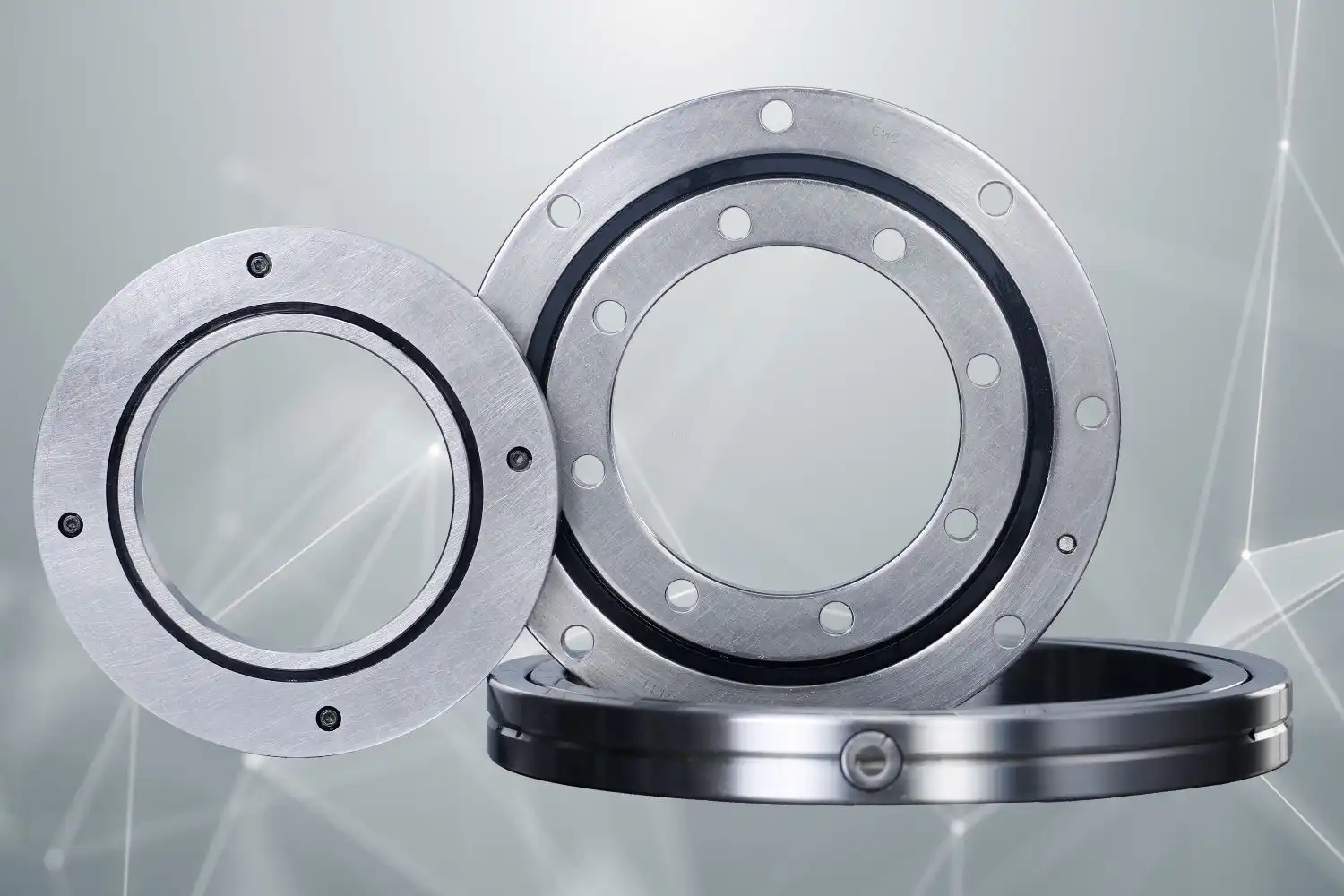
Overview of Ru Cross Roller Bearings
RU cross roller bearings are a high-tech engineering answer made for uses that need to be very precise and able to handle a lot of weight. These special parts stand out because they have a special arrangement of cylindrical rollers placed orthogonally within a single bearing raceway. This makes a structure that can handle high radial, axial, and moment loads with better stiffness and accuracy than regular bearing designs. The basic idea behind these bearings is that they have crossed roller construction, which means that the rollers turn 90 degrees to each other every time they are positioned. This arrangement better spreads the weight across the bearing structure, making it more rigid and less likely to bend when it's under operating stress. Because they are small, these bearings can hold a lot of weight and still run smoothly. This makes them essential parts of robots, automation systems, slewing mechanisms, and precision machinery.
Key Design Characteristics
The combined inner and outer ring structure gets rid of the need for complicated fastening steps and keeps the dimensions stable. This way of designing keeps performance changes that could happen during fitting to a minimum, making sure that the accuracy of rotation and torque are always the same. The bearings have preload mechanisms that make them more rigid, and the fact that they can handle loads coming from multiple directions makes them especially useful in applications with limited room where regular bearing arrangements would not work. Understanding these basic features makes it possible to check for size availability and see if the product is suitable for use in different workplace settings. When engineers have to balance the need for performance with limited room in a bearing, the relationship between bearing size and performance becomes very important.
Exploring the Range of Sizes in Ru Cross Roller Bearings
The size spectrum of Ru cross roller bearings encompasses small, medium, and large categories, each designed to accommodate specific application requirements and load demands. This comprehensive range of Ru Cross Roller Bearings addresses diverse industrial needs, from lightweight precision instruments to heavy-duty manufacturing equipment.
Standard Dimensional Categories
Inner diameters of 20 mm are the smallest sizes that are available. This makes them good for small robotic joints and light automation systems that need to save space. These smaller bearings usually have outer sizes that start at 70 mm and widths that match, which means they can hold enough weight while taking up very little space. When it comes to inner widths, medium-sized bearings are right in the middle of the size range, from about 50mm to 200mm. These measurements are especially useful for machine tools, industrial robots, and medium-sized manufacturing equipment that need to balance performance between load capacity and size limitations. Large-diameter bearings make the range bigger, with inner diameters up to 350 mm, outer diameters up to 540 mm, and widths up to 45 mm. These big bearings are used in heavy-duty systems like big slewing systems, crane mechanisms, and excavator parts, where holding the most weight is more important than saving room.
Customization Capabilities and Special Requirements
In addition to basic sizes, manufacturers offer a wide range of customisation options to meet the needs of any project. These changes make sure that the machine works at its best, lasts longer, and can handle loads accurately in a variety of operating situations. Different sizes have direct effects on load ratings, how well they handle torque, and how accurately they work. This is why procurement managers and engineers who specify tools need to be very careful when choosing sizes. During the selection process, you need to give careful thought to the link between bearing size and performance characteristics. It is usually true that bigger bearings can hold more weight and last longer, but they may need to be maintained and installed differently.
Comparison of Ru Cross Roller Bearings Sizes with Other Bearing Types
When evaluating bearing options, understanding how Ru cross roller bearings compare dimensionally and functionally with alternative bearing types provides valuable insight for informed decision-making. This comparison reveals distinct advantages in size variability and load handling capabilities that make crossed roller designs particularly attractive for demanding applications.
Performance Advantages Over Conventional Designs
Angular contact bearings, while effective for specific axial load applications, typically require multiple bearing arrangements to achieve the multi-directional load capacity that Ru bearings provide in a single compact unit. This fundamental difference means that Ru bearings often enable more space-efficient designs while delivering superior combined load performance through their cross-roller layout. Ball bearings, though common in many applications, generally cannot match the load capacity per unit size that crossed roller bearings achieve. The linear contact of cylindrical rollers versus point contact of balls creates substantially Ru Cross Roller Bearings higher load ratings, particularly beneficial in heavy-duty applications where size constraints limit bearing selection options.
Size Efficiency and Rigidity Comparison
Needle roller bearings offer compact radial designs but lack the axial load capacity and moment resistance that Ru cross roller bearings provide. The integrated design of crossed roller bearings eliminates the need for separate thrust bearing arrangements, resulting in overall system size reductions and simplified mounting procedures. The superior load distribution and precision characteristics of Ru bearings consistently outperform needle or ball bearing alternatives in demanding scenarios, facilitating enhanced operational efficiency and extended service life. These performance advantages explain the increasing preference for crossed roller bearings in sophisticated industrial applications where reliability and precision remain paramount.
Technical Specifications That Define Ru Cross Roller Bearing Sizes
Critical technical specifications form the foundation for proper bearing size selection, ensuring compatibility with specific mechanical requirements and operational parameters. Understanding these specifications enables engineers to optimize bearing performance while maximizing service life and operational reliability.
Dimensional Specifications and Compatibility
Shaft diameter compatibility represents the primary sizing consideration, with inner diameters ranging from 20mm to 350mm accommodating diverse equipment requirements. Housing bore dimensions must align precisely with outer diameter specifications spanning 70mm to 540mm, while total bearing width measurements from 12mm to 45mm determine axial space requirements within mechanical assemblies. The integrated inner/outer ring structure simplifies mounting procedures while ensuring dimensional consistency. Mounting holes provided in the standard design eliminate requirements for presser flanges or specialized housing arrangements, reducing overall system complexity and potential sources of misalignment.
Load Capacity and Performance Ratings
Load capacity ratings directly correlate with bearing size dimensions, with both static and dynamic load ratings increasing substantially with larger bearing sizes. These ratings dictate the bearing's ability to sustain operational stresses while maintaining specified accuracy levels throughout the service life. Static load capacity determines the maximum loads the bearing can support without permanent deformation, while dynamic load capacity relates to the bearing's ability to handle varying loads during rotation. Understanding these relationships allows engineers to select appropriate sizes based on actual operating conditions rather than simply choosing the largest available option.
Material and Precision Specifications
High-quality materials, including GCr15 and GCr15SiMn, provide Ru Cross Roller Bearings with exceptional durability and dimensional stability across the complete size range. These steel grades maintain consistent properties regardless of bearing size, ensuring predictable performance characteristics. Precision grades ranging from P6 through P2 accommodate varying accuracy requirements, with higher precision grades (P4 and P2) delivering superior rotational accuracy and reduced runout. Larger bearings may require adjusted maintenance schedules due to increased surface areas and higher load capacities, but proper selection and maintenance ensure extended operational life.
Procurement Insights: Sourcing Ru Cross Roller Bearings by Size
To make good purchasing decisions for Ru cross roller bearings, you need to know a lot about the size-related factors that affect availability, price, and delivery times. Strategic methods of sourcing can have a big effect on the success of a project and the efficiency of operations.
Supplier Selection and Quality Assurance
Working with certified manufacturers and authorised distributors makes sure that the products are real, that they meet international standards, and that you can get them from trusted supply networks. Suppliers that have been around for a while, like Huigong, offer full technical help and high-quality documentation that is needed for important applications. Quality certifications like ISO9001 and ISO14001 show that a company is committed to regular quality and being good to the environment. When looking for bigger bearing sizes, where industrial precision needs to go up a lot, these certifications become even more important.
Size-Based Ordering Strategies
Strategies for buying in bulk can help you save the most money, especially for standard-size ranges where economies of scale can be very helpful. However, delivery times and logistics issues are very different based on the size of the bearing and any customisation needs. Smaller standard sizes usually have shorter lead times because they are made more often and there is more inventory on hand. Larger bearings or special sizes may need longer production times, so it's important to plan your purchases early on to keep your project on schedule. Understanding warranty terms and after-sales support that are specific to different sizes can help lower operating risks. Support packages should include technical help, the ability to get replacement parts, and upkeep instructions that are right for the chosen bearing size and application needs. Purchasing managers gain from building relationships with suppliers who can offer a wide range of sizes and technical know-how. This method makes sure that quality standards are always the same and makes planning easier for projects with a lot of different needs.
Conclusion
With inner diameters ranging from 20mm to 350mm, outer diameters ranging from 70mm to 540mm, and widths ranging from 12mm to 45mm, RU cross roller bearings can be used in a wide range of commercial settings. The integrated design method gives these precision parts a lot of flexibility, so they can handle complicated load combinations while still having small footprints. Engineers and procurement professionals can make better choices about equipment reliability and operational efficiency across a wide range of industrial applications if they understand the relationship between size specifications and performance capabilities.
FAQ
1. What are the smallest and largest standard sizes available in Ru Cross Roller Bearings?
The smallest standard RU cross roller bearings feature inner diameters of 20mm with outer diameters of 70mm and widths of 12mm. The largest standard sizes reach inner diameters of 350mm, outer diameters of 540mm, and widths of 45mm. These dimensional ranges accommodate applications from compact precision instruments to heavy-duty industrial machinery.
2. Can bearing sizes be customized beyond standard ranges?
Yes, reputable manufacturers offer customization capabilities beyond standard dimensional ranges. Custom sizing ensures optimal performance for specific applications while maintaining the fundamental crossed roller design advantages. Customization typically involves extended lead times and engineering consultation to ensure proper specification alignment with operational requirements.
3. How does size selection impact bearing lifespan and maintenance cycles?
Bearing size directly influences load capacity, operational stresses, and maintenance requirements. Larger bearings generally provide extended service life due to higher load ratings and improved stress distribution. However, they may require adjusted maintenance schedules and specialized handling procedures. Proper size selection based on actual load requirements rather than maximum available size often optimizes both performance and maintenance efficiency.
Partner with Huigong for Premium Ru Cross Roller Bearings Solutions
Huigong stands as your trusted Ru Cross Roller Bearings manufacturer, delivering precision-engineered solutions across the complete size spectrum for heavy industry applications. Our extensive experience in rolling mill bearings and precision thin-section technology ensures exceptional quality and reliability for your critical equipment requirements. With comprehensive size availability from 20mm to 350mm inner diameters and advanced customization capabilities, we provide tailored bearing solutions that optimize performance and extend operational life.
Our technical expertise, backed by rigorous quality standards and comprehensive testing capabilities, guarantees bearings that meet the demanding requirements of steel manufacturing, large machinery, and industrial equipment applications. Contact our engineering team at sale@chg-bearing.com to discuss your specific size requirements and discover how our precision Ru Cross Roller Bearings can enhance your equipment performance and operational efficiency.
References
1. Cross Roller Bearing Design Principles and Size Optimization in Industrial Applications, Journal of Mechanical Engineering Technology, 2023
2. Bearing Size Selection Criteria for Heavy Industry Equipment: A Comprehensive Analysis, International Bearing Manufacturing Review, 2024
3. RU Series Crossed Roller Bearing Performance Characteristics Across Different Size Categories, Precision Machinery Components Quarterly, 2023
4. Industrial Bearing Procurement Guidelines: Size-Based Selection Strategies for Critical Applications, Manufacturing Engineering Standards Publication, 2024
5. Comparative Analysis of Cross Roller Bearing Sizes in Automation and Robotics Applications, Industrial Automation Technology Review, 2023
6. Load Capacity Correlation with Bearing Dimensions in Crossed Roller Designs, Mechanical Systems Engineering Journal, 2024